An agreement with a payroll provider raises questions about how personal data will be handled. A public-sector services contract may include statutory performance reporting duties. Even a routine sales agreement can breach company policy if the customer negotiates a liability cap higher than your company allows. Each situation calls for different safeguards, and your team needs a reliable way to implement them.
Contract compliance software can apply the right checks during contract creation and review, record approval decisions, and track contractual commitments after signing. But platforms differ considerably, particularly in how they track ongoing obligations and help teams verify whether contractual commitments have been met.
This guide examines the UK GDPR and Procurement Act 2023 requirements relevant to contract management, explains which software capabilities to prioritise, and compares five platforms that simplify contract compliance.
What should contract compliance software help UK businesses manage?
Contract compliance software is a type of contract management software that helps organisations follow internal policies, meet applicable legal and regulatory requirements and monitor whether contractual commitments are fulfilled. It can support the entire contract lifecycle, from the initial contract draft through review and signing to renewals and ongoing contract administration.
An effective contract management process needs controls at two stages: before signing and after it becomes active.
Before signing: Applying company standards
When employees in different departments create agreements, legal operations teams need a way to apply consistent rules without reviewing every routine contract. These contract management software features help reduce repetitive manual tasks while keeping the contracting process under control:
- Contract templates and clauses: A template library lets employees start with wording legal teams have approved. Where supported, administrators can lock sections or provide approved alternative contract clauses, keeping contract creation consistent.
- Playbook-based contract review: Review rules define acceptable positions and identify deviations that need attention. AI contract review can examine key clauses against approved standards and flag potentially missing provisions or unusual terms, but someone still needs to verify the findings.
- Contract approvals: Automated approval workflows can route an agreement to the appropriate reviewers based on its value, type or proposed terms.
- Access controls and version control: Access permissions determine which employees or departments can view and access specific contracts, keeping sensitive agreements restricted to authorised users. Version histories and audit trails help track changes and verify which contract terms were reviewed and approved.
An example of applying these rules in a company setting would be when a customer requests 90-day payment terms, but your company policy requires payment within 30 days. This is a deviation from your approved commercial terms that needs to be addressed before signing. Review rules can flag the difference in the sales agreement your team is preparing, and the approval workflow can send it to someone authorised to accept or reject the exception. This way, you can ensure the final agreement either follows company policy or includes a properly approved exception. You’ll also have a clear record of the decision within the contract process, rather than buried in a separate email thread.
After signing: Monitoring commitments and deadlines
Post-sign contract compliance includes tracking contractual commitments, keeping records of how they’ve been fulfilled and managing contract data in line with your organisation’s retention policies. Some platforms also help you apply data retention rules, including setting retention periods and managing the deletion of records when they’re no longer needed, supporting compliance with UK GDPR requirements. Depending on the platform, post-signature features include:
- Obligation tracking: Teams can record contractual commitments, assign responsible employees and track deadlines and completion status. Some platforms also support escalations and let users attach evidence that obligations have been fulfilled.
- Renewal and notice tracking: Automated reminders notify teams about upcoming renewals, termination notice periods and other important contractual deadlines.
- Commercial terms and SLA tracking: A central contract record makes agreed pricing, payment terms and service level agreements (SLAs) accessible to the teams responsible for fulfilling them. This helps employees check invoices and service delivery against the agreed terms.
- Contract analytics and reporting: Dashboards and reports help teams identify upcoming deadlines, outstanding obligations and potential compliance issues across their contract portfolio.
- Data retention controls: Where supported, administrators can configure retention periods and manage the deletion of contracts and associated personal data in line with company policies and applicable data protection requirements.
Legal requirements and internal policies your contract management software should support
Before comparing contract compliance software, you need to understand which requirements apply to your agreements and how you’ll enforce them. Some affect the clauses you include in contracts, while others determine who can approve certain terms or what your organisation must monitor after signing.
The following three examples illustrate these different needs: UK GDPR requirements for contracts with data processors, performance monitoring under the Procurement Act 2023 and your organisation’s internal approval policies. Each requires different software capabilities, so understanding them will help you prioritise features when comparing platforms.
UK GDPR: Contracts with data processors
Under UK GDPR Article 28, when your organisation acts as a controller and engages another organisation to process personal data on its behalf, the relationship must be governed by a contract or another binding legal act containing specified terms.
For example, a payroll provider processing employee information on your behalf may need a contract covering the purpose and duration of processing and the categories of personal data involved and the processor’s responsibilities. The Information Commissioner’s Office (ICO) explains the required contract terms, including processing instructions, confidentiality, security, sub-processors and what happens to personal data when the service ends.
For contract management, the practical questions are whether your team can:
- Keep approved data processing clauses in a template library and identify changes proposed by counterparties.
- Find the agreements that involve processors, including those using older wording that may need review.
- Retain approved versions, relevant contract approvals and supporting records in one secure location, with appropriate access controls.
- Track contractual follow-ups, such as returning or deleting data when the agreement requires it.
For UK organisations operating internationally, EU GDPR may also apply depending on their activities and the law’s territorial scope. Having an EU supplier doesn’t necessarily mean both sets of rules apply to every agreement.
Contract management software can make these records easier to maintain, but it can’t ensure compliance with UK GDPR. You still need to determine which rules apply and whether the contract terms satisfy them.
Procurement Act 2023: Performance monitoring in public contracts
The Procurement Act 2023 introduces performance monitoring requirements for certain public contracts. Under section 52, contracting authorities generally must set at least three key performance indicators (KPIs) before entering a public contract valued at more than £5 million, unless they consider that performance cannot appropriately be assessed using KPIs. Some categories such as frameworks, concession contracts and light-touch contracts are excluded from this rule.
Where those rules apply, section 71 also requires contracting authorities to assess and publish relevant contract performance information at least once every 12 months and when the contract ends. These duties fall on contracting authorities, although suppliers may have their own contractual reporting responsibilities.
This makes a clear connection between contract terms and performance evidence particularly useful. Many contract management software options include features to record agreed KPIs in the contract record, assign responsibility for collecting results, and retain supporting documents. Supplier performance monitoring platforms can also help compare delivery against contractual targets.
If your organisation manages public-sector contracts, check which performance monitoring and reporting requirements apply to you. This will help you choose software that can track the right KPIs, monitor contractual commitments and retain the records needed for compliance. The government’s guidance on key performance indicators explains which public contracts fall under the Procurement Act 2023’s KPI requirements and which are exempt.
Internal policies
Not every contract compliance requirement comes from legislation. Your organisation may set rules for discounts, liability caps, contract values or supplier risk assessment. These rules determine who can approve agreements under normal circumstances and when additional approval is required, such as when proposed terms fall outside company policy.
Contract automation in contract management systems can help you apply these policies consistently. For example, you can use approved contract templates and configure workflows that send discounts above 20% to finance for approval. Software can also record who approved the discount and when, so you have evidence that the correct process was followed. However, automated workflows only work on the rules your organisation configures. Good contract governance still requires people to review those rules when policies change.
Contract lifecycle management software for better compliance
As these examples show, contract compliance requirements vary by organisation and the agreements you manage. Some businesses need more control over contract wording and approvals, while others need detailed records of contractual obligations and evidence that they’ve been fulfilled.
The five platforms below offer different levels of support for these needs. We’ve compared their compliance capabilities, ideal use cases and main limitations to help you identify which one is the right fit for you.
| Platform | Choose it when… | Key compliance capabilities | Main limitation |
|---|---|---|---|
| Oneflow | You need compliance controls across departments, with editable contracts and CRM-connected data | Locked clauses, ordered approvals, conditional sections, AI review, contract and portfolio level insights, audit trails, renewal reminders, bi-directional CRM sync | Document formatting and template customisation limits |
| Juro | You prioritise self-service contracting with conditional templates and approval rules for routine agreements | Conditional templates and approvals, AI review, activity history, renewal reminders | Reported formatting issues with complex Word documents |
| Luminance | You handle extensive third-party contract reviews in Word and need detailed AI analysis across existing agreements | AI playbook review, suggested redlines, approval routing, portfolio risk analysis | Complex playbook configuration |
| Gatekeeper | You need to assess supplier risks and maintain vendor compliance evidence throughout the relationship | Vendor risk scores, questionnaires, compliance evidence tracking, audit records, obligation extraction | Limits in dashboard, reporting and field customisation |
| Icertis | You manage complex contractual obligations that require assigned owners, fulfilment tracking and audit evidence | AI risk review, obligation owners, completion tracking, fulfilment evidence, portfolio analytics | Complex template and intake configuration; limited amendment workflow flexibility |
Oneflow
Oneflow is an effective contract lifecycle management platform that helps mid-size and large organisations apply consistent contract rules across departments. Legal teams can control which clauses employees use, while authorised employees across departments can manage approvals and track contract changes. Meanwhile, sales, HR and other departments can create and negotiate editable digital contracts without exchanging multiple Word or PDF versions.
This is especially useful when different teams must follow the same company policies. For example, finance can review a sales agreement with a discount outside the approved range before it goes for signature. Oneflow also syncs supported contract data with Salesforce, HubSpot, Microsoft Dynamics 365 and Pipedrive, helping teams keep agreed commercial terms consistent with their CRM records and other business systems.
Key features:
- Contract templates and approval workflows: Administrators can lock sections of contract templates to prevent changes to approved wording. For agreements that require additional review, Internal Approval Flows route them to designated approvers in a specified order. Contracts remain in draft until all required approvals are complete.
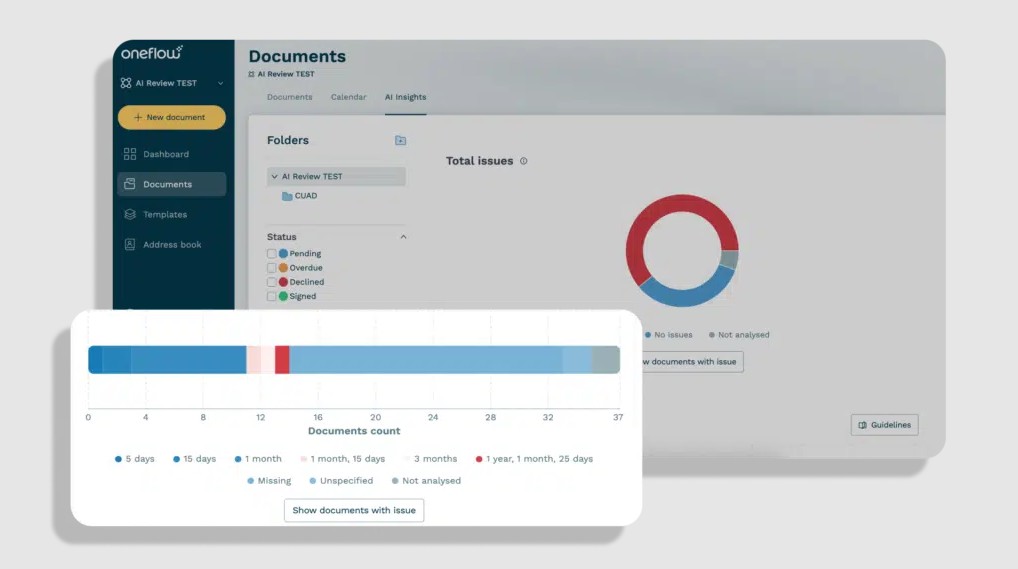
- AI Review, AI Insights and contract records: AI Review checks documents against configured playbooks and flags potential risks or missing contract clauses. AI Insights helps legal teams identify recurring issues across a workspace. AI Insights Premium adds custom rules and thresholds that surface exceptions and let teams drill down to the relevant clauses. Each electronic contract also maintains an activity history showing relevant edits and signatures.
- Lifecycle management and integrations: Teams can configure fixed-term or automatically renewing agreements, track contract status and receive reminders about important dates. The searchable repository makes existing agreements easy to find, while two-way integrations with Salesforce, HubSpot, Microsoft Dynamics 365 and Pipedrive keep mapped contract data aligned with CRM records, even when commercial terms change during negotiation.
Oneflow also supports several electronic signing methods, allowing organisations to choose the appropriate level of signature security for each agreement.
Limitation: Some G2 reviewers report limitations in document formatting. Capterra users have also requested more flexibility when customising templates and form layouts.
Juro
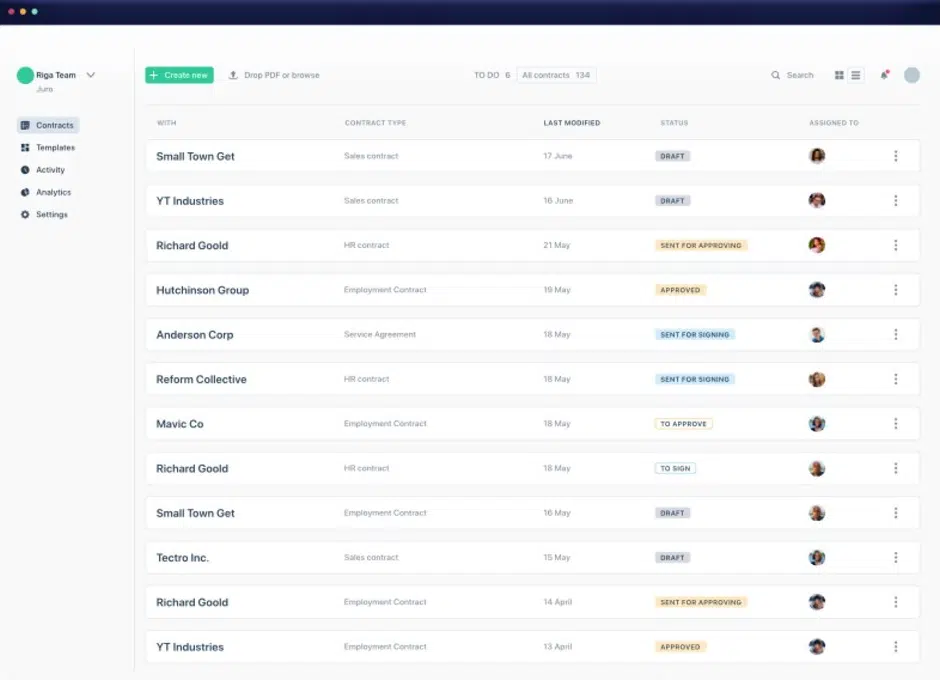
Juro is a contract lifecycle management platform that helps organisations apply consistent contracting policies across departments. Sales, HR and procurement teams can prepare agreements using approved templates, while conditional approval workflows ensure that contracts requiring additional review reach the right people.
Its integrations with Salesforce, HubSpot and Slack also help employees manage contracts from their existing systems.
See also: Juro alternatives.
Key features:
- Templates and approvals: Approved clauses, conditional templates and approval workflows help teams follow internal policies and control exceptions.
- AI-assisted review: Playbook-based checks identify deviations from approved terms and suggest revisions, including for third-party agreements reviewed in Microsoft Word.
- Contract records and reminders: Activity histories help verify changes and approvals, while renewal and notice reminders support ongoing contractual compliance.
Limitation: Some G2 reviewers report difficulty preserving complex Word formatting when importing agreements, especially documents with elaborate tables or layouts.
Luminance
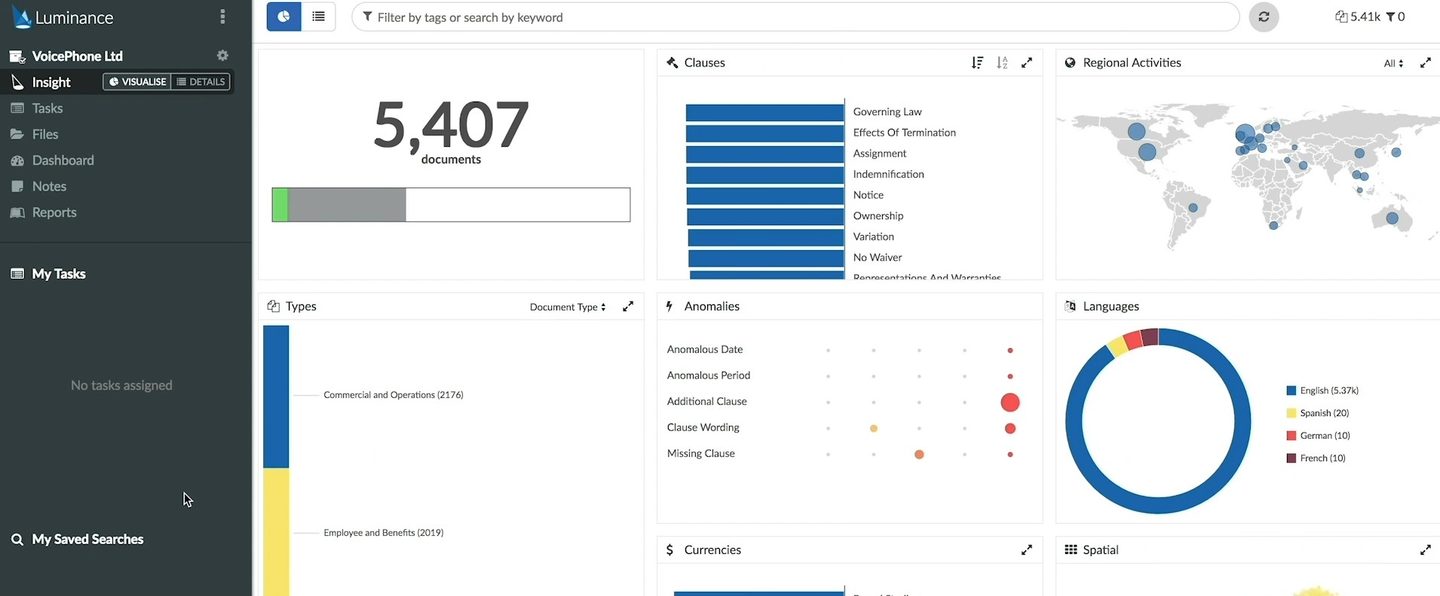
Luminance is a UK-founded AI-powered contract management platform that helps organisations check agreements against company policies and identify compliance risks across large contract portfolios. Procurement, finance and legal teams can use it to review terms, manage approvals and find contracts that may need attention when requirements change.
Luminance supports AI-assisted contract review and negotiation through its Microsoft Word integration. The platform also provides approval workflows, contract search and portfolio-wide compliance analysis.
Key features:
- AI-assisted compliance checks: Configurable playbooks help identify clauses that deviate from approved standards, flag potential compliance issues and suggest alternative wording.
- Approval workflows: Teams can route agreements requiring additional review to designated approvers, with an audit trail documenting each approval decision.
- Portfolio analysis: Search and reporting capabilities help identify contractual obligations, renewal dates and potentially non-compliant terms across existing agreements.
Limitation: Some G2 reviewers report that configuring custom playbooks and fallback positions takes considerable effort. Others note that AI-generated findings can be inaccurate when reviewing complex or unusual clauses, requiring additional manual verification.
Gatekeeper
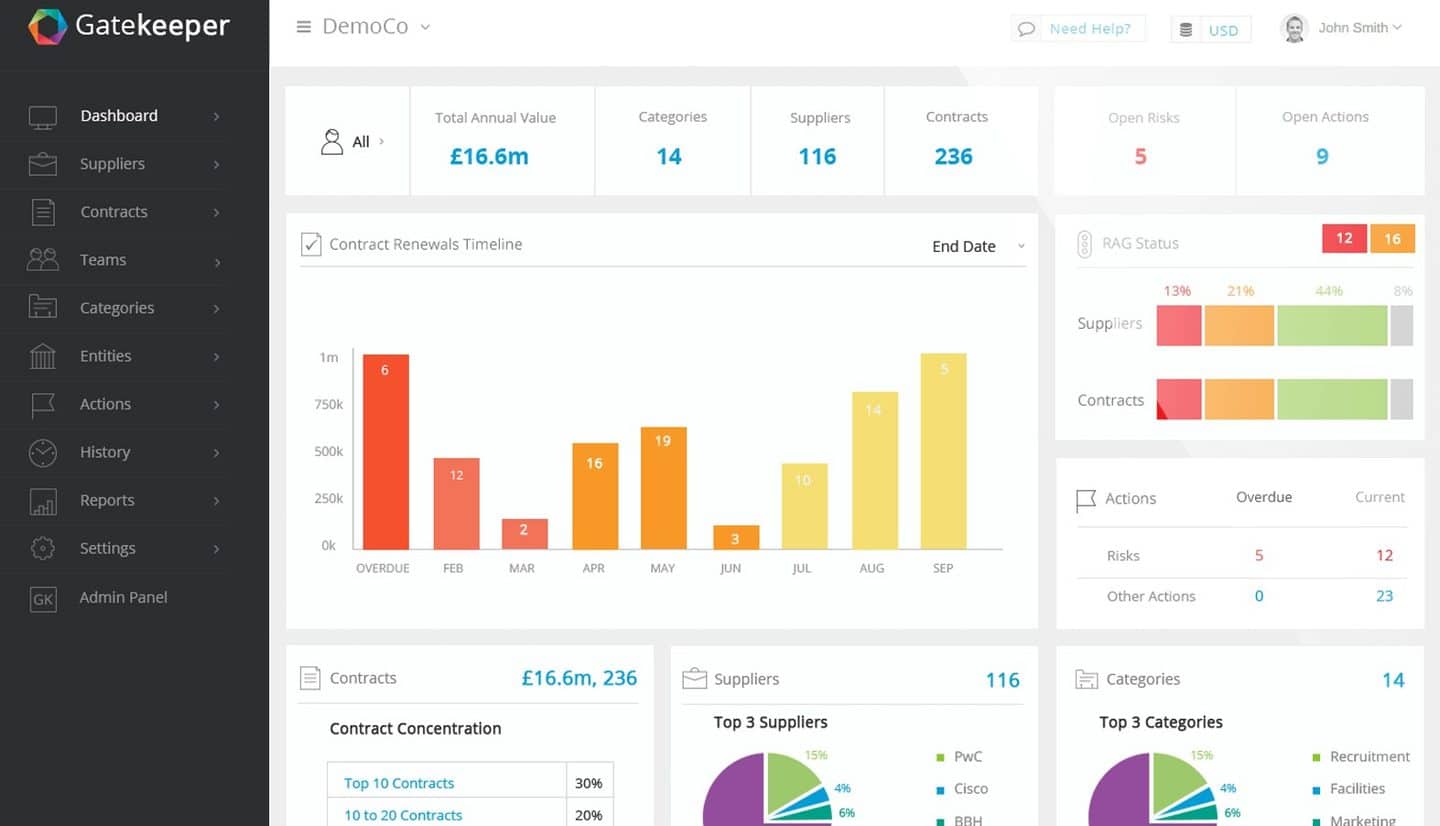
Gatekeeper combines contract lifecycle management with vendor risk management, helping organisations check supplier compliance before signing and monitor obligations throughout the contractual relationship. Procurement and compliance teams can keep supplier agreements connected to risk assessments and supporting evidence, making it easier to verify whether vendors meet company standards.
Key features:
- Vendor risk assessment: Questionnaires and risk scores support supplier due diligence. Document tracking helps teams monitor insurance certificates and other required compliance evidence.
- Approvals and audit records: Contract and vendor requests can be routed to designated approvers, with decisions and activity recorded for future compliance checks.
- AI review and obligation tracking: AI agents identify contract risks and extract obligations. Reminders help teams monitor contractual deadlines and renewal dates.
Limitation: Some G2 reviewers report limited flexibility when customising dashboards, reports and certain contract fields. This may make it harder for organisations to adapt compliance reporting to their specific requirements.
Icertis
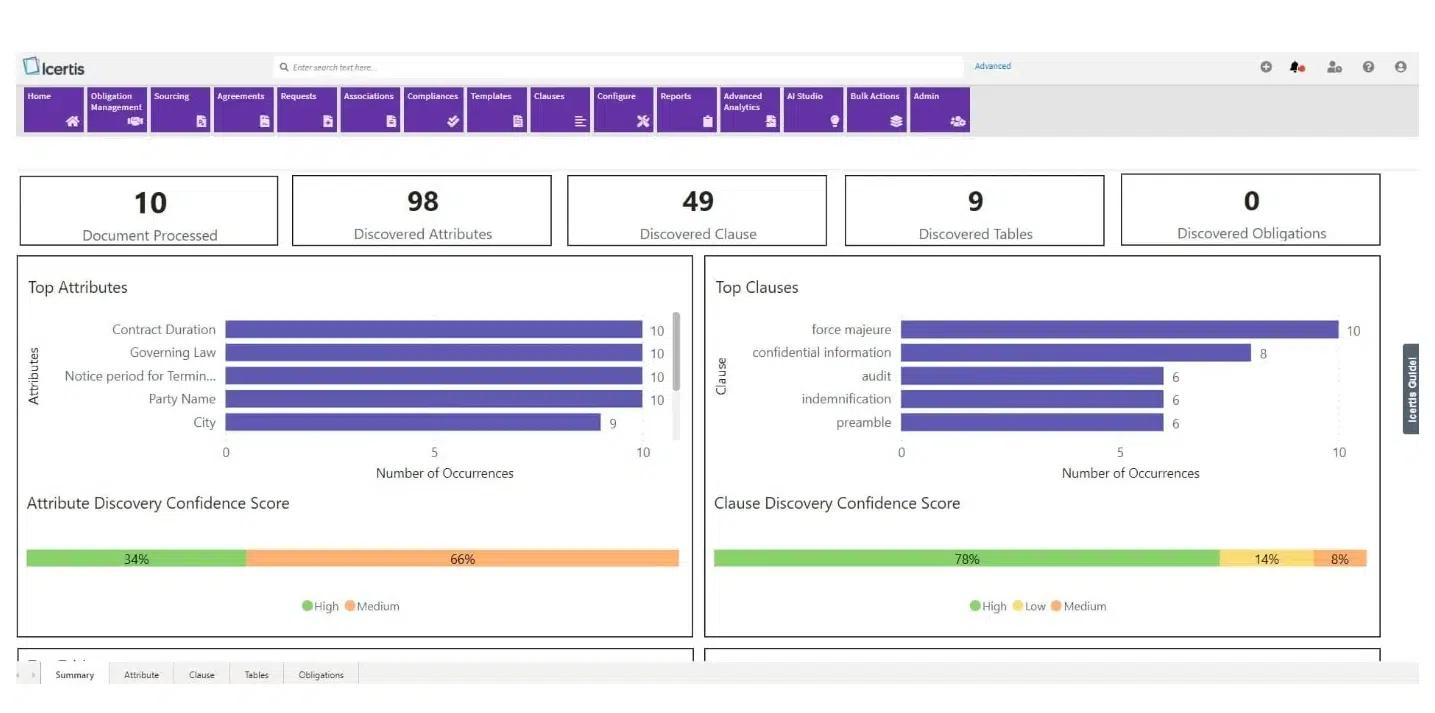
Icertis is an enterprise contract management platform for organisations managing complex agreements across departments and countries. It helps procurement, finance and operations teams assign responsibility for contractual obligations, monitor whether commitments are fulfilled and retain supporting evidence for audits and compliance reviews.
Key features:
- AI-assisted review: Compares contract clauses against company playbooks, flags deviations and suggests revisions. Teams can review contract risks and manage redlining through Vera Copilot or Microsoft Word.
- Vera Obligations: Identifies contractual commitments, assigns responsible employees and tracks fulfilment, including deadlines and supporting evidence.
- Vera Analytics: Helps teams identify compliance risks across large contract portfolios, with dashboards showing obligations, potential issues and recurring patterns.
Limitation: Some G2 reviewers report that customising intake forms and maintaining clause libraries or templates can be complicated. Amendment workflows also offer limited flexibility, which may create additional work for organisations with complex approval requirements.
Make compliance tracking part of the contract process
Every organisation needs to ensure its agreements follow company policies, pass the correct approvals and are managed properly after signing. What varies is the level of oversight required. A routine sales agreement may need a discount approval, while a public contract may also need detailed performance reporting.
The challenge is keeping these controls consistent throughout the contract lifecycle, especially when several departments are involved. That’s why it’s important to connect compliance checks with the processes your teams already use to manage agreements.
Oneflow helps you bring those controls into your everyday contracting process. For example, you can lock approved wording, review agreements against company standards, manage internal approvals and keep contract records accessible across departments.
Are your contracts following the rules you’ve set? Book a Oneflow demo to see how you can catch deviations before signing, keep track of important contract deadlines and stay on top of compliance.
FAQs
Does contract compliance software guarantee legal compliance?
Contract compliance software can flag clauses that deviate from company standards, enforce configured approval rules and track contractual deadlines. However, it can’t determine whether every agreement meets applicable laws or verify that contractual commitments have been fulfilled. Your organisation remains responsible for setting the right requirements, keeping them up to date and ensuring compliance.
What is the difference between contract compliance and contract governance?
Contract governance defines the rules for managing agreements, including approved clauses, signing authority and approval procedures. Contract compliance means following those internal rules, meeting applicable legal and regulatory requirements and fulfilling contractual obligations. For example, governance might require finance approval for discounts above 20%, while compliance means obtaining that approval and keeping a record of it.
What records should you keep to prove contract compliance?
Relevant records include signed agreements and amendments, approval histories, version records and audit trails showing who authorised changes. You may also need evidence of contractual performance, such as supplier KPI reports, delivery confirmations or records of completed obligations. Retention periods depend on applicable laws, contractual requirements and your organisation’s policies.
How does UK GDPR affect contracts with data processors?
Under UK GDPR Article 28, organisations acting as controllers must have a binding contract or other legal act with processors handling personal data on their behalf. It must specify the processing activities and include terms covering documented instructions, confidentiality, security, sub-processors, assistance with compliance obligations and the return or deletion of data. Contract compliance software can help standardise these clauses, track approvals and identify agreements requiring updates.
.png?id=40edbc9ee25345a211152388fdcf1fd2)

.png?id=073897979970647cd034d6db96c145de)