Every contract sitting on your desk is money – either revenue coming in or costs going out. When contracts stall, that value stays locked up. Research shows that contract cycle times improve by 35% when organizations implement automation. That can be the difference between closing deals this quarter and losing them to competitors who move faster.
So how does contract automation actually unlock that value? This article walks you through how contract lifecycle automation works, the tangible benefits it delivers and how to get started without the usual enterprise software headaches. You’ll see why automation isn’t just about speed—it’s about protecting revenue, ensuring consistent compliance, and giving your team back the time they need to focus on strategy instead of paperwork.
How contract lifecycle management automation works
Contract lifecycle automation takes the entire contract process – from initial creation through final signature, ongoing management and renewal – and digitizes it with intelligent workflows and artificial intelligence capabilities. Think of it as the difference between manually driving a car and having adaptive cruise control: you’re still in charge, but the system handles the repetitive work and prevents errors.
Basic digitization, like scanning contracts into PDFs and collecting electronic signatures, doesn’t cover it. True automation means dynamic contracts that connect to your business systems, extract data automatically, route approvals intelligently, and alert you before critical deadlines pass.
Most companies start their contract automation journey with scattered tools—maybe a proposal software here, an e-signature platform there, and spreadsheets holding everything together with digital duct tape. Contract lifecycle management (CLM) consolidates these fragmented processes into one connected workflow where contract data flows between systems automatically.
Oneflow exemplifies this integrated approach to the contract management process. Rather than forcing you to adopt yet another disconnected tool, it creates a centralized hub where contracts become live documents that sync with your CRM, adapt as terms change, and maintain a complete audit trail without anyone manually updating spreadsheets.
Let’s break down how these automations actually work in practice.
Automated contract creation with templates and AI writer
If contract creation makes you dread finding last year’s agreement, searching for that one clause you need, copying text between documents, and hoping you caught all the fields that needed updating, you can finally forget all that.
Oneflow’s smart contract templates pull data directly from your CRM or ERP system. When a sales rep creates a proposal, the system automatically populates customer details, pricing from your product catalog, and the specific terms your legal team pre-approved for that contract type. These standardized contract templates eliminate copy-paste errors, outdated pricing, and accidentally using expired terms.
Our AI proposal generator helps teams draft contracts in a fraction of the time, based on natural language prompts.
Companies using AI in contract management have achieved major cost savings (31% of organizations), improved accuracy (35%) and reduced contracting lifecycle time (39%).
Contract approval routing and signing order
Manual approval processes are where deals go to die (slowly). The contract sits in someone’s inbox for three days. It gets forwarded to the wrong person. Legal asks for changes that sales have already addressed. The back-and-forth continues until everyone forgets what they were arguing about.
Automated approval workflows in Oneflow solve this by routing contracts to the right people automatically based on rules you define once. The CLM software tracks who’s reviewed what, sends alerts and notifications to people holding up the process, and escalates to managers when deadlines approach.
Digital signatures complete the process without printing, scanning or chasing people down. Advanced contract lifecycle management platforms like Oneflow maintain signing order, ensuring internal approvals happen before customer signatures and that all parties involved sign in the correct sequence. When someone signs, everyone gets notified automatically, and the fully executed contract archives itself in your centralized repository.
AI-powered contract review and risk detection
AI-powered analysis scans every clause in seconds, comparing contract language against your playbook and flagging deviations from standard terms. It identifies risky provisions like unlimited liability, unusual payment terms or missing force majeure clauses before anyone signs something they’ll regret.
According to research, organizations using AI-powered CLM solutions have achieved up to 60% reduction in contract processing time and 45% fewer errors, improving compliance accuracy.
Modern CLM solutions have risk analysis features that understand context and can assess whether a specific clause creates risk given your company’s situation, industry regulations and past contract performance.
Integration with business systems
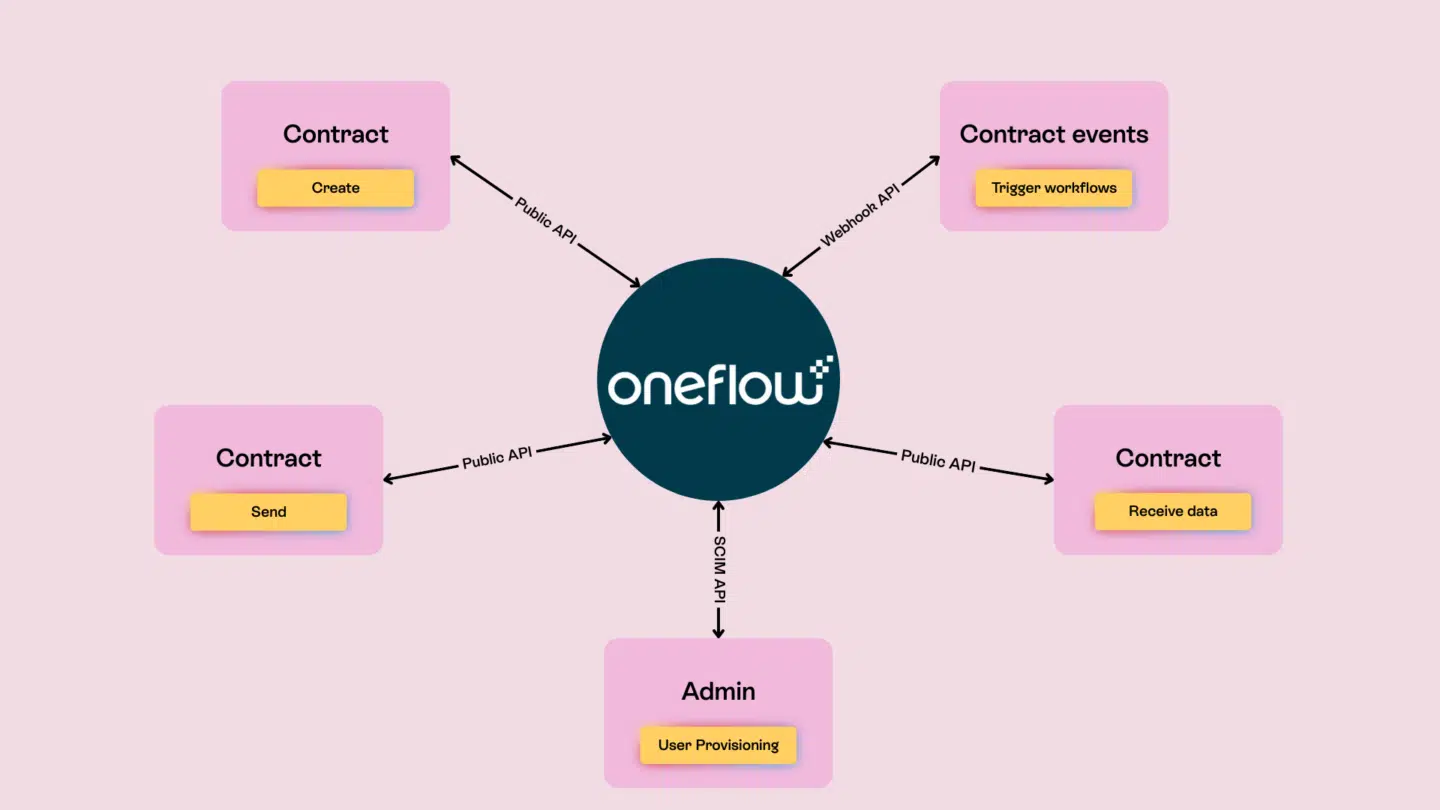
Oneflow contract lifecycle management software integrates with the enterprise systems you already use: Salesforce, HubSpot, Microsoft Dynamics and more. When a contract closes in your CRM, the executed agreement automatically attaches to the customer record. When terms change, both systems update simultaneously, maintaining a single source of truth.
This integration eliminates manual effort and the errors it creates from re-entering data between disconnected systems.
With Oneflow, your CRM becomes the source of truth for product catalogs and pricing, while the software manages contract creation and execution.
Post-signature obligation management, tracking and contract renewals
Signing the contract isn’t the finish line. Now you need to fulfill your end of the agreement, ensure the other party delivers on their vendor contract commitments, track key dates, and prepare for renewal negotiations.
Our obligation management software automatically monitors all parties’ contractual obligations. It tracks delivery milestones, payment schedules, performance metrics and regulatory compliance requirements. Automated renewal tracking alerts contract owners before auto-renewal dates, giving you time to negotiate better terms or decide to exit agreements that no longer serve your needs.
The system maintains a complete record of contract performance, amendments and communications. This transforms renewals from rushed last-minute agreements into strategic opportunities that improve the overall contract value.
Key benefits of contract automation with CLM software
Contract lifecycle automation benefits come down to three things: speed, accuracy and contract visibility. Let’s look at the specifics.
Accelerate deal velocity and reduce cycle times
Every day a contract sits in someone’s inbox is a day your business isn’t generating revenue. Contract automation software eliminates the delays linked to manual processes.
That means your sales team closes more deals per quarter, you onboard new vendors in days instead of weeks, and customer renewals happen smoothly before they even consider competitors.
Oneflow quoting software enables this speed by connecting proposals directly to contract execution. A quote becomes a binding agreement as soon as the customer signs, with no handoff between sales and legal, no reformatting and no transcription errors—expediting contract execution across your organization.
Eliminate costly errors and revenue leakage
Contract digitization boosts compliance by removing manual steps where errors creep in. When your contract management system pulls data directly from your CRM and product catalog, pricing is always current and accurate. When AI checks every contract against your playbook, missing clauses get flagged before signature, not discovered during an audit.
Automated contract processes create consistency, eliminating revenue leakage linked to poor management. Every agreement follows your standard workflow, includes required terms and archives properly. You bill accurately because your billing system receives structured contract data automatically. You capture every renewal opportunity because the system tracks dates and alerts key stakeholders with enough time to act strategically.
Ensure compliance and mitigate risk
GDPR, CCPA, industry-specific regulations, and your own corporate policies all impose requirements on contract language and data handling. Tracking regulatory compliance manually across thousands of agreements is practically impossible.
Automated contract systems maintain compliance by enforcing approved clause libraries and flagging deviations for legal review. The system maintains complete audit trails showing who reviewed what, when decisions were made, and what changes occurred.
Instead of discovering problematic terms when a dispute arises, AI-powered risk analysis identifies issues during contract creation.
Oneflow’s compliance features provide version control, complete audit trails, and the ability to quickly locate specific clauses across your entire contract portfolio. When auditors ask for every agreement containing specific terms, you can produce the list in minutes with functional search capabilities.
Unlock operational efficiency across teams
With contract automation sales teams spend less time on vendor agreements drafting and more time selling; legal handles more contracts with existing headcount because AI handles routine reviews; finance receives clean data that doesn’t require reconciliation.
The cumulative impact of better contract management frees up budget for growth initiatives instead of being consumed by processing overhead and manual effort.
Gain strategic insights from contract data
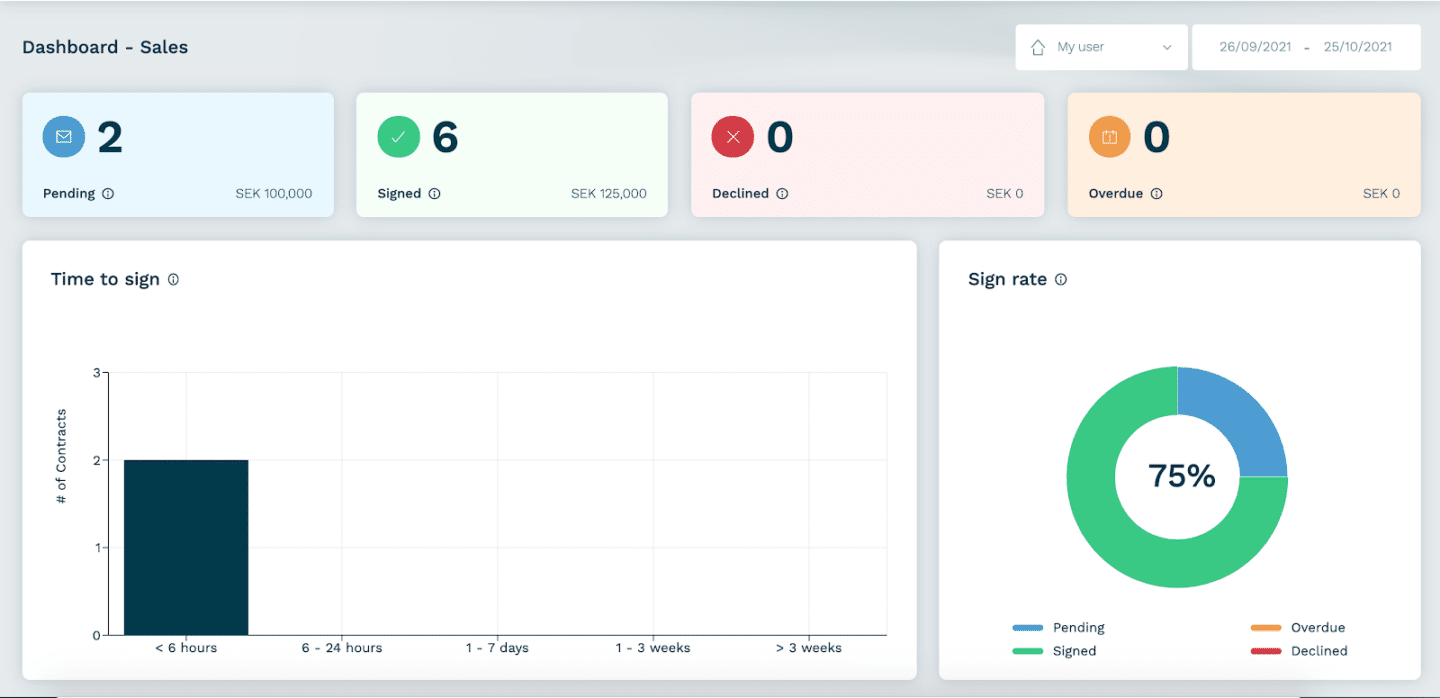
Contract management software extracts and structures data like contract close time or most common payment terms, making it searchable and analyzable. You gain visibility into key metrics like average contract value, cycle times by department, most negotiated clauses, and renewal success rates. This intelligence informs better business decisions and continuous improvement in your contract workflows.
What every contract lifecycle automation tool needs
Not all contract automation software delivers the same value. Some excel at pre-signature processes but offer limited post-signature capabilities. Others provide robust repositories but lack workflow automation. Understanding essential features helps you evaluate CLM solutions and avoid tools that only solve part of the problem. Here’s what to look for when evaluating solutions:
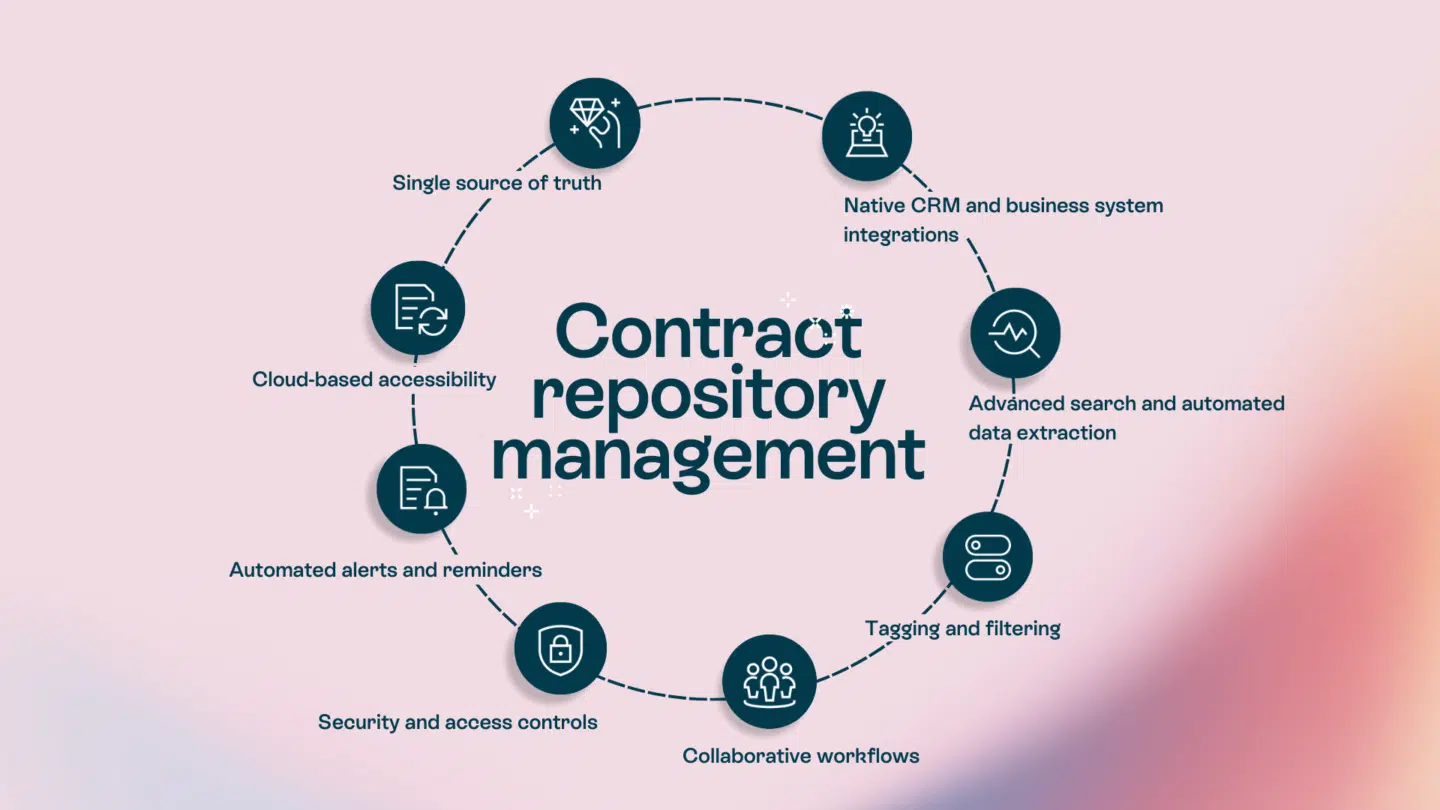
- Centralized repository with advanced search: This eliminates the nightmare of contracts scattered across email, shared drives, and individual computers—enabling you to manage contracts efficiently. Advanced search should include keyword matching, filtering by contract type, counterparty, date ranges, specific clauses or metadata. When your legal department needs to find every instance where you’ve agreed to specific terms, they can pull that report immediately.
- Template library: Standardization accelerates contract creation and ensures consistency. Oneflow’s templates are fully customizable, so you can create and approve versions for every common contract type (sales agreements, NDAs, employment contracts, service agreements, and whatever else your business regularly executes) once and never waste time on it again.
- Workflow automation and approval routing: Your platform needs configurable workflows that route contracts to the right approvers automatically based on rules like contract value, contract type, counterparty risk level, etc. Automated workflows should include escalation paths for when approvers don’t respond within specified timeframes, support parallel approvals, and sequential approvals. Real-time visibility into the approval process means contract managers can see what’s holding up the process and optimize contract workflows.
- AI features for writing and checking: Leverage modern AI for contract drafting, clause recommendation, risk analysis and data extraction. AI quoting software helps sales teams create accurate proposals quickly, while AI-powered review identifies risky clauses that require legal attention.
- Integration capabilities: Your contract platform needs to connect with the systems you already use. Look for pre-built integrations with major CRM platforms, ERP systems, e-signature providers, and document storage solutions. Custom API access allows your IT team to connect specialized systems unique to your business. True integration means bidirectional data flow, where changes in one system automatically update the other. Oneflow’s approach makes your contracts the single source of truth for customer data and product information. This architecture eliminates duplicate data entry and ensures consistency across your entire tech stack.
- Real-time collaboration tools: Pick something that supports real-time editing, commenting, version tracking and change comparison without passing Word documents back and forth. Modern collaboration features include the ability to @mention colleagues in comments, track who suggested what changes, and maintain a complete history of contract negotiations. This reduces manual effort throughout the negotiation process.
- Obligation and deadline tracking: Post-signature contract management is where many platforms fall short. Your system needs obligation management that tracks deliverables, payment schedules, performance metrics, and renewal dates across your entire contract portfolio—helping you manage contracts throughout their entire lifecycle. Comprehensive deadline tracking prevents the costly mistakes that happen when you miss critical dates: auto-renewals at unfavorable terms, missed termination windows that lock you into another contract period, or delivery obligations that become breaches because nobody was watching the calendar.
- Analytics and reporting: Your contract data should drive business processes. The platform needs reporting capabilities that answer questions like: What’s our average contract cycle time? Which contract types take the longest to approve? What terms are most frequently negotiated? Where do bottlenecks occur in our process? Track contract risk levels and approval patterns, revenue timing and contract value metrics. Identify trends in contract volume, analyze seasonal patterns in deal flow, and benchmark current performance against past quarters.
- Mobile accessibility: This lets you approve contracts and check contract status from anywhere. The interface needs to adapt to smaller screens. Your customers and partners should be able to review and sign contracts on their phones without printing documents or using separate apps. This convenience removes friction from the entire contract lifecycle.
- Extensive security and compliance: Contract data is sensitive—pricing, strategic plans, customer information, proprietary terms—your platform must meet enterprise security standards, including encryption at rest and in transit, role-based access controls, multi-factor authentication, and comprehensive audit logging. Look for platforms that maintain SOC 2 Type II certification, GDPR compliance, HIPAA compliance, and other relevant standards. Plus, backup and disaster recovery capabilities ensure you never lose contract data.
See also: Best contract lifecycle management software solutions
Getting started with contract lifecycle automation
The best time to implement contract lifecycle management (CLM) was last year. The second-best time is today.
Modern automated contract management platforms like Oneflow make deployment fast, with organizations often processing their first automated contracts within days.
Start by identifying your biggest pain points. Begin with one contract type or one department, then expand. This allows your team to learn the system, refine workflows, and demonstrate ROI before asking the entire organization to change its processes.
Oneflow’s intuitive interface requires minimal training, and the quick setup process means you’re generating value within days. You can start with automating sales contracts and expand to procurement, HR and legal as your team becomes comfortable with the platform.
Try Oneflow and see how automation can transform your contract management tasks from a bottleneck into a competitive advantage.
FAQs
What is contract lifecycle automation, and how does it differ from contract management?
While contract management generally refers to organizing and storing contracts, contract lifecycle automation actively reduces manual work by automatically routing approvals, extracting key data, flagging risks, and connecting contract information to your business systems. Think of contract management as the filing cabinet for your agreements, while contract lifecycle automation is an intelligent assistant that handles routine tasks, prevents errors, and ensures nothing falls through the cracks.
How much does contract lifecycle automation cost, and what’s the typical ROI?
Oneflow offers flexible pricing plans designed to scale with your business, ensuring you only pay for the capabilities you actually need. Basic contract automation work is free, while plans with more advanced features start from $17 monthly. Cost savings from ROI on reductions in administrative costs and faster contract cycle times add up quickly.
Can contract lifecycle automation integrate with my existing CRM and ERP systems?
Yes, modern contract lifecycle management platforms like Oneflow integrate with your existing business systems: major CRM platforms like Salesforce, HubSpot and Microsoft Dynamics, plus ERP systems and other enterprise applications. This enables bidirectional data flow, meaning your contracts remain the source of truth for customer and product information. When a contract closes, the executed agreement automatically attaches to the customer record in your CRM. When pricing updates in your product catalog, quotes, and contracts reflect the changes immediately.
How long does it take to implement contract lifecycle automation?
Modern CLM platforms like Oneflow are designed for rapid deployment. Simple implementations focusing on one contract type or department can be operational within days. More comprehensive rollouts involving multiple departments, custom workflows, and extensive integrations typically take a few weeks. The key is starting with a focused scope—automate your highest-volume contract type first, prove the value, then expand to other areas.
.png?id=40edbc9ee25345a211152388fdcf1fd2)

.png?id=073897979970647cd034d6db96c145de)