Every empty desk costs you money in lost productivity, overtime and project delays. And right now, the average time to fill a position sits at 41 days—meaning that an empty desk is burning through your budget for over six weeks.
But here’s what most HR teams don’t realize: a chunk of that delay has nothing to do with finding candidates. It’s the contract phase where hiring goes to die. Candidates accept offers and then… wait. Wait for contracts to be drafted. Wait for approvals to route through. Wait for revisions. Wait for signatures. By the time the paperwork finally lands, your top choice may have moved on to a competitor.
In this guide, you’ll learn how modern HR contract management transforms this bottleneck into your competitive advantage, with the right contract management system that can cut your time-to-hire while reducing compliance risk.
What is HR contract management?
HR contract management is the end-to-end process of creating, negotiating, executing, storing and managing employment-related agreements throughout their entire contract lifecycle.
Unlike general contract management, the HR process focuses specifically on the people side of your business. You’re not dealing with vendor agreements or sales contracts—you’re managing the legal foundation of every employment relationship in your organization.
The scope covers offer letters, employment agreements, confidentiality agreements, non-compete agreements, variation letters, contractor arrangements, severance agreements and all the amendments. Each document needs review from the legal team, proper approval processes, secure contract storage, and often, regular renewal cycles.
Why does this matter? Because managing HR contracts directly impacts hiring speed, legal compliance, employee experience and operational efficiency. When the contract management process drags on, you lose candidates. When contracts aren’t standardized, you face compliance issues. When legally binding agreements are scattered across email threads and shared drives, you have no visibility into job responsibilities or renewal dates.
Why HR contract management matters more than ever
Your top candidate probably receives multiple offers and stays on the market for a few days before accepting a position. If your contract execution time takes two weeks, you’re already losing.
At the same time, regulatory complexity has exploded. Labor laws vary by jurisdiction, remote work has introduced multi-state compliance challenges, and data privacy regulations like GDPR and CCPA add another layer of risk.
A distributed workforce makes standardization harder. When you’re hiring across multiple states or countries, each location brings different employment law requirements. Managing these variations in contract terms manually is a recipe for missed clauses and legal exposure.
Candidates judge organizations by their hiring process. A clunky, slow contract management workflow signals dysfunction and makes candidates question whether they want to work there. On the flip side, a smooth, professional experience—mobile-friendly signing, clear timelines, quick turnaround—sets a positive tone from day one and supports employee engagement.
Last but not least, the financial impact of inefficiency adds up fast. Every day a role stays open costs productivity. Every contract error that requires rework wastes human resources time. Every compliance mistake carries potential penalties.
Types of HR contracts you need to manage
Here’s everything your HR team has to juggle.
Core employment contracts
- Full-time employment agreements define permanent positions with standard benefits, compensation structure, job details, termination conditions and notice periods. These legally binding agreements include sections on health insurance, retirement plans and company policies. Use these for your permanent workforce where you’re offering ongoing employment with full benefits packages.
- Fixed-term and temporary contracts specify employment for a defined period or for a specific project. These need clear start and end dates, renewal conditions and what happens when the term expires. The contract creation process for temporary contracts must clearly distinguish them from permanent roles to avoid misclassification. Use these for project-based work, seasonal hiring or maternity leave coverage.
- Part-time employment contracts outline reduced working hours with prorated benefits and compensation. They need to clearly specify weekly or monthly hours, scheduling expectations, and how benefits are calculated. Use these when you need ongoing support but don’t require full-time capacity.
- Contractor and freelancer agreements establish independent contractor relationships with payment terms, deliverables and clauses protecting the company’s intellectual property. These are different from employment contracts because they don’t create an employment relationship. Use these carefully, as contractor vs employee misclassification can trigger serious legal consequences and require review from legal counsel.
Supporting HR documents
- Offer letters serve as the initial employee’s agreement outlining role, job title, compensation, start date and contingencies like background checks. They’re typically less detailed than full employment contracts but legally binding once accepted.
- Non-disclosure agreements (NDAs) and other confidentiality agreements protect confidential information by restricting what new employees can share during and after employment. Use these when employees will access sensitive business information, trade secrets or proprietary data.
- Non-compete and non-solicitation clauses prevent employees from working for competitors or poaching clients and colleagues for a specified period after leaving. These face increasing legal scrutiny and have been banned or limited in some jurisdictions, so work with senior counsel to ensure contracts comply with local laws.
- Variation and amendment letters document changes to existing employment terms—promotions, salary adjustments, role changes and location transfers. These need a clear reference to the original contract and explicit acceptance from both parties to maintain the employment relationship.
- Separation and severance agreements formalize the end of employment, including final compensation, benefits continuation, return of company property and any mutual release of claims. Use these to create clean breaks and reduce legal risk while ensuring ongoing compliance with termination requirements.
The hidden costs of managing HR contracts manually
- Bottlenecks that slow hiring: Manual HR processes create approval bottlenecks where documents sit in email inboxes waiting for someone to review and approve. When you need to route contracts through multiple stakeholders, you have no visibility into where things are stuck or who’s holding up progress. This repetitive contract admin work drains efficiency across your entire organization.
- Compliance and risk exposure: Some states require specific leave policies. Some countries mandate certain termination clauses. When you’re copying and pasting from old Word documents during contract drafting, you’re probably using outdated language or missing required provisions that put business operations at risk. Plus, version control becomes impossible when contract information lives in email threads.
- Operational inefficiency: HR teams spend hours recreating similar contracts from scratch instead of using pre-approved templates. Every contract requires formatting, proofreading and quality checking. Then chasing signatures, tracking status and manually filing executed documents. The contract generation process consumes valuable time that should go toward strategic HR processes.
- Poor employee experience: New employees want to feel excited about joining your company. Instead, they’re frustrated by slow responses, confusing processes and documents that require printing, signing, scanning and emailing back. It feels outdated and unprofessional. When you can’t efficiently process contracts or streamline contract negotiations, candidates start their employee journey already questioning their decision.
- Financial impact: Wasted HR hours on administrative work, extended vacancy costs, potential compliance penalties and the expense of restarting recruitment when candidates drop out. For a mid-level position, you’re looking at thousands of dollars in direct and indirect costs that undermine organizational success.
How modern HR contract management software works
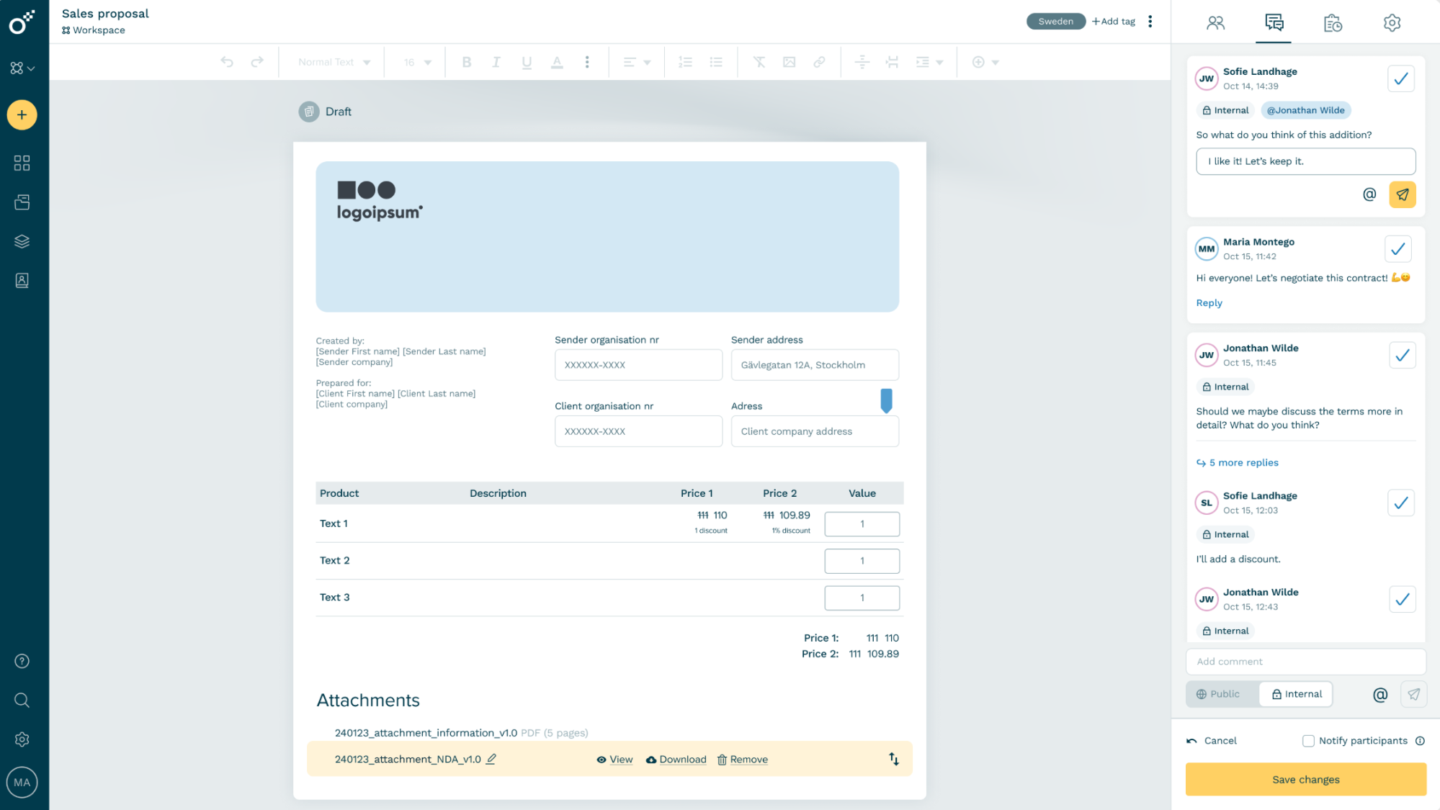
Modern HR teams need more than digital storage—they need contract automation that connects hiring to business outcomes. Oneflow delivers a purpose-built CLM software solution that addresses every challenge we’ve outlined while integrating seamlessly with your existing HR technology to enhance contract management efficiency and a simpler review process from one source of truth.
Dynamic contracts that stay connected
Unlike static PDFs that freeze data at signature, Oneflow creates live, dynamic contracts that maintain two-way sync with your HRIS and CRM. When employee data changes—promotion, salary adjustment, role change—your contract record updates automatically. This eliminates manual changes and ensures your contract repository remains your single source of truth for managing contracts.
Quote-to-cash for HR operations
By streamlining the quote-to-cash (Q2C) process across departments, Oneflow enables HR teams to structure compensation packages, manage contractor arrangements, and maintain accurate payroll data throughout the contract-to-payment journey. HR teams can also generate offer letters using our AI-powered proposal generator, automatically populating compensation details into finance systems, reducing errors and eliminating duplicate data entry.
This means when you create an employment contract with salary, bonus structure and equity details, that information flows directly into payroll and finance systems without manual re-entry. The contract becomes the source of truth that drives downstream business operations.
Key capabilities
- Template-based automation gives you pre-approved employment contract templates with role-based customization. The legal department reviews the templates once, then HR can generate hundreds of compliant contracts without going back to legal counsel for routine hires. This approach to contract generation dramatically improves contract management efficiency.
- CRM/HRIS integration provides native connections with Salesforce, HubSpot and leading HR platforms. Pull candidate data directly into contracts, push signed agreements back to your HRIS, maintaining data consistency across systems. This integration eliminates the copy-paste errors that plague manual contract management practices while allowing business users to work within familiar systems.
- Collaborative negotiation enables real-time editing and commenting without email attachments. Candidates can review contracts, suggest changes to start dates or other contract terms, and HR can respond—all within the platform. This capability helps you streamline negotiations and reduce back-and-forth that extends contract execution time.
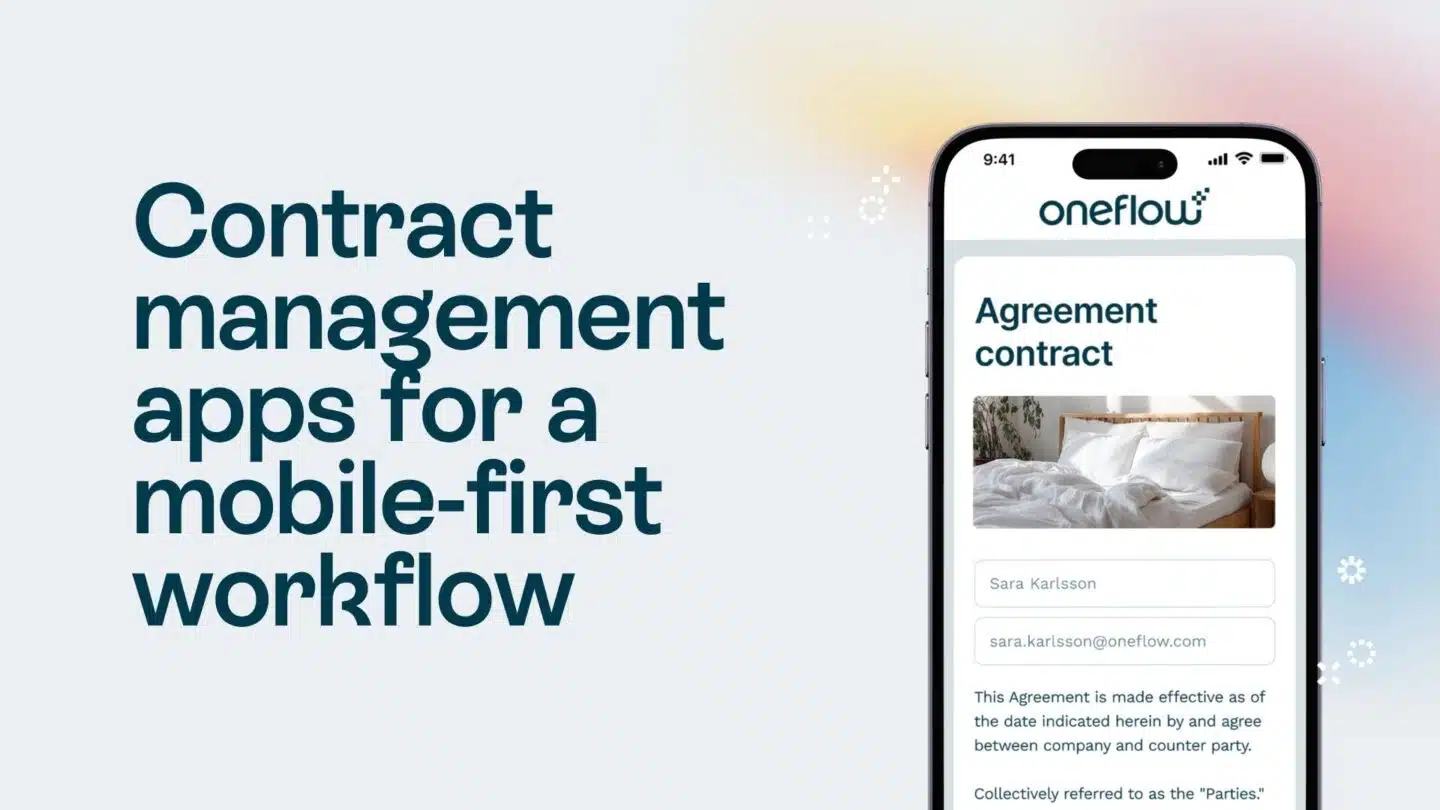
- Mobile-optimized experience lets candidates review and sign from any device. They can read through the contract on their phone during lunch, use electronic signatures or digital signatures, and return it in minutes.
- Bulk operations allow you to generate, send and sign hundreds of contracts efficiently. When you’re doing seasonal hiring or onboarding a large cohort, you can create customized contracts for dozens of people simultaneously.
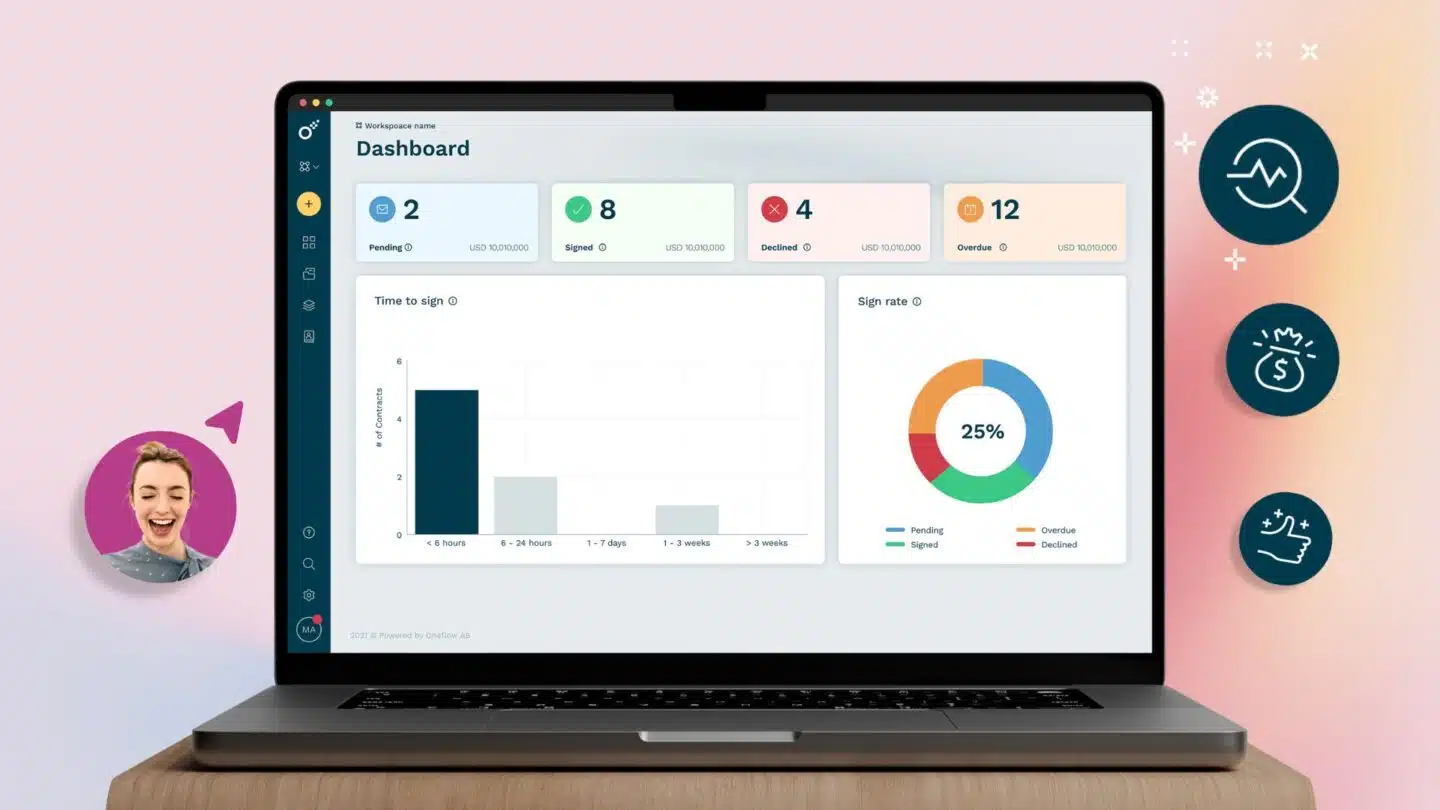
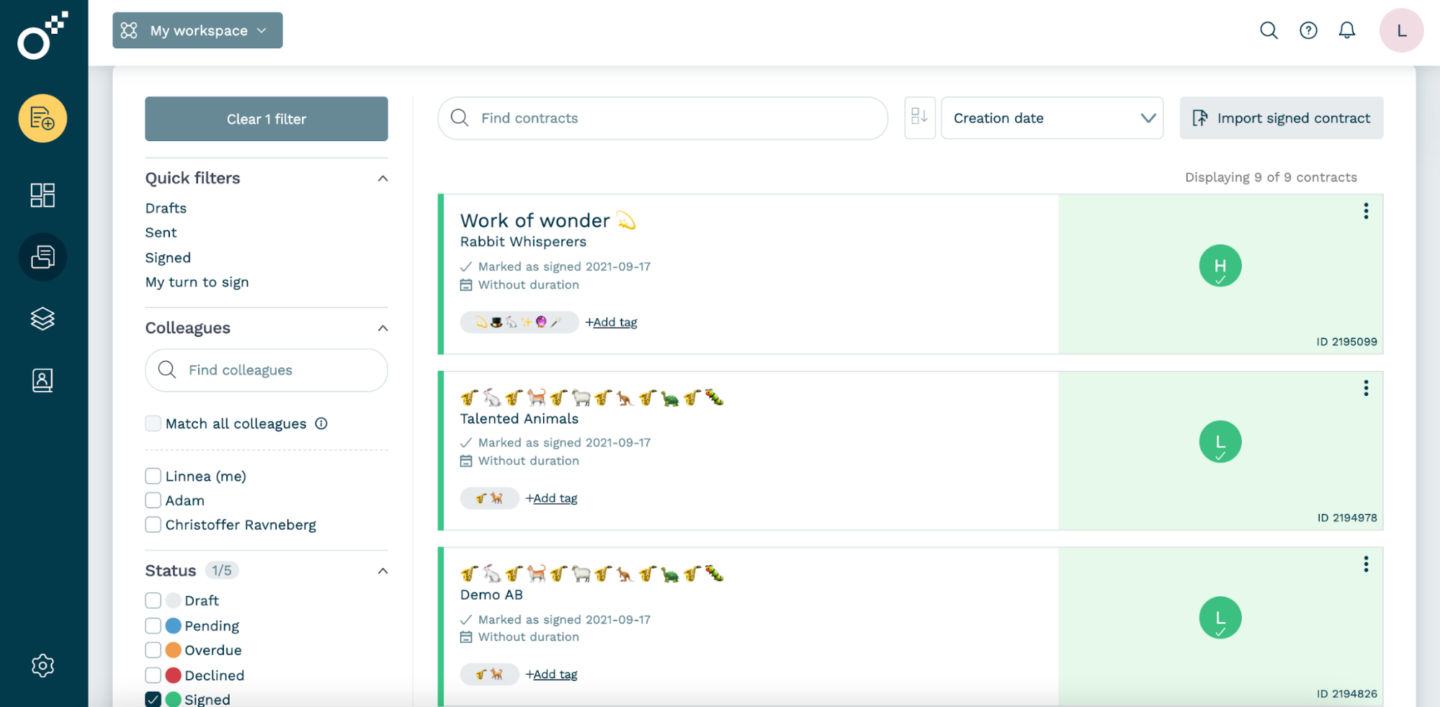
- Intelligent analytics provides visibility into contract status, approval bottlenecks and cycle times. See exactly where contracts are getting stuck or which approvers are slow to respond. These insights help you continuously enhance contract management efficiency.
- Compliance built-in delivers automated version control, complete audit trails and renewal management. Know exactly who changed what and when, maintain perfect records for audits, and get automatic alerts when contracts are coming up for renewal.
Business outcomes HR teams achieve with CLM software
- Reduce time-to-hire by eliminating contract bottlenecks. When you can generate and send a contract in minutes instead of days using modern software, you capture candidates before competitors do.
- Improve candidate experience with a professional, mobile-friendly process. Candidates appreciate the speed and ease, which reinforces their decision to join your organization and improves employee onboarding from the start.
- Ensure compliance through standardized, legally-reviewed templates. When every contract uses approved language that’s regularly updated for regulatory changes, your risk drops significantly and you maintain better contract management practices.
- Free HR teams from administrative work to focus on strategic initiatives. When contract creation, routing and filing happen automatically through a proper contract management system, your team can spend time on talent development, culture building and business partnership.
- Create seamless data flow from offer acceptance to payroll and beyond. Contract data populates HRIS records, payroll systems and benefits platforms without manual data entry, improving both contract management efficiency and overall business operations.
Why HR teams choose Oneflow for contract lifecycle management
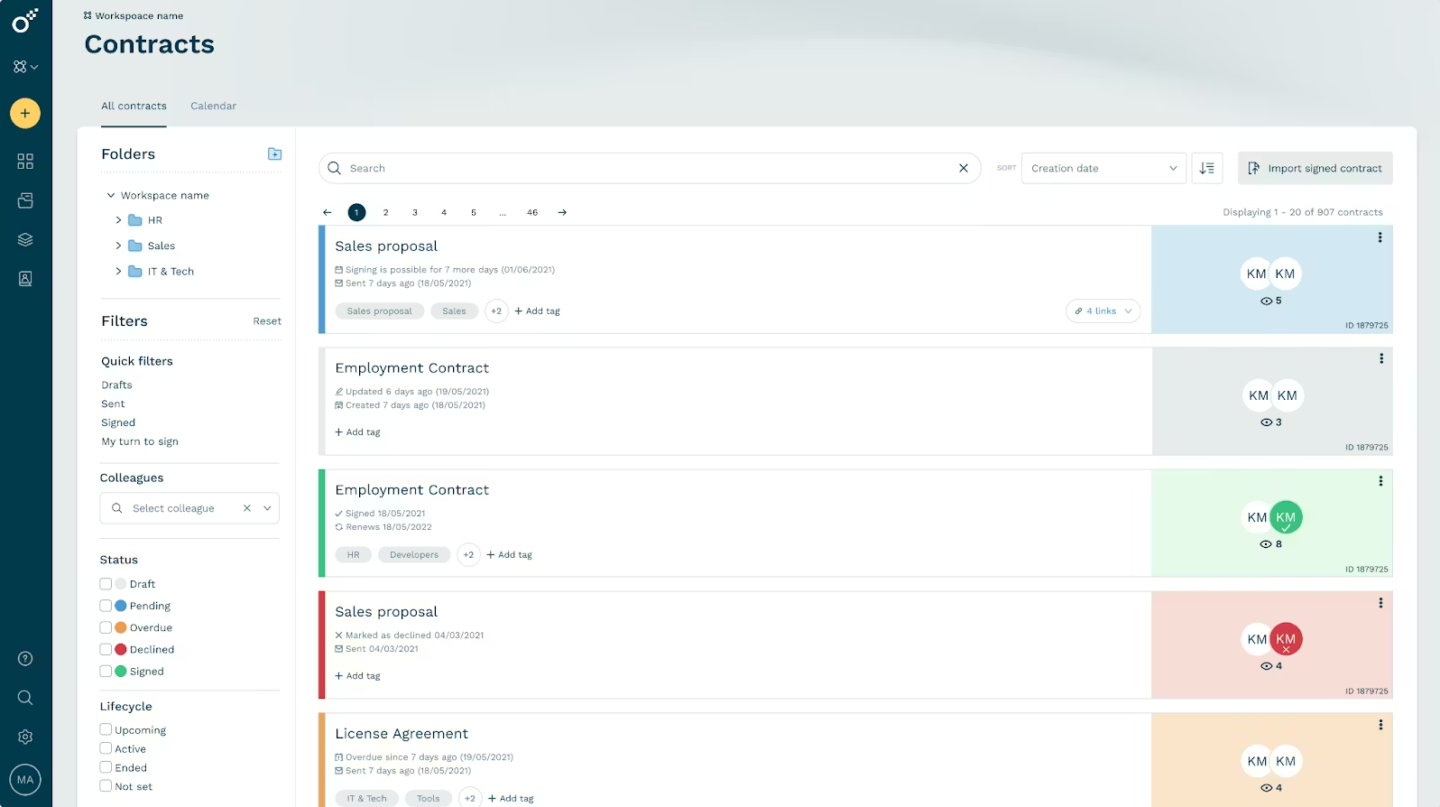
Oneflow understands that HR contracts aren’t just legal documents—they’re the foundation of every employment relationship. The platform makes it easy to create contracts that are both legally sound and human-friendly, with a signing experience that sets a positive tone from day one.
Getting started takes minutes, not months. Connect your HRIS, upload your templates, customize your approval workflows, and you’re ready to send your first contract. Most teams are fully operational within a week and immediately see improvements in how they manage contracts.
Ready to turn your contract bottleneck into a competitive advantage? Try Oneflow and see how fast your hiring process can actually move when you properly manage the entire contract lifecycle.
Transform your HR contract management with Oneflow
With the right HR contract management software, you can turn the contract phase into a smooth, fast, professional experience that wins candidates and protects your business.
The organizations that master this process don’t just save time and reduce risk—they build a reputation as an employer that has their act together. In a competitive talent market, that reputation becomes your edge for attracting top talent and supporting organizational success.
Your contracts should work as hard as your recruitment team does. Make them count with Oneflow.
FAQs
What’s the difference between HR contract management and general contract management?
HR contract management focuses specifically on employment-related agreements and the unique requirements of managing workforce contracts. While general contract management handles vendor agreements, sales contracts and commercial deals, the HR contract management process deals with offer letters, employment agreements, NDAs, and separation agreements.
The key differences include people-centric workflows, compliance with employment law rather than commercial law, a higher volume of similar contracts requiring standardization, and integration with HRIS systems rather than CRM or procurement platforms. HR contracts also carry different risk profiles—misclassifying an employee as a contractor triggers tax and labor law violations, not just commercial disputes.
How do you implement contract lifecycle management for HR contracts?
Start by auditing your current contract creation process to identify where delays and errors occur. Document every step from contract generation through contract storage and renewal. Next, standardize your templates—work with the legal department to create approved versions for each contract type and document which clauses can be customized by HR versus which require legal review.
Choose a contract lifecycle management platform designed for HR needs with HRIS integration, mobile signing, and bulk operations, like Oneflow. Then configure approval workflows that match your organization’s structure and compliance requirements. Train your team on the new system and create documentation for common scenarios, ensuring business users can confidently manage contracts.
What features should HR departments look for in contract management software?
Prioritize HRIS integration so contract information flows seamlessly into your HR systems without manual entry. Look for template management with version control and approval workflows that let you standardize contracts while maintaining proper oversight. Electronic signature capability with mobile optimization is essential—candidates need to sign from any device to reduce contract execution time.
The platform should support bulk operations for high-volume hiring and provide analytics dashboards showing where bottlenecks occur in your HR contract management process. Audit trails and compliance features protect you during audits and disputes while ensuring contracts meet legal requirements. Role-based permissions ensure the right people can edit, approve, or view contracts.
User experience is critical; if the platform is clunky, your team won’t use it, and candidates will be frustrated during employee onboarding. Finally, make sure you get responsive support.
Can you automate HR contracts while ensuring compliance?
Yes, when done correctly. Automation doesn’t mean removing legal oversight—it means building legal review into your templates and workflows upfront. Work with senior counsel to create comprehensive, compliant templates for each contract type and jurisdiction. Build approval workflows that require legal department review for non-standard terms or high-risk positions.
Use contract automation to handle the standardized portions (pulling in candidate data, calculating prorated benefits, inserting standard clauses) while flagging unusual situations for human review. Configure the system to automatically use the correct template based on location, role type, and employment classification, ensuring contracts remain compliant.
Maintain version control, so you always know which template is current and who approved it. Set up regular reviews (quarterly or annually) where legal counsel examines templates for regulatory changes. Track every change through audit trails so you can demonstrate ongoing compliance during audits.
.png?id=40edbc9ee25345a211152388fdcf1fd2)

.png?id=073897979970647cd034d6db96c145de)