In 2025, 57% of government-affiliated organizations reported conducting audits specifically to meet contract requirements, up from 40% in 2024. That’s hundreds of organizations scrambling to avoid the financial and reputational mess that comes with missed obligations.
If you’ve ever watched a contract renewal slip through the cracks or discovered a compliance gap during an audit, you know the sinking feeling. One missed deadline can mean penalties, lost business relationships or worse—lawsuits that drag on for months.
But here’s the good news: contract compliance tracking and reporting doesn’t have to feel like defusing a bomb every quarter. The right approach can turn it from a source of anxiety into a competitive advantage.
In this article, you’ll discover what effective contract compliance tracking and reporting actually looks like, the essential components that make it work, key metrics to monitor, and practical tools that help you stay ahead of your obligations without the constant stress.
What is contract compliance tracking and reporting?
Contract compliance refers to ensuring that contractual parties fulfill the agreed-upon terms and conditions. The compliance process should include thorough analytics and risk management tools to help avoid regulatory penalties and meet quality standards.

Contract compliance tracking and reporting is the systematic process of monitoring whether all parties are fulfilling their contractual obligations and communicating that status to stakeholders.
It breaks down into two critical components:
- Tracking involves the ongoing monitoring of obligations, deadlines, deliverables and performance metrics throughout the contract lifecycle. Think of it as your early warning system—the process that flags when a vendor’s performance is slipping, when a renewal date is approaching or when payment schedules aren’t being met.
- Reporting is the systematic documentation and communication of compliance status to stakeholders. It transforms raw tracking data into actionable intelligence that helps your legal department, finance team and executives make informed decisions about whether contracts adhere to terms and where risks are emerging.
Together, these processes ensure that contractual commitments are actively managed, measured and enforced. Solid compliance measures ensure security but also operational efficiency and generally help make contract managers’ work easier, eliminating many manual processes.
Challenges automated contract compliance helps overcome
Manual contract compliance of vendor contracts is a disaster waiting to happen. Here’s what you’re probably dealing with:
- Spreadsheet chaos and email trails: Your contracts live in one place, the financial obligations in a spreadsheet somewhere else, and the actual performance data is buried in email threads. When audit time comes, you’re piecing together a puzzle with half the pieces missing.
- Scattered contracts across systems: Sales keeps their agreements in one system, procurement in another and legal in shared drives that nobody can access after someone leaves. Looking for contract data takes time, and silos make it harder for your team to work efficiently.
- Resource constraints and human error: Your team is buried in routine compliance tasks—manually checking dates and applicable regulations, sending reminder emails, and updating spreadsheets. One person out sick or on vacation, and things start falling through the cracks.
- Lack of real-time visibility: You only discover compliance issues after they’ve become problems. The vendor missed three deliverables before anyone noticed. The contract renewed automatically at unfavorable terms because nobody flagged it. You don’t know contract status, let alone compliance trends.
- Regulatory complexity: Compliance requirements keep multiplying. PwC’s 2025 Global Compliance Survey reveals that nearly 90% of organizations report their compliance responsibilities have increased dramatically over the past three years. Keeping track of changing regulations across different jurisdictions is overwhelming when you’re doing it manually.
- Business relationships and reputation are suffering: When you can’t track compliance effectively, you miss obligations to your partners and clients. That erodes trust. Inconsistencies in how you enforce your own contract terms make you look unprofessional. Over time, this damages relationships you’ve spent years building.
Essential components of effective contract compliance tracking
Let’s talk about how modern contract management software like Oneflow actually solves these problems and helps with ongoing improvement when it’s built to handle contract compliance tracking and reporting from pre-sign through post-sign:
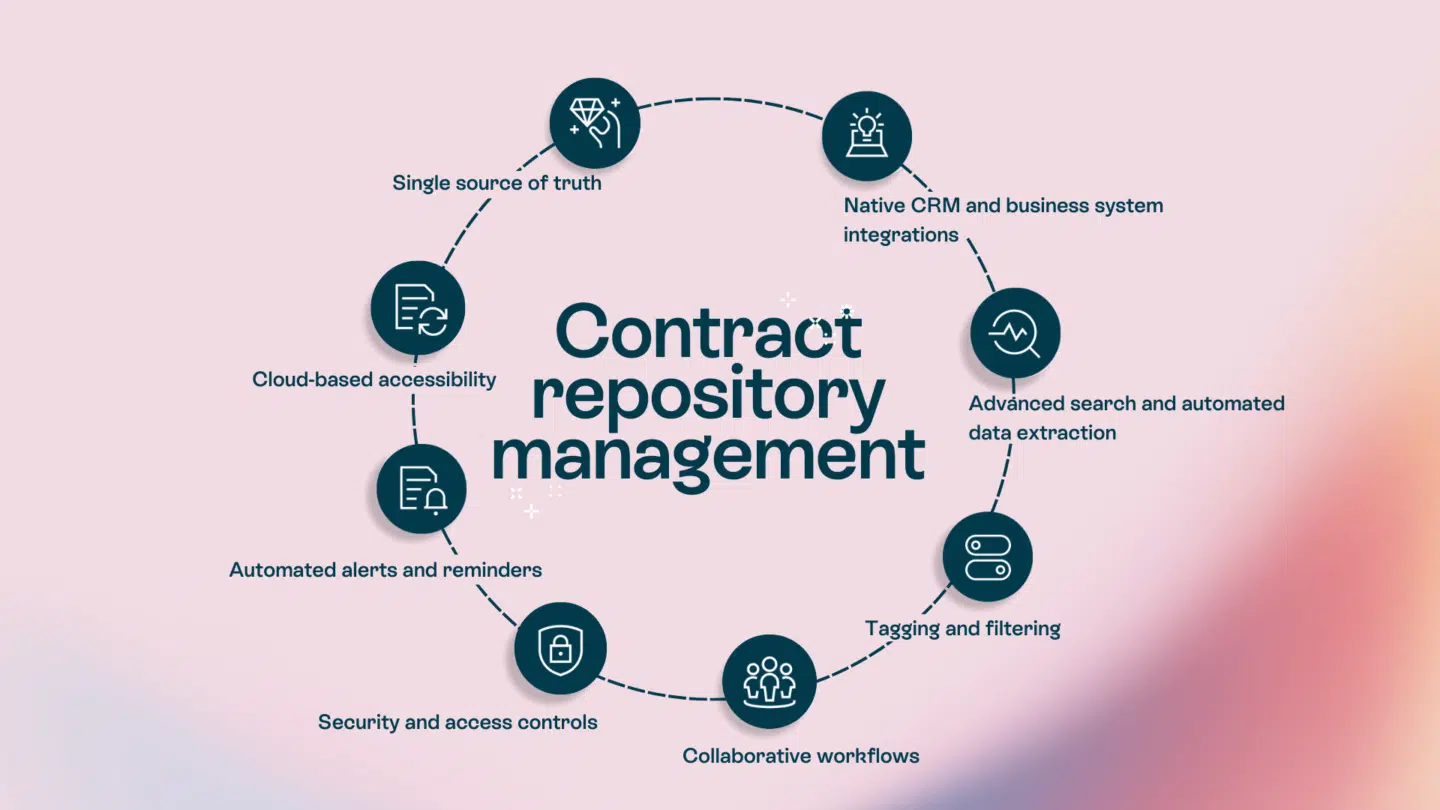
- Centralized contract repository: First, you need all your contracts in one place. Oneflow provides a single source of truth where every agreement lives, complete with version control and granular access management. No more hunting through email or shared drives. Every contract, amendment and related document—all searchable and accessible to the right people.
- AI-powered search: Once everything’s centralized, you need to actually find what you’re looking for. Tag contracts by type, department, risk level or any custom field that matters to your business. Filter by date ranges, counterparties or obligation types.
- Automated alert and reminder system: Here’s where contract compliance tracking gets proactive. Oneflow automatically notifies the right people at the right time. Renewal deadlines, deliverable due dates, payment schedules, regulatory reporting requirements—the system tracks it all and sends notifications through email, in-app alerts, or calendar integrations. No more manual tracking.
- Compliance reporting with AI: Oneflow’s AI flags issues and helps you understand patterns. Which vendors consistently miss deliverables? Which contract types generate the most compliance incidents? Where are your biggest risk exposures? The system helps you understand your compliance status at a glance and drill down into specifics when needed.
- Audit trail and documentation: Every action in Oneflow is logged: who viewed the contract, when amendments were made, who approved what, and when obligations were marked complete. During audits, you’re not scrambling to piece together what happened—you have a complete, tamper-proof record of the entire contract lifecycle.
- Risk assessment and issue detection: The AI actively scans for potential compliance risks, like non-standard clauses that deviate from your templates, missing required provisions or contractual relationships that might conflict. The system flags these issues before they become problems, identifying potential risks based on compliance protocols.
- Native CRM and business system integrations: Oneflow integrates directly with Salesforce, HubSpot, Microsoft Dynamics and other business and financial systems. Contract data flows automatically into your CRM, keeping it as your single source of truth while still giving you powerful contract management capabilities. No duplicate data entry, no sync issues, no disconnect between sales and legal.
- Collaborative workflows for compliance management: Managing contract compliance isn’t a solo job. Oneflow’s approval routing ensures contracts move through the right channels. Internal comments let teams discuss issues without cluttering the actual contract. Cross-team coordination happens in real-time, with everyone seeing the current status and their pending tasks.
- Security: All of this means nothing if your contract data isn’t secure. Oneflow provides bank-level encryption, SOC 2 Type II compliance, GDPR compliance, and granular access controls. You can learn more about Oneflow’s security measures here.
Poor contract management continues to cost companies 9% of their bottom line, and breaches with a noncompliance factor cost $174K more on average.
Using automated contract management solutions to increase contract accuracy and compliance, businesses might save a lot of their overall yearly expenditures just from better contract and financial compliance tracking.
Key performance indicators for contract compliance tracking
As the saying goes, you can’t improve what you don’t measure. Here are the metrics that help ensure regulatory compliance excellence and achieve your business objectives in the process.
| Metric category | KPIs | Why it matters |
|---|---|---|
| Obligation fulfillment | % of obligations met on time, Average days to fulfill | Measures performance against commitments and identifies patterns in execution. |
| Deadline management | Renewals tracked, Missed deadlines, Average response time | Prevents revenue loss and financial penalties from auto-renewals or missed notifications. |
| Compliance rate | Overall compliance score, Non-compliance incidents | Quantifies risk exposure and shows trends in compliance performance. |
| Financial impact | Contract value tracked, Savings realized, Penalty costs avoided | Demonstrates ROI of your compliance program to executives. |
| Vendor performance | SLA adherence rate, Quality scores, Issue resolution time | Drives accountability among suppliers and informs contract renewal decisions. |
| Audit readiness | Documents accessible, Audit prep time, Compliance gaps identified | Reduces audit stress and ensures you can respond quickly to regulatory inquiries. |
According to Deloitte’s comprehensive analysis of over 1,200 organizations, the average organization experiences 8.6% contract value erosion, with poor performers losing more than 20% of their contract value through inadequate data management.
That’s real money disappearing because organizations aren’t tracking the right things. The metrics above help you plug those leaks.
Best software tools for easier contract compliance tracking
Let’s look at five solutions that handle contract compliance tracking well. Each has different strengths depending on your needs, but all help transform contract compliance with automated risk mitigation and contract analysis.
Oneflow
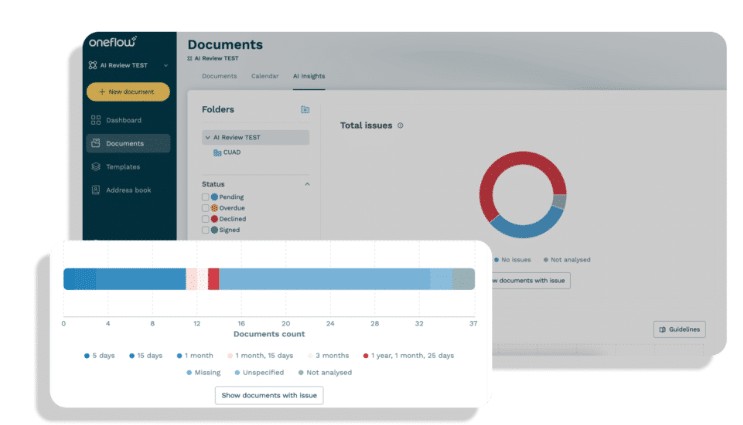
Oneflow stands out by combining proposal software, quoting software, and complete contract lifecycle management in one platform. Where traditional tools create static PDFs that lock your data away, Oneflow uses dynamic, live contracts with tagging, filtering and smart search options that two-way sync with your CRM.
The key differentiator for compliance tracking: Oneflow treats contract data as structured, actionable information from the moment a quote is created through the entire post-sign lifecycle. This means finance gets accurate invoicing data automatically, reducing revenue leakage. The platform includes AI-powered features for contract drafting and risk analysis, as well as electronic signatures and comprehensive audit trails.
For mid to large businesses focused on quote-to-cash software integration, Oneflow provides better value than specialized CPQ or CLM tools because you’re not maintaining duplicate product catalogs or wrestling with PDF bottlenecks. Try it now for better compliance and smoother contract-to-revenue.
Ironclad
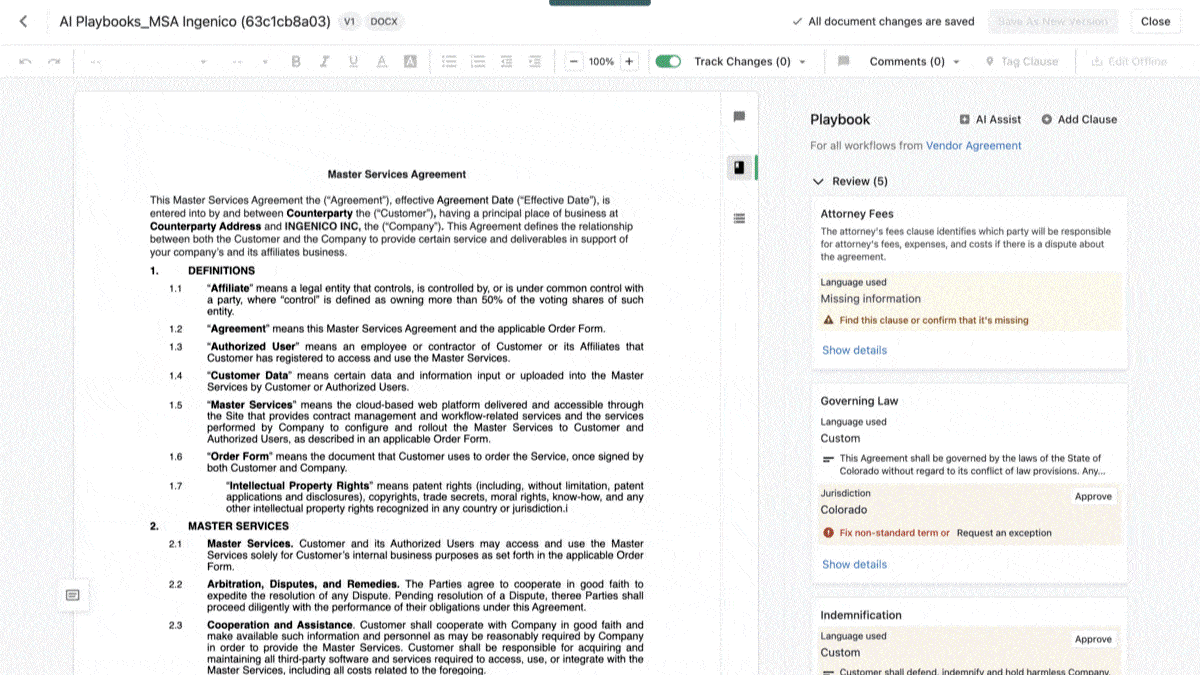
Ironclad is a digital contracting platform designed primarily for in-house legal teams at larger enterprises. It provides workflow automation, approval processes and data integration focused on legal operations.
The platform handles complex approval workflows well and integrates with various enterprise systems. However, it’s optimized for legal workflows rather than the quote-to-cash process, which can make it less ideal if you need deep CRM integration for sales and finance alignment.
Sirion
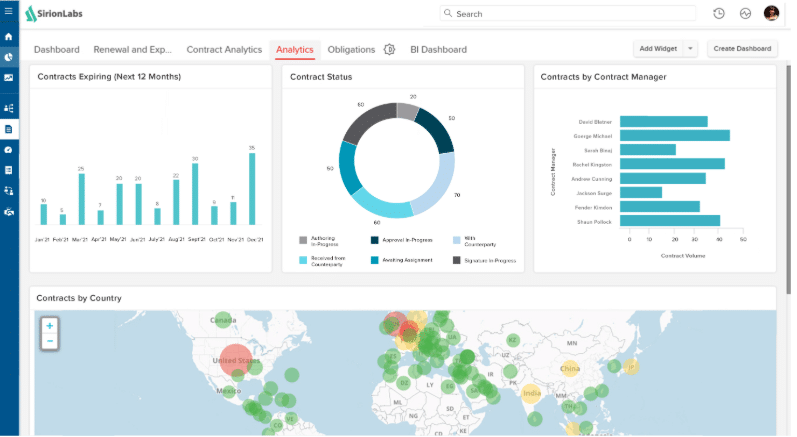
Sirion focuses heavily on post-signature contract management and obligation tracking. It’s particularly strong in vendor relationship management and complex compliance monitoring for large enterprises with thousands of supplier contracts.
The platform excels at tracking obligations and supplier performance but requires significant implementation time and typically serves Fortune 500 companies. The learning curve is steep, and the pricing reflects its enterprise focus.
House of Control
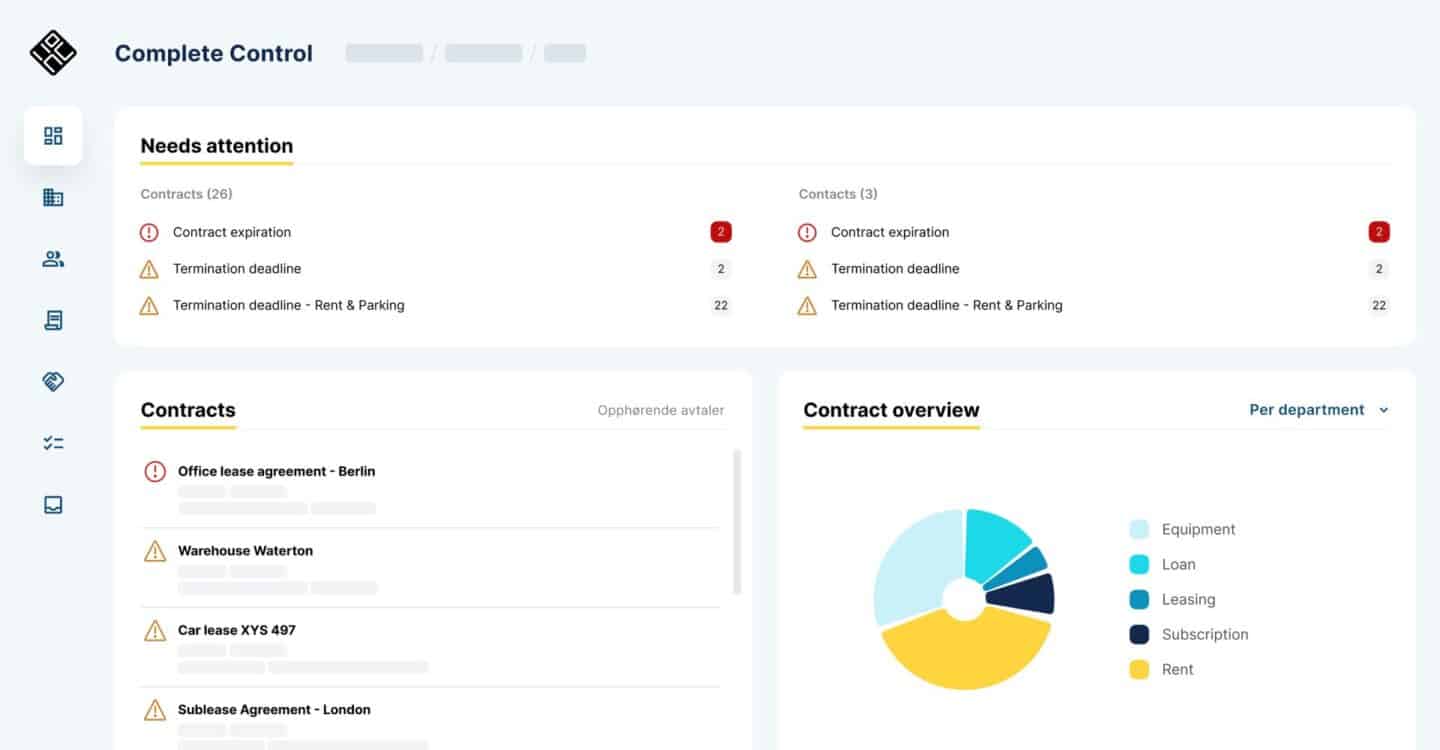
House of Control is designed specifically for managing supplier contracts and third-party compliance. It’s particularly popular in industries with heavy regulatory requirements like healthcare and financial services.
The tool provides detailed compliance checklists and audit trails. However, it’s more limited for the full contract lifecycle and doesn’t offer the proposal or quoting capabilities that many growing businesses need.
Icertis
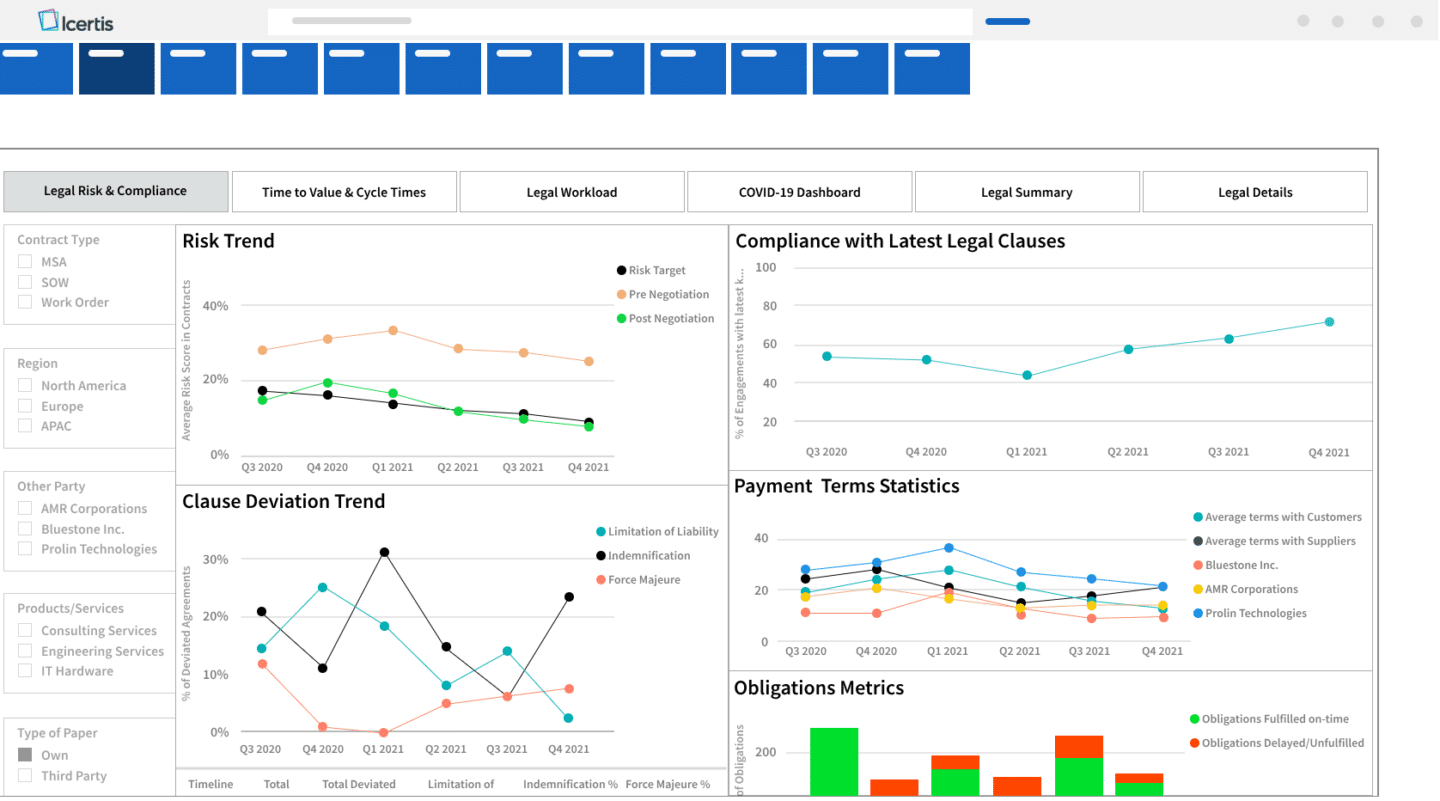
Icertis is an enterprise CLM platform with sophisticated AI capabilities and extensive industry-specific templates. It’s one of the more comprehensive solutions, handling everything from contract creation to compliance tracking at scale.
The trade-off: Icertis implementations typically take months and require dedicated resources. It’s a powerful solution for global enterprises, but it can be an overkill (and overpriced) for mid-sized businesses that need agility and faster time-to-value.
Transform compliance from burden to business advantage
Contract compliance tracking and reporting doesn’t have to be a defensive activity—something you do just to avoid penalties and audits. When done right, it becomes a strategic advantage.
Organizations that master compliance tracking gain real-time visibility into their entire contract portfolio. They identify opportunities to renegotiate unfavorable terms before auto-renewals hit. They catch vendor performance issues early and address them proactively. They have the data to make smarter decisions about which partnerships to deepen and which to exit.
Oneflow transforms compliance from scattered spreadsheets and manual reminders into a connected, intelligent system. With AI contract writing and review, automated workflows, smart search and deep CRM integration, your team can focus on strategy instead of constantly putting out administrative fires.
Ready to stop worrying about missed deadlines and start using your contract data as a competitive advantage? Try Oneflow and see how modern contract compliance tracking should work.
FAQs
What is the difference between contract compliance and contract management?
Contract management encompasses the entire contract lifecycle—from initial drafting and negotiation through execution, storage and eventual renewal or termination. Contract compliance is a specific component focused on ensuring all parties meet their contractual obligations throughout the lifecycle. Think of contract management as the big picture and compliance as the mechanism that ensures everyone does what they promised.
How often should you conduct regular compliance audits?
It depends on the contract’s complexity and risk level. High-value or high-risk contracts warrant continuous monitoring with automated alerts for key obligations and deadlines. For standard vendor agreements, monthly or quarterly reviews might suffice. The key is having a system that tracks everything continuously in the background and surfaces issues automatically, so you’re not relying on manual calendar reminders.
What are the biggest risks of poor contract compliance tracking?
Financial penalties from missed obligations, auto-renewals at unfavorable terms, revenue leakage from unbilled services, legal disputes from non-performance, regulatory fines for failing to meet compliance requirements, and damaged business relationships from inconsistent enforcement.
Can you enhance compliance tracking with automated contract workflows?
Yes, and you should. Modern contract automation tools handle most routine compliance tasks automatically: deadline tracking, obligation monitoring, performance data collection and report generation. The technology exists to free your contract managers from manual tracking so they can focus on strategic compliance decisions rather than administrative busywork.
.png?id=40edbc9ee25345a211152388fdcf1fd2)

.png?id=073897979970647cd034d6db96c145de)