The average business loses almost 8% of its annual revenue through poor contract management. For a company generating $100 million in revenue, that’s $8 million vanishing into thin air each year.
The problem? Most organizations treat contracts like static documents instead of living sources of business intelligence. Your agreements contain pricing patterns, renewal opportunities, risk indicators and compliance requirements that could inform better decisions—but only if you can actually extract and analyze that data.
Contract management analytics changes this equation. Instead of storing agreements in filing cabinets (physical or digital) and hoping nothing goes wrong, you gain real-time visibility into what your contracts actually say and what they mean for your business.
In this guide, you’ll find out what contract management analytics actually does, how to implement it without requiring a PhD in data science, and discover the top contract analysis software you can implement right away.
What is contract management analytics?
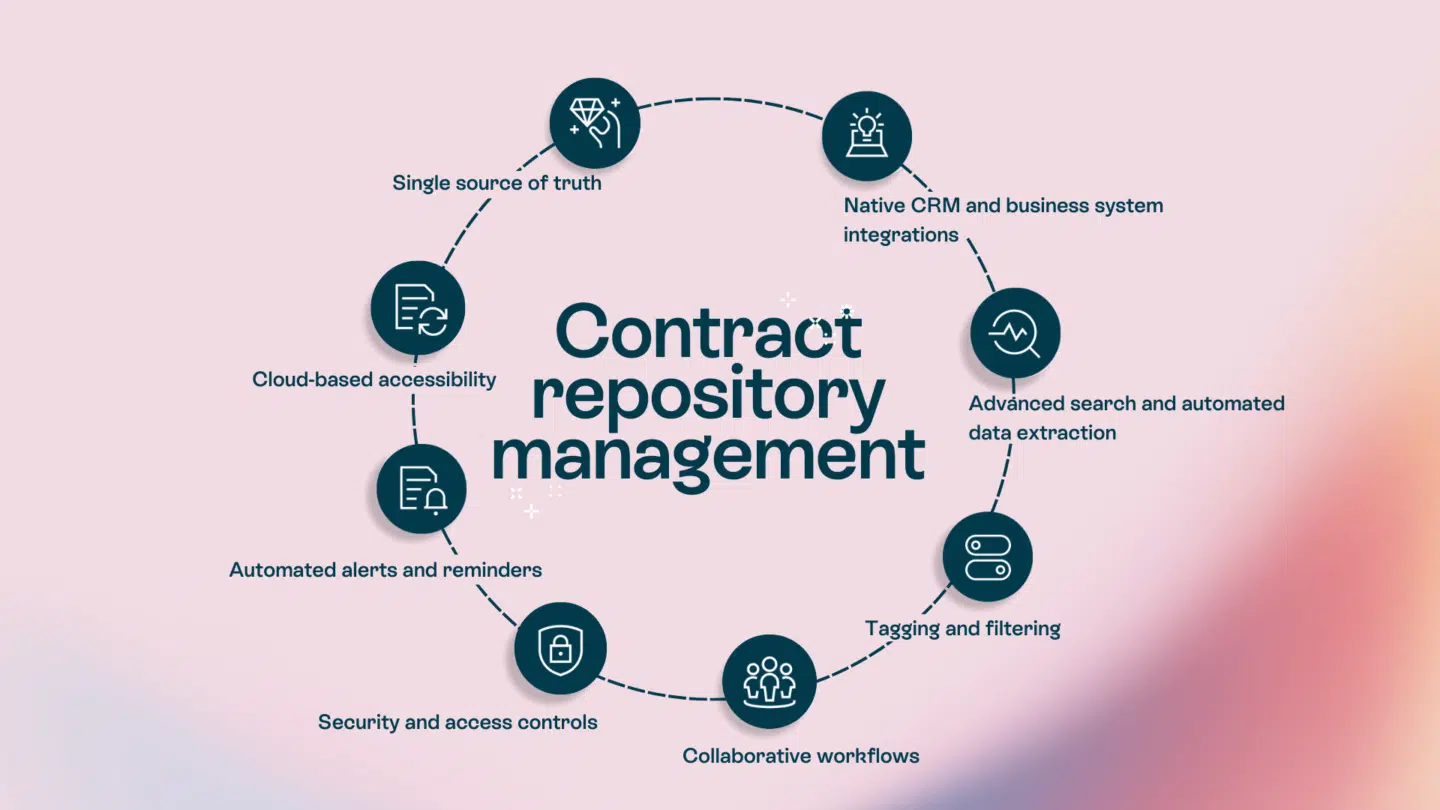
Contract management analytics uses artificial intelligence, machine learning and natural language processing to automatically extract, organize and interpret data from your contracts. Instead of manually reviewing agreements one by one, the technology reads through thousands of contracts in minutes, identifying key terms, obligations, risks and opportunities. Tags and interlinking make smart search possible, helping you group and find crucial information in seconds. When the contract management process is extended to post-sign archiving and linked to your CRM, it serves as a single source of truth.
Think of it as the evolution from passive storage to active intelligence. Traditional contract management software helps you organize documents, track signatures and set renewal reminders. Contract analytics goes several steps further—it understands what’s actually written in those contracts and translates legal language into actionable business data.
Here’s what makes contract analytics different from basic contract management software:
| Basic contract management | Contract management analytics |
|---|---|
| Stores contracts in a centralized repository | Extracts structured data from unstructured contract text |
| Tracks key dates and milestones | Identifies patterns and trends across contract portfolios |
| Manages approval workflows | Analyzes risk scores and compliance rates |
| Provides document search | Smart search with folders, tags, filters, linking, reminders and downloads |
| Supports electronic signatures | Enables data-driven negotiation strategies |
The shift happened because contract volumes exploded while legal teams stayed the same size. 31% of surveyed organizations that leverage AI in contract management reported achieving significant cost savings.
Contract data exists in two forms: structured and unstructured. Structured data includes fields like contract value, start date and party names—information that fits neatly into spreadsheets. Unstructured data is everything else: the actual contract language, clauses, payment terms and obligations buried in paragraphs of legal text. Advanced contract analytics excels at converting unstructured contract text into structured data that business teams can actually use.
Why does this matter? Three reasons: First, contract complexity keeps increasing as business relationships become more sophisticated. Second, regulatory requirements demand better compliance tracking and audit trails. Third, companies finally recognize that contract data extraction isn’t just a legal department problem—it’s a strategic business opportunity.

Oneflow approaches this differently than most platforms. Because Oneflow creates truly digital contracts (HTML-based rather than PDFs), the platform generates cleaner, more structured data from the start. This means easier tagging, smarter filtering, more effective search capabilities and a universal archive where contract metadata is already organized for analysis. When your contracts are born digital instead of converted from static documents, contract analytics becomes significantly more accurate and actionable, helping with potential risk management.
Key benefits of contract analytics solutions
Here’s what actually changes when you implement these advanced technologies in contract analytics:
- Accelerate contract velocity and decision-making: Contract review bottlenecks cost you deals. When sales teams wait days or weeks for legal approval, competitors close faster. “In a slowing economy, contract analytics’ importance is growing, because it can help speed up contract processes, reveal risks, and identify renegotiation opportunities,” explains Dian Zhang, Senior Research Principal at Gartner. AI-powered contract analytics can help you complete contract reviews fast, identifying potential risks before they become deal-breakers.
- Proactive risk management: Hidden contract risks lurk in inconsistent language, missing clauses and unfavorable payment terms. Natural language processing enables proactive management of these risks by automatically flagging non-standard provisions, unusual liability terms and compliance gaps across dozens of executed contracts. You catch problems before they create financial or legal exposure.
- Unlock hidden revenue opportunities: Your existing contracts probably contain money you’re leaving on the table: auto-renewal clauses you forgot about, price escalation terms that haven’t been enforced, volume discounts that weren’t applied. Tools for contract analytics solve this issue by surfacing these opportunities by analyzing contract performance against business objectives and identifying where renegotiation could increase contract value.
- Ensure regulatory compliance and audit readiness: Compliance requirements change constantly, and manual contract tracking can’t keep pace. Contract analytics technology monitors contractual obligations in real time, automatically checking compliance requirements across your portfolio. When auditors come knocking, you can instantly generate reports showing compliance rates, obligation fulfillment and complete audit trails.
- Drive cost optimization and operational efficiency: Contract processes eat up valuable time across multiple business teams. According to research tracking AI adoption trends, 35% companies using AI have seen an improvement in contract review accuracy. Automation reduces manual effort, minimizes errors and frees up your team to focus on strategic work instead of administrative tasks.
The ROI is significant. A typical Fortune 500 organization processing 10,000+ contracts annually can expect an ROI of 300-500% within the first year when implementing comprehensive AI-driven contract data analysis tools.
Key metrics and KPIs for contract analysis
Measuring contract performance requires tracking the right metrics. Here’s a practical reference guide for the key performance indicators that matter most:
| Category | KPIs | Why it matters |
|---|---|---|
| Cycle time metrics | Time to signature, approval bottlenecks, negotiation duration, contract turnaround time | Direct impact on sales velocity and operational efficiency. Faster cycles mean revenue comes in sooner and business relationships start on schedule. |
| Financial metrics | Total contract value, revenue per contract, savings captured, cost per contract, value leakage prevention | Quantifies business impact and demonstrates ROI. These numbers connect contract lifecycle management directly to your bottom line. |
| Risk & compliance | Risk scores, compliance rate, obligation fulfillment, clause deviation rate, audit readiness | Protects your organization from legal liability, regulatory penalties, and reputation damage. Contract clauses that don’t meet standards create exposure. |
| Operational efficiency | Contracts created per month, template usage rate, auto-renewal capture rate, amendment frequency | Measures process maturity and identifies areas for improvement. High template usage indicates standardization; low amendment rates suggest better initial drafting. |
| Engagement metrics | Contract views, time spent reviewing, stakeholder participation, approval delays, negotiation touchpoints | Indicates friction points in your contract workflows. When stakeholders spend excessive time reviewing or approvals consistently delay, you’ve found your bottleneck. |
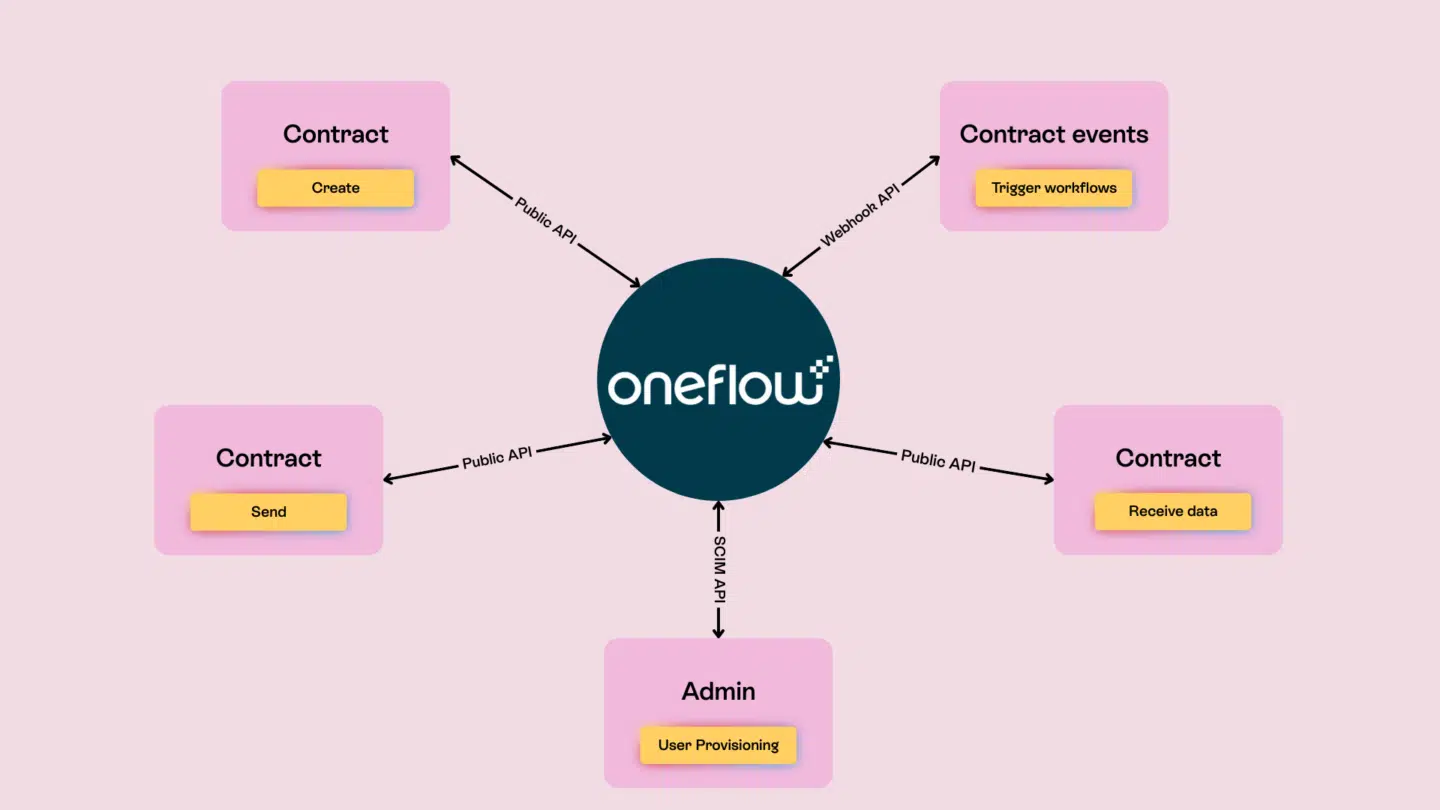
Oneflow makes your contracts the single source of truth by connecting bi-directionally with your CRM like HubSpot or Salesforce. The platform includes a calendar view for tracking critical dates, AI-powered insights for risk analysis and compliance reports, and automated tracking of expiration and renewal dates. Contract metadata feeds directly into analytics dashboards, giving you visibility across your entire portfolio.
This matters because contract data analysis only works when you’re measuring what actually drives business outcomes. Tracking dozens of vanity metrics feels productive but delivers little value. Focus on the KPIs that align with your strategic and competitive advantage.
Top contract management analytics software solutions
The contract analytics market includes both specialized point solutions and comprehensive platforms with built-in analytics capabilities. Here are our top five solutions worth considering.
Oneflow
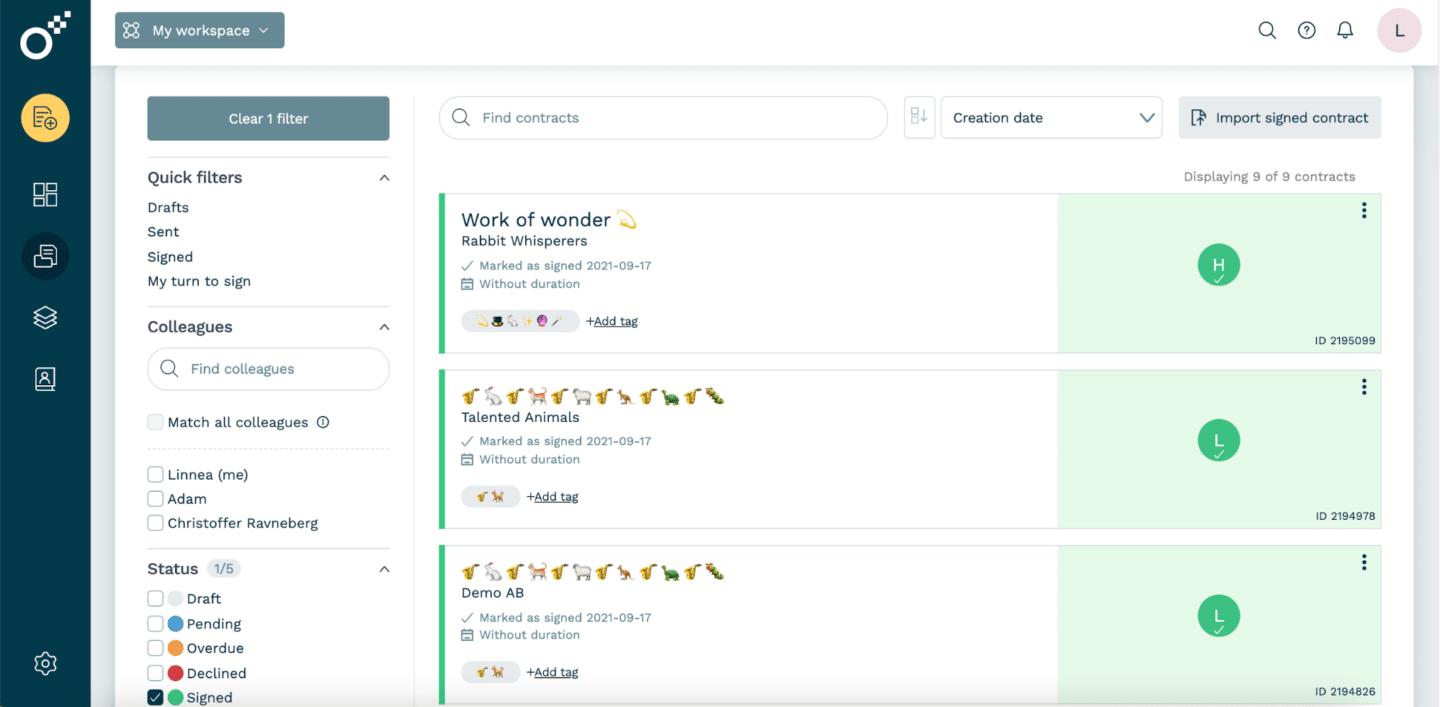
Oneflow delivers end-to-end contract management with analytics built into a truly digital platform. Unlike PDF-based systems, Oneflow creates HTML contracts that generate structured data from the moment of creation—no optical character recognition or complex data extraction needed.
Key differentiators include AI-powered risk analysis that automatically flags potential issues, bi-directional CRM integration that keeps your quoting software and sales data synchronized, and post-signature analytics that track contract performance over time. The platform combines proposal software capabilities with contract analytics in a single workflow, particularly valuable for quote-to-cash processes where contract data needs to flow directly into billing systems.
Oneflow’s AI assistant provides instant insights into contractual obligations, identifies compliance gaps and recommends optimizations based on your contract portfolio. The calendar view and automated alerts ensure no renewal dates or key milestones slip through the cracks. Try Oneflow to experience how digital-first contracts transform analytics accuracy.
ContractPodAi
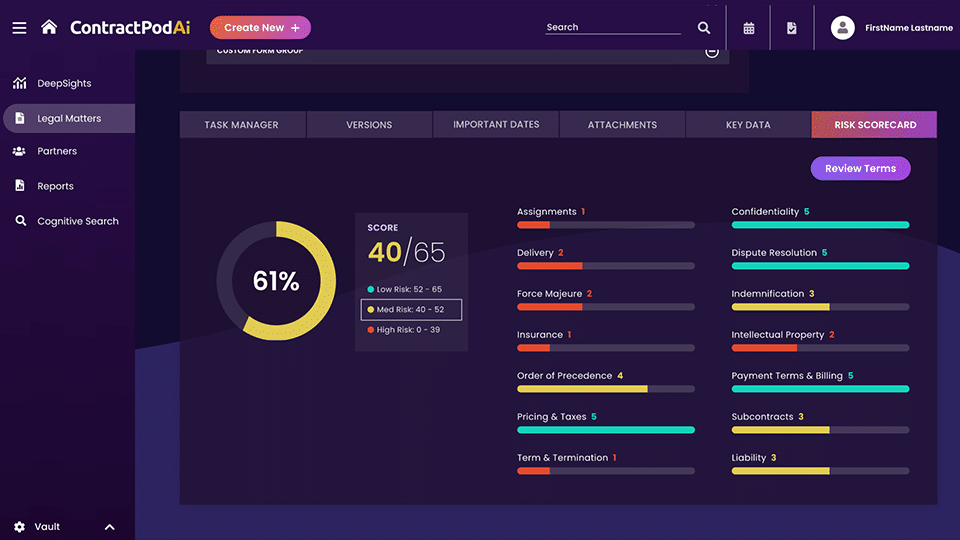
ContractPodAi specializes in contract lifecycle management with strong generative AI capabilities. The platform combines traditional CLM functionality with advanced contract analytics solutions powered by natural language processing and machine learning. Legal teams use it to extract key data points from legacy contracts and generate precedent-based analysis.
The AI engine analyzes contract language for risk exposure, non-standard clauses, and deviation from playbook templates. ContractPodAi excels in complex enterprise contracts where legal operations need sophisticated clause libraries and detailed contract analysis capabilities.
CobbleStone Software
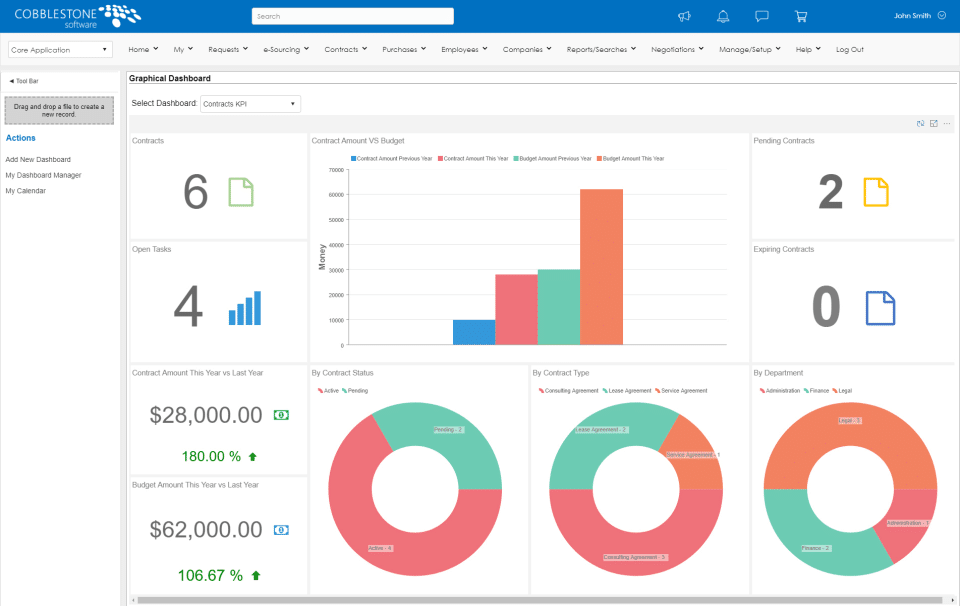
CobbleStone Contract Insight offers extensive contract analytics technology alongside traditional contract management features. The VISDOM artificial intelligence module provides automated contract review, intelligent searching across contract portfolios, and risk identification based on configurable business rules.
The platform handles high contract volumes effectively and includes comprehensive reporting tools for tracking contract performance. CobbleStone’s strength lies in its configurability—organizations can customize analytics dashboards, risk scoring models and obligation tracking to match specific business objectives.
Icertis
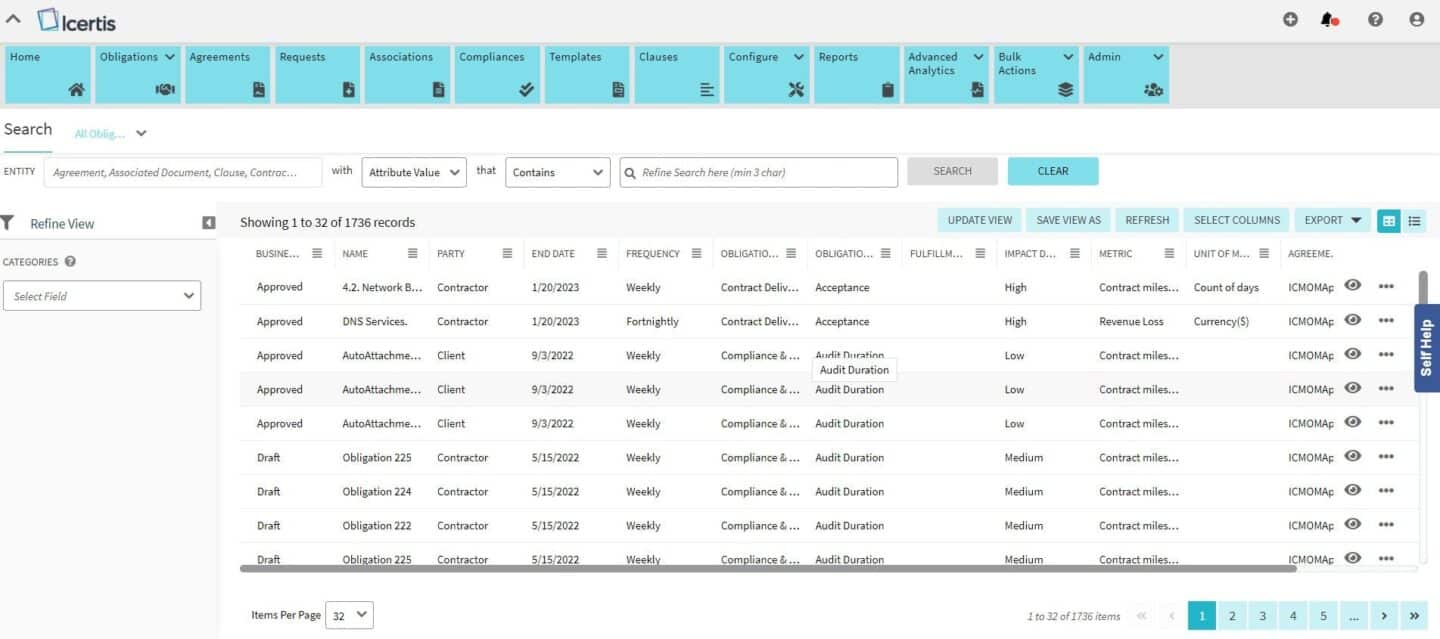
Icertis Contract Intelligence (ICI) transforms contracts from static documents into strategic assets through advanced contract analytics. The platform specializes in enterprise-scale deployments across multiple countries and languages, making it suitable for global organizations managing complex agreements.
ICI’s analytics engine extracts structured data from unstructured contract text, monitors key dates and provides business intelligence across the entire contract lifecycle. The platform integrates with existing systems, including ERP and CRM platforms, enabling contract data to flow into broader data analytics tools and operational efficiency initiatives.
Conga
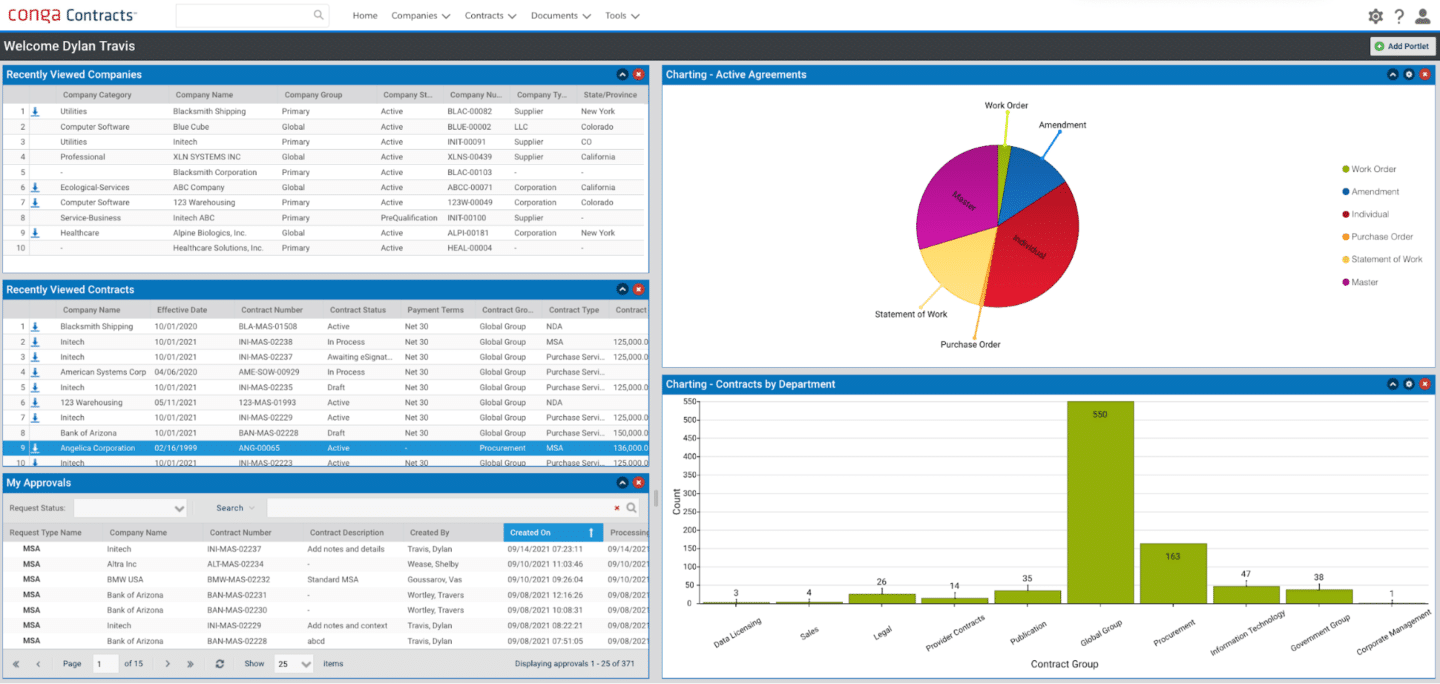
Conga brings contract analytics into a broader revenue lifecycle management platform that spans configure, price, quote, contract management and subscription services. This integration makes it particularly effective for organizations where contract data needs to connect directly with pricing strategies and recurring revenue management.
The analytics capabilities focus on revenue opportunities, identifying upsell potential, tracking renewal rates, and analyzing payment terms across customer contracts. Conga’s reporting tools provide visibility into how contract terms affect overall business performance and revenue growth.
Your next step with contract data that accelerates business
Contract management analytics isn’t optional anymore—it’s become fundamental to staying competitive. When your competitors can analyze thousands of contracts in minutes while your team manually reviews agreements one at a time, you’re not only slower, but also blind to risks, missing revenue opportunities and leaving strategic decisions to guesswork instead of data.
The technology has matured. Implementation takes weeks instead of months. And the ROI shows up fast when you start preventing value leakage, accelerating contract velocity and making informed decisions based on actual contract performance.
Oneflow combines digital contracts, e-signatures and analytics in one platform purpose-built for modern business needs. Whether you’re looking to replace outdated systems or finally gain visibility into your contracts, Oneflow delivers the insights you need without the complexity you don’t. Try Oneflow and discover what happens when your contracts become your competitive advantage.
FAQs
What is the difference between contract management and contract analytics?
Contract management focuses on organizing, storing and tracking contracts through their lifecycle—basically the operational side of handling agreements. Contract analytics goes deeper by extracting and analyzing data from those contracts to generate actionable insights. Think of contract management as filing your contracts properly, while contract analytics reads them and tells you what they mean for your business. Most modern platforms combine both capabilities, but contract analytics specifically requires AI, natural language processing (NLP), and machine learning to transform contract language into structured data.
How does AI improve contract analytics accuracy?
AI-powered contract analytics eliminates the human error and inconsistency that comes from manual review. Natural language processing understands contract terms and context, not just keywords, so it can identify similar clauses written in different ways. Machine learning improves over time by learning from corrections and patterns across thousands of analyzed contracts. For specific tasks like clause identification and risk scoring, AI has demonstrated 35% improvement in accuracy compared to manual methods, according to industry research. The technology also works 24/7 without fatigue, maintaining consistent quality regardless of contract volumes.
How long does it take to implement contract analytics software?
Implementation timelines vary based on contract volumes, system complexity and data quality. For organizations with clean, digitized contracts, basic implementation might take 4-8 weeks. Companies dealing with legacy contracts, complex integrations or large contract portfolios should expect 3-6 months. The key factors affecting timeline include: data migration from existing systems, integration with CRM and ERP platforms, customization of analytics rules and dashboards and team training on the new platform.
How does contract analytics help with regulatory compliance?
Contract analytics monitors contractual obligations automatically across your entire contract portfolio, flagging potential compliance issues before they become problems. The technology tracks changing compliance requirements against existing contract terms, identifies contracts that need amendments and generates audit trails showing when obligations were reviewed and by whom. For industries with strict regulatory oversight—healthcare, financial services, government contracting—this automated compliance tracking reduces the risk of penalties and makes audits significantly less painful. The system can also ensure contract negotiations include required clauses and meet current regulatory standards.
.png?id=40edbc9ee25345a211152388fdcf1fd2)

.png?id=073897979970647cd034d6db96c145de)