A signed contract can contain a costly term that the business never sees. If a supplier agreement renews automatically unless notice is given 60 days in advance, but the clause is buried in an unstructured PDF, it may remain invisible until the cancellation window has passed.
This is the problem contract intelligence software addresses: it interprets contract language and turns dates, obligations, prices and risks into searchable data. The key difference between contract intelligence platforms is what happens after that information is found. Some tools stop at extraction or analysis, while others connect the surfaced data with owners, workflows and business systems so teams can act on it.
What is a contract intelligence platform?
Contract intelligence software uses AI to interpret agreement content and convert relevant terms into structured data. Machine learning and natural language processing (NLP) help the system recognize meaning beyond exact keyword matches. Some platforms also use OCR to convert scans and image-based PDFs into machine-readable text.
The category includes three overlapping product types:
- Embedded in CLM: Some contract lifecycle management platforms combine lifecycle workflows with contract intelligence. The CLM platform manages creation, review, approval, signing and post-sign work, while the intelligence features examine the content of individual contracts and provide insights into the contract portfolio as a whole.
- Repository and portfolio intelligence: These products ingest agreements from repositories or shared drives, structure key terms, and let teams search across the portfolio, compare clauses and commercial terms between agreements and create reports.
- Specialist contract-analysis tools: These focus on narrower tasks such as clause extraction, due diligence, contract review or metadata capture. Results may remain inside the tool or be exported or synchronized with another system.
How does contract intelligence work?
Regardless of product type, the process can be divided into four stages:
- Bring contracts into the system. Agreements are created in the platform or imported from existing files, repositories and connected systems.
- Interpret and structure the contract data. The software identifies information such as parties, dates, commercial terms, clauses and obligations, then stores relevant results as searchable fields or metadata.
- Analyze the agreements. Users can search individual contracts or the entire portfolio and, where supported, check language against internal policies and playbooks during contract review.
- Review the findings. Users can review the results and decide on follow-ups. Platforms with workflow or integration capabilities can also trigger alerts, tasks, approvals or system updates.
What are the benefits of contract intelligence?
When contract data is accurate and current, contract intelligence can provide:
- Commercial visibility: Bring pricing, payment terms, discounts and contract values into a searchable view, helping teams understand the revenue, spend and other financial commitments across active agreements.
- Timely post-sign control: Surface renewal dates, notice periods and contractual obligations before action is due.
- More consistent review: Review contract terms against set-up playbooks.
- Less manual administration: Tools with strong integrations allow contract data to sync to CRM, finance or procurement systems and support the quote-to-cash process without manual effort, costly delays or mistakes.
Contract intelligence software compared
Which is the right product for you depends on what your teams need to learn from their contracts and which business processes the software must support. The comparison below shows each platform’s main use case and its contract intelligence capabilities.
| Tool | Best for | Key contract intelligence capabilities | Capterra rating |
|---|---|---|---|
| Oneflow | Creating, signing and analyzing contracts in one platform, with two-way data sync for supported CRMs | Dynamic contracts; two-way CRM sync; content search; AI summary extraction, review and portfolio-level analysis; document reminders | 4.6 |
| Icertis | Centrally governed analysis of large enterprise contract portfolios, including agreements outside the CLM repository | AI summaries and questions; playbook-based risk flags; semantic and keyword search; portfolio agents; external repository ingestion | 4.3 |
| Sirion | Managing obligations, monitoring SLA compliance and validating invoices after signature | Extraction Agent for 1,200+ fields; AskSirion search and actions; obligation and SLA tracking; four-way invoice matching | N/A |
| Ironclad | Configurable legal workflows with repository intelligence and AI-assisted drafting | Smart Import and OCR; natural-language repository search; Intake Agent; Jurist; contract relationships; workflow and portfolio reporting | 4.4 |
| Workday Contract Intelligence | Analyzing mixed collections of contracts and related documents from multiple repositories | AI and OCR ingestion; Ask AI answers with source links; pre-built and custom models; dashboards, reports and integrations | 4.8 |
| LinkSquares | Legal-led repository intelligence with optional pre- and post-signature workflows | Smart Values extraction; context-aware search; Smart OCR; portfolio dashboards, reports and alerts | 4.3 |
| Conga CLM | Organizations that need to standardize complex contract processes across multiple teams and agreement types | AI extraction and validation; configurable provisions and risk analysis; AI summaries; Search Agent; reports and alerts | 4.3 |
| Docusign CLM and IAM | Agreement intelligence alongside Docusign e-signature and workflow automation | Agreement Manager; search by attributes, keywords and related terms; custom extraction; AI-Assisted Review; renewal and obligation management | 4.5 |
Oneflow
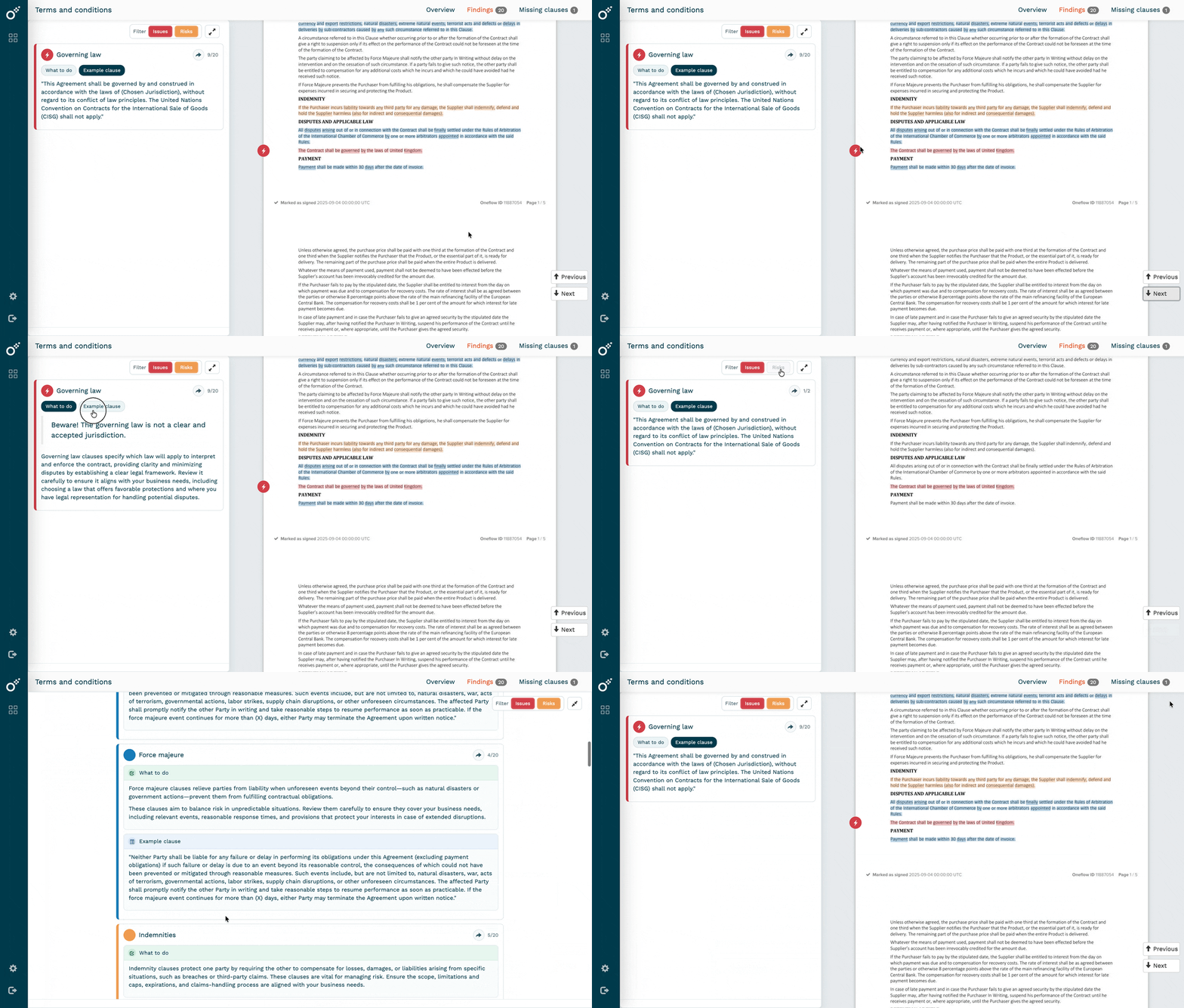
Oneflow is a contract lifecycle management platform for creating, negotiating, signing and managing agreements. Its contract intelligence capabilities focus on analysis: AI Review and AI Summary work with individual agreements, AI Extract structures information from imported documents and AI Insights analyzes contracts across a portfolio.
For contracts created in Oneflow, information entered into data fields and product tables remains structured as the agreement is negotiated, signed and managed after signature. Supported CRM integrations can keep customer, product and pricing data aligned. Imported agreements are stored in the same contract database, creating one searchable portfolio for new and legacy contracts. This reduces manual handoffs between sales, finance, procurement, legal and operations while improving control over renewals, obligations and other post-sign work.
Key features:
- Dynamic contracts and controlled workflows: Teams work in live, browser-based agreements that remain editable after sending. Templates, inline comments, approvals, electronic signatures and audit trails support faster negotiation without losing governance or version clarity.
- Connected CRM data: Supported CRM integrations let teams create Oneflow contracts from CRM records and populate mapped fields with CRM data. If those values change during negotiation, the final agreed values can be synced back to the corresponding CRM properties after signing.
- Portfolio search and summaries: Content Search helps you find contracts with specific clauses and terms such as renewal dates, notice periods and pricing. AI Summary generates a customizable overview of an individual agreement, including the most relevant terms and obligations.
- AI extraction, review and portfolio analysis: AI Extract captures details such as participants, contract duration and sign date from uploaded agreements. AI Review compares individual contracts with predefined legal guidelines, while AI Insights analyzes contracts in bulk for portfolio-level analysis and risk and compliance patterns.
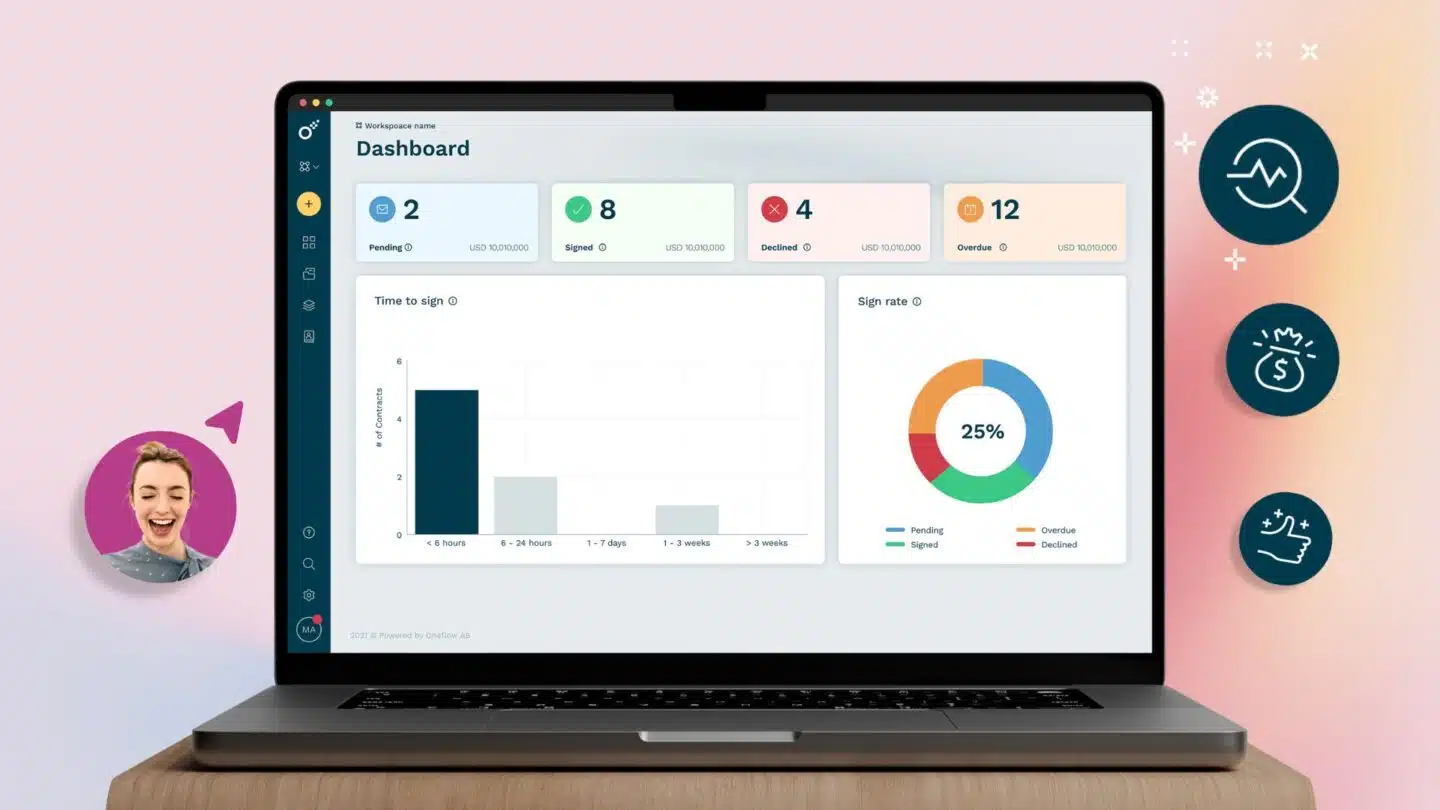
- Post-sign control: The Document List, lifecycle rules, reminders and contracts dashboard help teams monitor renewals, notice periods, obligations and portfolio activity.
Price: Business starts at $58 per user per month, with a five-user minimum and annual billing. This includes approvals, lifecycle management, e-signature, AI Extract, AI Summary and Write with AI. Enterprise packages add further intelligence features and account-level controls.
Before adopting Oneflow, Knowit’s contract process took several days. The same work now takes just a few hours, with real-time status visibility and automatic reminders. To see how Oneflow could support your own contract processes, book a demo.
Icertis
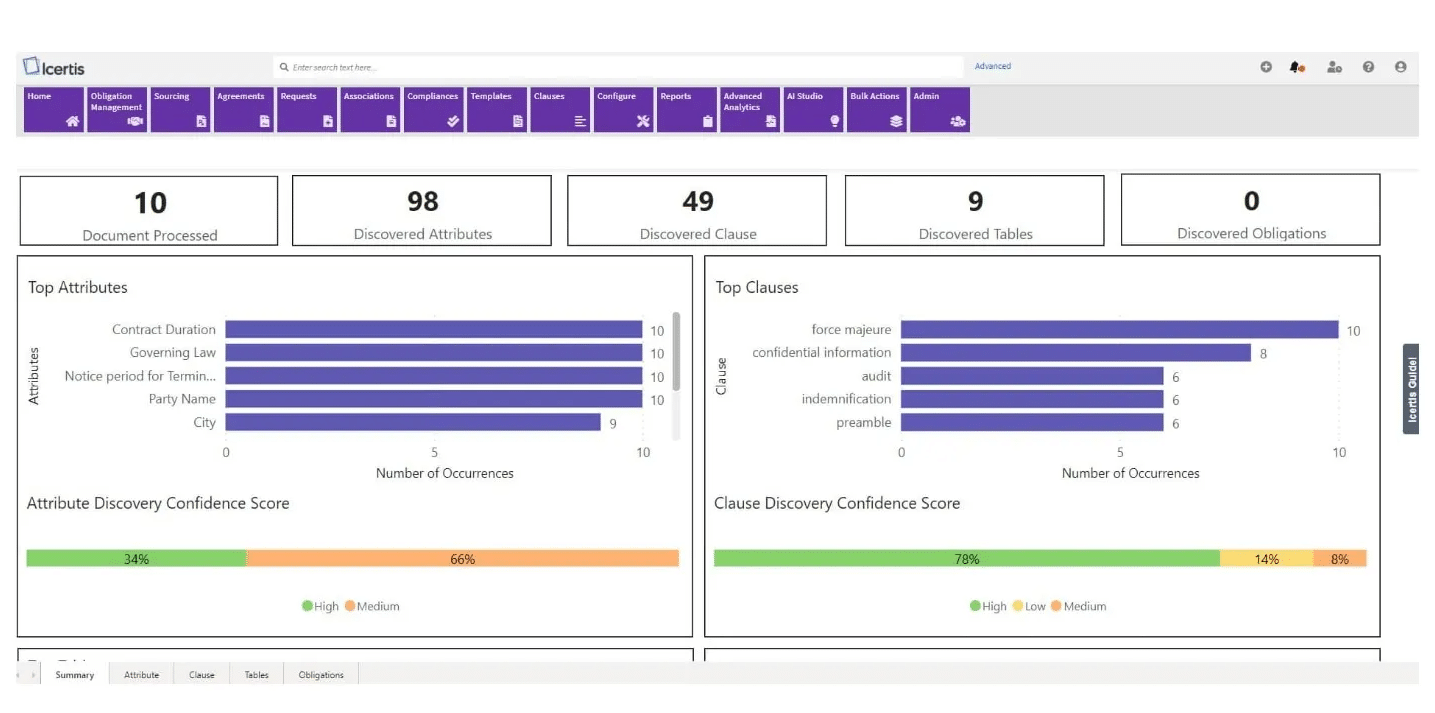
Icertis provides contract intelligence through Vera Analytics Standard and Advanced. Standard supports agreement summaries, natural-language questions and playbook-based risk assessment. Advanced expands the analysis across larger portfolios and can ingest agreements stored outside Icertis CLM. This setup suits enterprises that want legal, procurement and finance teams to access contract insights under centrally managed rules and permissions.
Key features:
- Agreement analysis: Vera Analytics Standard provides AI-generated summaries, natural-language questions and search. Summaries highlight obligations, commercial terms and risk indicators, while answers include supporting contract details.
- Playbook-based risk assessment: Standard identifies deviations from configured playbooks and categorizes them using risk flags. Dashboards and visualizations help users review contract risks, performance and key attributes.
- Enterprise portfolio analysis: Vera Analytics Advanced adds semantic and keyword search, AI agents, a prompt builder, a report builder and ingestion from shared drives or other repositories. It supports portfolio-level analysis of obligations, amendments, financial exposure and risk patterns.
- Continuous portfolio insights: Vera Insights Agent continuously analyzes agreements to surface risks, obligations and opportunities, including clause deviations, compliance requirements, pricing protections and performance commitments.
- Controlled business access: Role-based permissions restrict users to contract data relevant to their responsibilities.
Price: Icertis does not publish plan prices.
Sirion
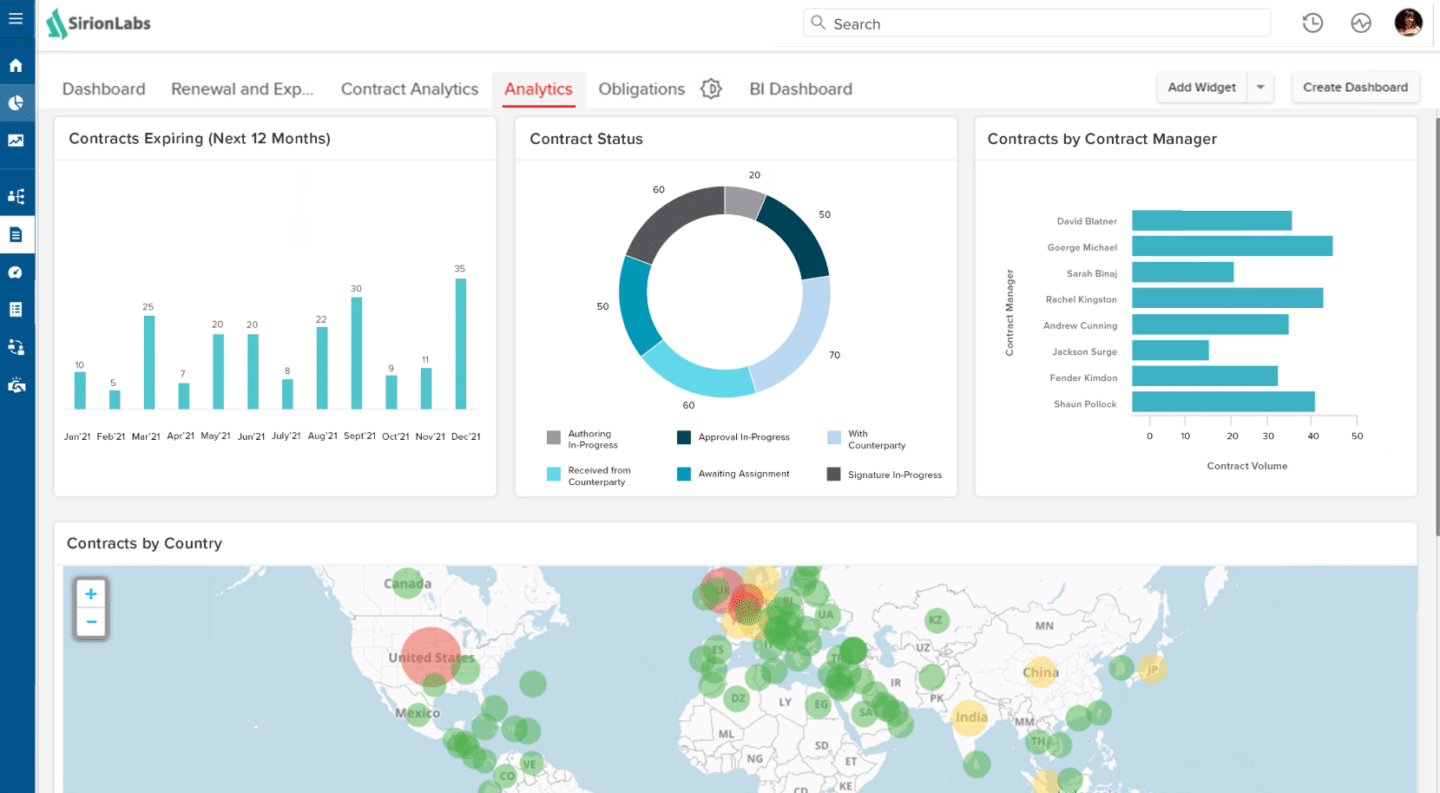
Sirion extracts and organizes agreements, supports drafting and negotiation, and uses extracted contract data to track obligations, monitor SLA performance and validate invoices after signature. AskSirion lets users investigate individual agreements or the entire repository and turn findings into workflows or alerts.
Key features:
- Extraction and data validation: Sirion’s Extraction Agent captures metadata fields and can interpret tables, signatures, logos, images, service levels and rate cards. Users can also create metadata models without code, route extracted data for human review, and export validated results to downstream applications.
- Source-linked contract intelligence: AskSirion can answer questions about contracts, summarize terms and clarify legal language, with references to the relevant source text. Portfolio findings can be presented through dashboards and reports.
- Conversational workflows: AskSirion can also initiate a draft, send a contract for approval or signature and create alerts from natural-language prompts.
- Post-sign performance management: Sirion Manage tracks obligations, milestones, deliverables and regulatory requirements.
- Invoice controls: Sirion can combine invoice and purchase-order data from systems such as SAP S/4HANA or SAP Ariba with service-performance data from ServiceNow or Remedy. It compares this information with contract pricing and SLA commitments to flag billing discrepancies and calculate credits or earnbacks, supporting contract performance management.
Price: Sirion does not publish pricing.
Ironclad
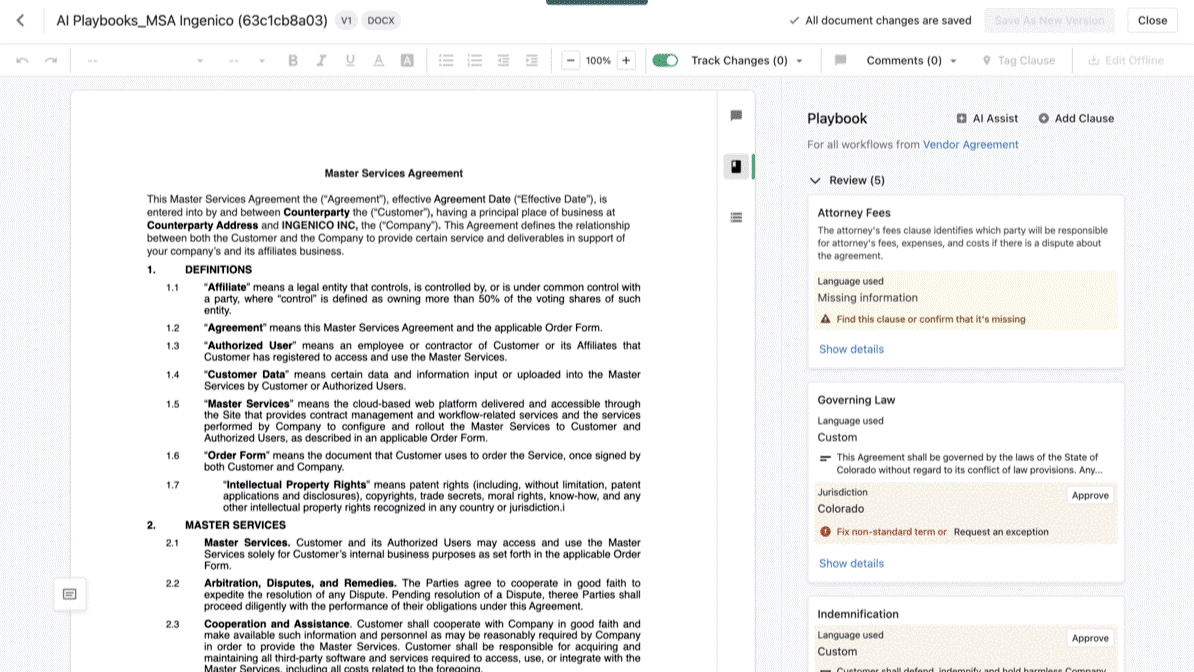
Ironclad combines configurable contract workflows, repository management and AI tools. Agreements move through review, approval and signature into a repository record that retains the documents, properties and workflow history. Smart Import helps you add contracts created elsewhere, giving teams one repository for search, renewal analysis, counterparty context and reporting.
Key features:
- Legacy contract ingestion: Smart Import supports bulk uploads, applies OCR and uses AI to suggest metadata and clause types.
- Repository intelligence and agentic workflows: Ironclad Assistant lets you search the repository using natural language. The Intake Agent reads contracts and pre-fills workflow launch forms. The dashboard shows you approaching deadlines, notice periods, contract values and cost-saving tips for vendor agreements.
- Legal drafting and review: Ironclad AI includes Jurist for drafting, editing, summarizing, researching and redlining documents. It works inside Ironclad workflows and connected Microsoft Word, with suggestions informed by playbooks, approved standards and historical negotiation positions.
- Counterparty and contract relationships: Each counterparty gets a profile linked to its contracts and obligations. Users can also map parent-child relationships between entities and review the relevant contract family in context.
- Contract and process reporting: Ironclad Insights combines workflow metrics with contract properties. Users can drill down from a chart into the underlying workflows or repository records.
Price: Ironclad does not publish plan prices.
See also: Ironclad alternatives.
Workday Contract Intelligence
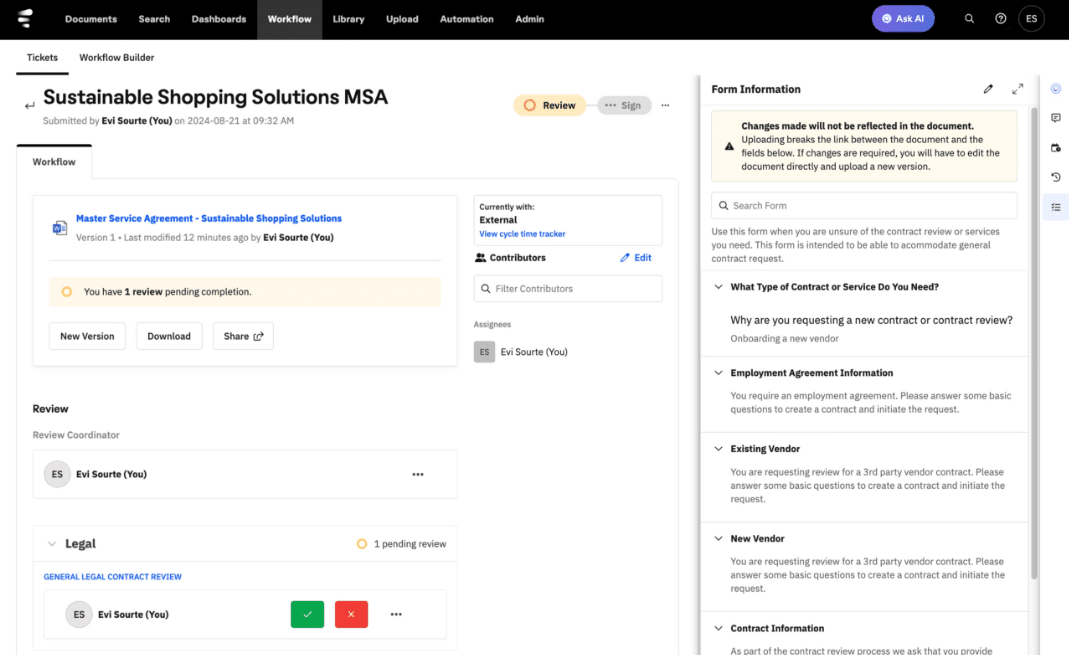
Workday Contract Intelligence brings signed agreements and related documents from multiple repositories into a single analysis layer. It can synchronize content from Box, SharePoint, Salesforce and other CLM systems, then organize the extracted data in dashboards. Users can ask questions across the portfolio or within a single document and trace answers to metadata, clauses and source text.
Key features:
- Mixed-document ingestion: AI and OCR analyze contracts and documents such as purchase orders, statements of work or invoices. It can enhance poor-quality scans, read handwriting and recognize different contract types and languages.
- Answers with sources: Ask AI lets users ask natural-language questions about an individual contract or the wider portfolio. It returns reasoned answers with links to the relevant clauses in the source documents.
- Pre-built and custom models: Workday’s Custom AI Model Library includes pre-built models for clauses, risks, line items and commercial terms. You can refine them via feedback without coding or create custom models with AI-assisted prompt support.
- Search, reporting and data sharing: You can filter contracts and terms, configure interactive dashboards and reports, and connect contract data to other enterprise systems. Administrators can also configure user roles and access controls.
Price: Workday does not publish prices.
LinkSquares
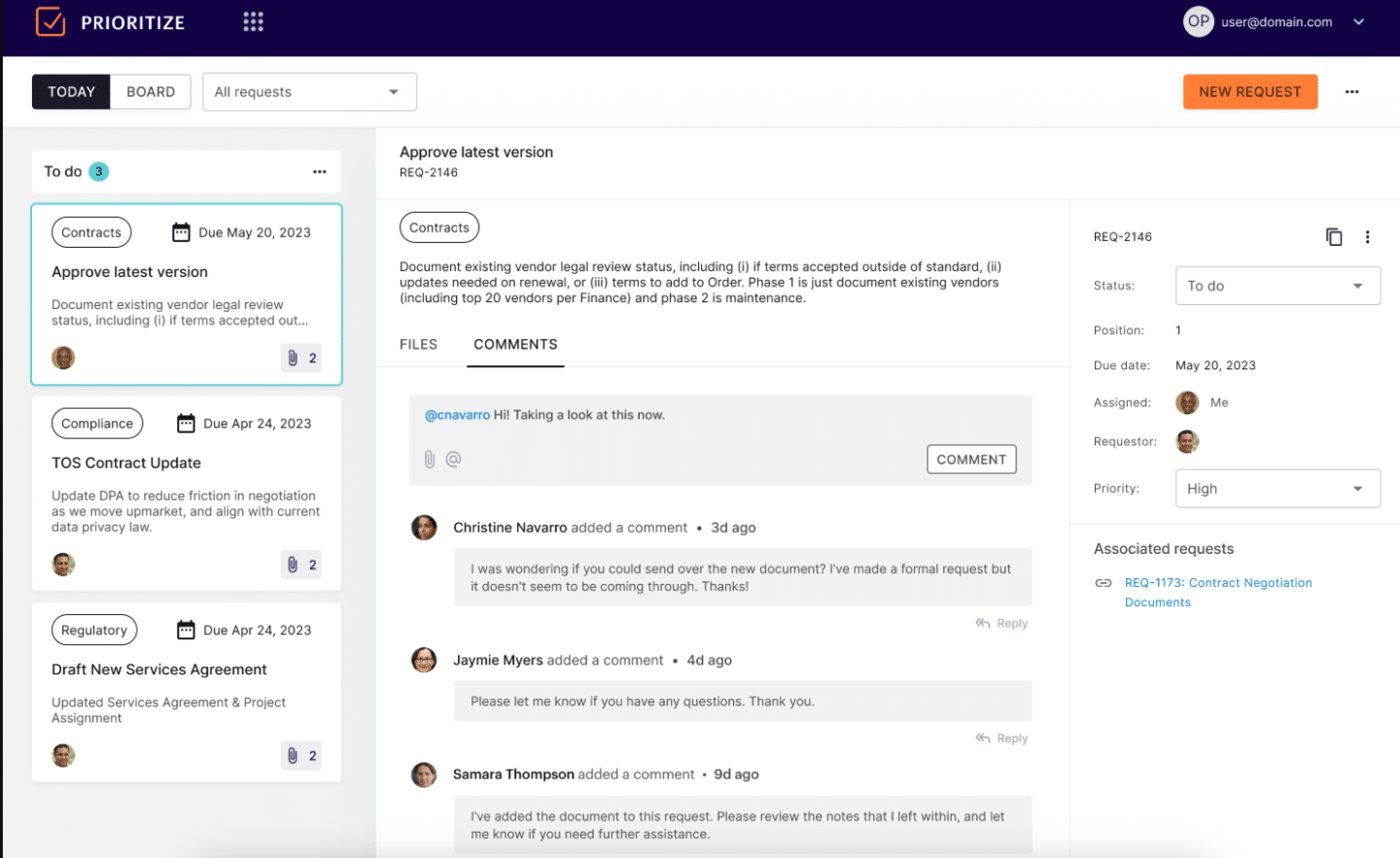
LinkSquares combines a contract intelligence repository with optional tools for contract creation, review, approval and signature. Once agreements enter the repository, teams can extract key data, search contract language and monitor renewals, obligations and risks across the portfolio.
Key features:
- Structured contract data: LinkSquares Contract Intelligence can extract data points, including key dates, payment terms, renewal windows, obligations, liability clauses, compliance requirements and counterparty information. The extracted fields become Smart Values you can search, filter and get reports on. Results with insufficient confidence are marked for review.
- Context-aware portfolio search: Ask questions in plain language and search for specific terms, clauses and obligations. The search function considers context, intent and relationships instead of relying on exact keyword matches.
- Legacy document processing: Smart OCR converts scanned PDFs, faxes and photographs of documents into searchable text, which lets you include older agreements in portfolio analysis.
- Portfolio monitoring: Dashboards, reports and alerts help teams track renewals, expirations, obligations, risk signals and compliance gaps. Analytics can also report on contract volumes, cycle times and bottlenecks.
Price: LinkSquares does not publish prices.
Conga CLM
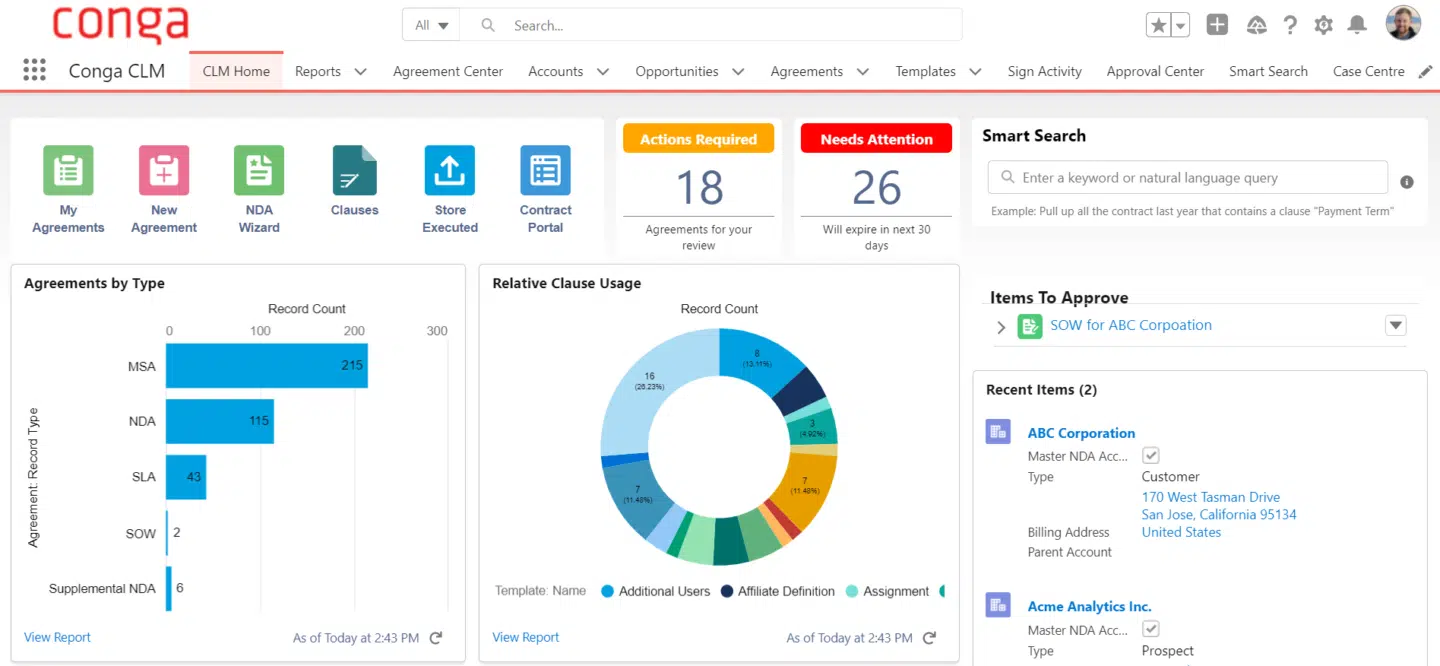
Conga CLM manages contracts starting from the initial request through review, approval, signing and post-signature tracking. You can use it in Microsoft Word, Google Docs or a browser. Administrators can configure templates, workflows and contract data.
Key features:
- Contract extraction: AI identifies metadata, clauses and table data in third-party and legacy agreements, then maps the results to the contract record. Users can validate the extracted data before creating the record.
- Risk analysis: Standard and custom provisions determine what the system can extract. Where supported, risk rules and Insights compare results with defined thresholds to flag issues or trigger actions.
- AI search and summaries: Contract AI can summarize an agreement and answer questions about its content. The Search Agent accepts natural-language queries and can compare clauses between parent agreements and amendments.
- Reporting and controls: Dashboards, reports and alerts track contract status, cycle time, renewals and obligations.
Price: Conga does not publish prices.
Docusign CLM and IAM
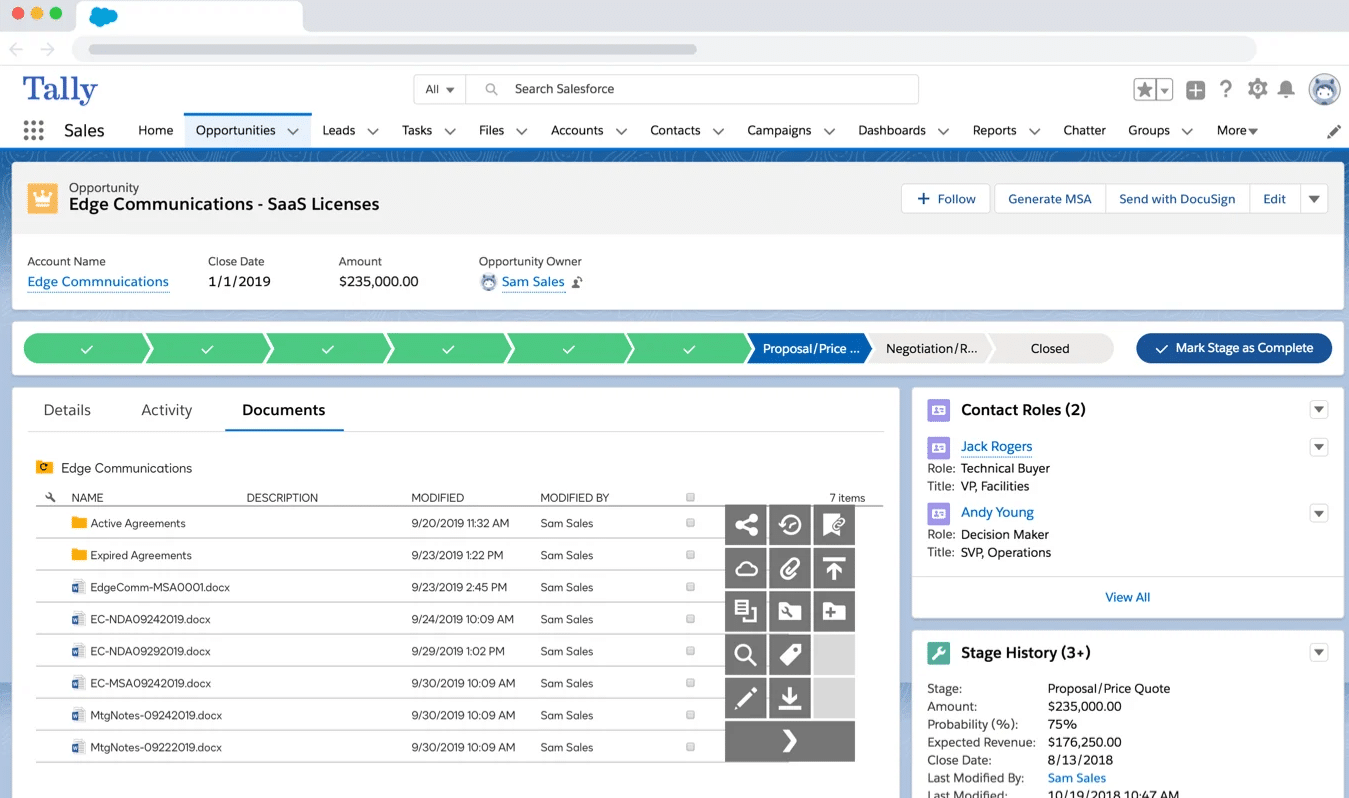
Docusign IAM combines electronic signature, workflow automation and an AI-powered contract repository. Agreements signed via Docusign can be added to Agreement Manager automatically, but you can also upload historical agreements in bulk. Higher-tier IAM plans include more preparation and review capabilities, while Docusign CLM provides more configurable contract generation, negotiation and approval processes.
Key features:
- AI-powered repository: Agreement Manager consolidates completed and uploaded agreements, then uses AI to extract key insights such as parties, dates and commercial terms.
- Search and reporting: You can search by agreement attributes, keywords or related terms using natural language. Configurable reports and dashboards analyze the whole portfolio.
- Custom extraction: Eligible IAM plans let authorized users define custom agreement types and fields. These extractions apply to existing and newly added agreements.
- Playbook-based review: AI-Assisted Review compares contract language with legal playbooks, flags deviations and suggests revisions.
- Renewals and obligations: Agreement Manager tracks renewal dates and can send notifications. Where Obligation Management is included, it can identify renewal, payment and termination commitments and assign follow-up tasks.
Price: Docusign IAM pricing ranges from $45 to $80 per user per month with an annual commitment. Standard and Professional require at least three users.
See also: Docusign alternatives.
Turn contract intelligence into action
Every contract contains information the business needs to act on, including prices, key dates, obligations, renewal terms and risks. Contract intelligence capabilities make this information searchable across the portfolio.
Oneflow provides contract intelligence for individual agreements and contract portfolios within a broader contract lifecycle management platform. Its AI tools can summarize and review contracts, extract information from imported files and analyze agreements in bulk. Contracts created in Oneflow can store key details in structured fields and product tables, while supported two-way CRM integrations can sync selected values between Oneflow contracts and CRM records.
Book a demo to see how Oneflow can help you leverage your contract data to the fullest.
FAQs
How does contract intelligence differ from traditional CLM?
Traditional contract lifecycle management controls how agreements are created, reviewed, approved, signed and managed. Contract intelligence interprets content by extracting data, finding terms and identifying risks or obligations. Many platforms combine both.
What is the difference between contract intelligence and contract analytics?
Contract analytics shows metrics such as cycle time, contract value and renewal exposure. Contract intelligence also interprets contract language, extracts data and may initiate follow-up actions. Some platforms also support conversational analysis across a portfolio.
How accurate is AI contract data extraction?
Accuracy depends on the field, contract type, language, layout and document quality. Always review low-confidence results and include human review for high-impact data.
Can contract intelligence connect contract terms to CRM and finance workflows?
Yes, if the integration supports the required fields, record type and direction of data flow. Before implementation, define which system owns each value, what triggers an update, how conflicts are handled and what audit history is retained.
.png?id=40edbc9ee25345a211152388fdcf1fd2)

.png?id=073897979970647cd034d6db96c145de)