A sales agreement gets signed with payment terms that never received the required finance approval. Months later, a supplier fails to submit a performance report required by its contract, and nobody follows up.
Both are contract compliance problems. The first violates an internal approval policy, while the second involves an unmet contractual obligation. Preventing them requires controls before signing and oversight of what happens afterward.
Contract compliance software helps organizations apply review and approval rules, monitor contractual commitments and maintain records of relevant decisions and activities.
This guide explains how it works and compares ten platforms based on their compliance capabilities, practical applications and limitations reported by users.
What is contract compliance software?
Contract compliance software is a type of contract management software that helps organizations follow internal contracting policies, meet applicable legal requirements and monitor whether contractual obligations are fulfilled. It may include templates reviewed by legal teams, automated contract reviews that flag deviations from company policies and approval workflows that route exceptions to the right people. Audit trails are essential for documenting changes and decisions, while post-signature tracking helps teams monitor contractual commitments.
These controls apply at different contract lifecycle management stages.
Pre-signature contract compliance
Pre-signature compliance aims to prevent parties from signing agreements containing unacceptable or unapproved terms.
For example, during negotiations over a supplier agreement, the supplier proposes a change to the company’s standard limitation of liability clause. Contract review can flag the deviation so the legal team can assess and approve the revised wording before signing.
Contract compliance software supports this process with features such as:
- Approved contract templates and clauses: Users create agreements using templates reviewed by legal teams. Some platforms allow administrators to lock certain sections or provide approved alternative clauses, reducing unauthorized changes.
- Playbook-based or rules-based review: A contract playbook defines which provisions an agreement should contain, what terms are acceptable and which deviations require further review.
- AI checks for missing clauses or deviations: AI-powered contract review can compare an agreement against defined standards. For example, it may flag a missing limitation of liability clause or payment terms that differ from company policy.
- Approval routing: Approval workflows direct agreements to designated reviewers. Depending on the platform, automated approval workflows can use contract values, agreement types or other criteria to determine who must approve a document.
- Access controls: Role-based access controls restrict who can view sensitive contract data or perform actions such as editing templates and approving agreements.
- Version and change history: Records of document revisions help reviewers identify changes during contract negotiations and determine which version was approved.
Together, these capabilities help organizations apply consistent standards without requiring legal teams to prepare every agreement themselves.
Some aspects, however, need extra attention:
- AI findings still require human verification.
- Approval routing depends on rules configured in the contract management system.
- Identifying a potentially risky clause doesn’t automatically prevent signing unless the appropriate approval controls are in place.
Post-signature contract compliance
Once an agreement is signed, compliance involves monitoring whether the parties meet their contractual commitments.
For example, a supplier contract might require quarterly performance reports, annual insurance renewal and advance notice before termination. Each requirement may involve a different team member and deadline.
Depending on the platform, contract compliance software may offer the following post-signature features:
- Contract obligation tracking: Records contractual commitments, such as reporting requirements or delivery milestones. Dedicated obligation management software may also support assigning owners, tracking completion and escalating overdue tasks.
- Contract renewal and notice date tracking: Monitors contract expiration dates, automatic renewals and notice periods, with automated reminders before important deadlines.
- Payment terms: Makes agreed prices, discounts and payment schedules accessible to finance teams for checking invoices against contractual terms.
- Service commitment monitoring: Records service level agreements (SLAs) and delivery targets. Some platforms can also compare these commitments with actual performance data.
- Evidence and completion status: Shows which obligations have been fulfilled and, where supported, allows teams to attach evidence such as reports or certificates.
- Audit trails: Preserve records of contract activity, including approvals, revisions and signatures, to support internal reviews and audits.
- Portfolio reporting: Provides an overview of upcoming deadlines, identified risks and other compliance indicators in active contracts through contract management analytics.
Post-signature capabilities vary between platforms. Some are focused on searchable contract repositories and reminders for important dates, while others support more detailed obligation management, including task assignments and evidence of completion.
Contract management software compared
The ten platforms below cover different compliance needs, from standardized contract creation and approval to enterprise contract management with extensive post-signature monitoring.
The comparison focuses on their capabilities and the main limitations identified through product information and independent user reviews.
| Platform | Key compliance capabilities | Best for | Main limitation |
|---|---|---|---|
| Oneflow | Locked templates, approval flows, AI review, audit trails, renewal reminders, bi-directional CRM sync | Mid-size and large teams managing CRM-connected contracts across departments | Formatting and template customization for complex agreements |
| Icertis | AI risk review, obligation assignments, fulfillment evidence, Vera Analytics | Global enterprises managing complex contractual obligations | Demanding implementation and customization |
| Sirion | AI playbook review, obligation alerts, supplier SLA monitoring, invoice validation | Enterprises monitoring supplier obligations and performance | Complex setup and some integration limitations |
| Agiloft | No-code approval rules, field-level permissions, AI review, obligation tracking | Enterprises needing highly customized compliance workflows | Configuration effort and potential need for specialist support |
| Ironclad | AI Playbooks, conditional reapprovals, activity records, obligation tracking | Enterprise legal teams managing complex approval requirements | Workflow setup complexity and reported search difficulties |
| Docusign CLM | Approved clause libraries, conditional approvals, version tracking, contract reporting | Enterprises standardizing contracting within Docusign and Salesforce workflows | Complex implementation and limited reporting flexibility |
| LinkSquares | AI contract extraction, playbook review, risk scoring, renewal alerts | Legal teams identifying risks across large contract portfolios | AI extraction inaccuracies and customization limitations |
| SpotDraft | VerifAI contract review, conditional approvals, approval resets, obligation tasks | In-house legal teams standardizing contract requests and routine agreements | Browser editing limitations and occasional performance issues |
| Gatekeeper | Vendor risk assessments, compliance evidence, conditional approvals, AI contract review | Procurement teams managing supplier compliance and vendor risk | Limited dashboard and contract field customization |
| ContractSafe | Contract search, deadline reminders, AI review playbooks, approval workflows, audit trails | Teams prioritizing straightforward contract organization and deadline tracking | Bulk-editing difficulties and occasional AI extraction errors |
With these differences in mind, let’s examine how each platform supports contract compliance.
Oneflow
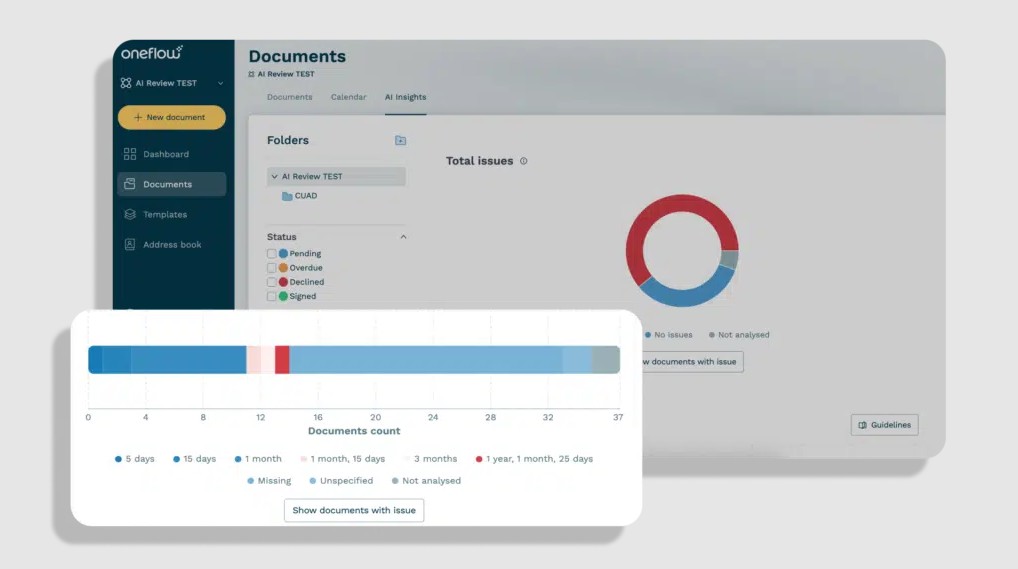
Oneflow is a contract management platform for mid-sized and large organizations that need to create, negotiate, approve, sign and manage agreements across departments.
Instead of relying on separate Word files and PDFs during contract negotiations, teams can collaborate on editable web-based agreements. Oneflow also supports electronic signatures, contract storage and post-signature lifecycle management.
Native integrations with Salesforce, HubSpot, Microsoft Dynamics 365 and Pipedrive allow sales teams to create contracts using CRM information and synchronize supported contract data. This helps keep agreed commercial terms available to the teams that use them after signing, reducing manual data entry and inconsistencies.
Key compliance features:
- Templates and approval workflows: Administrators can lock template sections to prevent changes to standard contract wording and use Section Rules to determine which sections appear. The Internal Approval Flow routes agreements to designated reviewers in a specified order. Documents remain in draft until the required approvals are complete.
- AI features supporting compliance: AI Review compares agreements against workspace-specific playbooks, flags potential risks and identifies clauses or requirements that may be missing. AI Insights brings together these findings across a workspace, allowing legal teams to spot recurring deviations and examine the affected contracts. AI Insights Premium adds custom rules and thresholds to surface exceptions and drill down to the relevant clauses.
- Audit trails and access controls: Document activity records help teams review relevant changes and signatures. Predefined and custom roles allow administrators to control access to sensitive contract information.
- Contract lifecycle management: Oneflow tracks whether agreements are awaiting their start date, active or ended. Teams can configure fixed-term or automatically renewing contracts, receive notifications about upcoming deadlines and manage cancellations or terminations. They can also set internal reminders for contractual follow-ups and use the searchable repository to find signed agreements and their details.
- Contract data extraction: AI Extract identifies key information in imported agreements, which can be used for contract administration or reporting.
Limitation: Some users report limitations in document formatting and template customization, particularly for complex agreements.
A missed approval or overlooked contract deadline can create compliance problems that are expensive to fix. With Oneflow, you can review agreements against your playbooks, involve the right people before signing, and always know when important dates are approaching. Book a demo to see how these controls can work together in your contract process.
Icertis
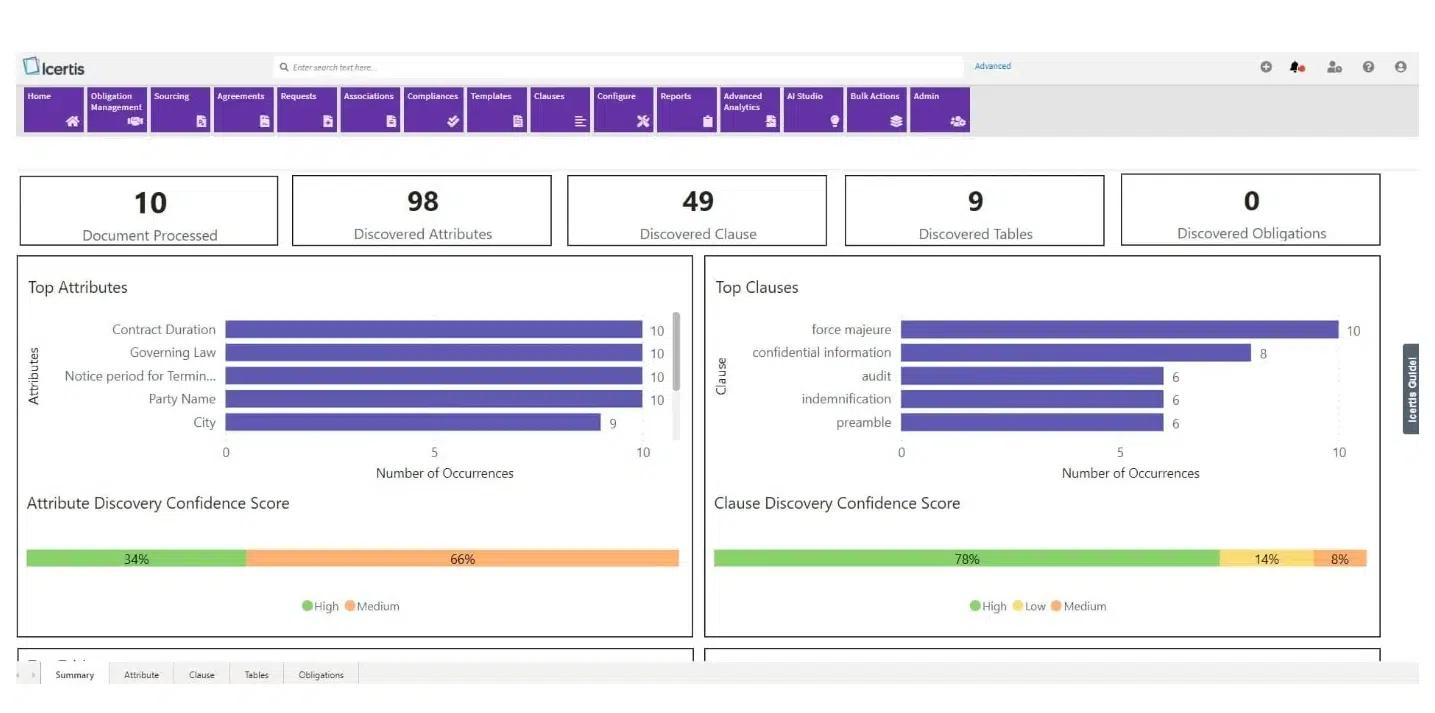
Icertis is a contract management platform for large companies managing agreements across multiple departments and countries. It supports contract creation and approvals, AI-assisted review and ongoing monitoring of contractual obligations. Its post-signature capabilities are particularly relevant to enterprises managing complex contracts with numerous commitments and compliance requirements.
Key compliance features:
- AI-assisted contract review: Compares contract clauses against company playbooks, flags deviations and classifies issues by risk level. Reviewers can apply suggested revisions directly in Microsoft Word.
- Vera Obligations: Uses AI to identify contractual commitments, assign them to responsible owners and track deadlines and completion. It also captures evidence of fulfillment to support compliance reviews and audits.
- Vera Analytics: Helps teams identify contractual risks and patterns across large contract portfolios. Dashboards and reporting provide visibility into obligations, compliance issues and potential areas of exposure.
Limitation: G2 reviewers report that implementation and customization can be demanding, particularly when integrating the platform with existing enterprise processes. Some also describe the interface requiring considerable familiarization.
See also: Icertis alternatives.
Sirion
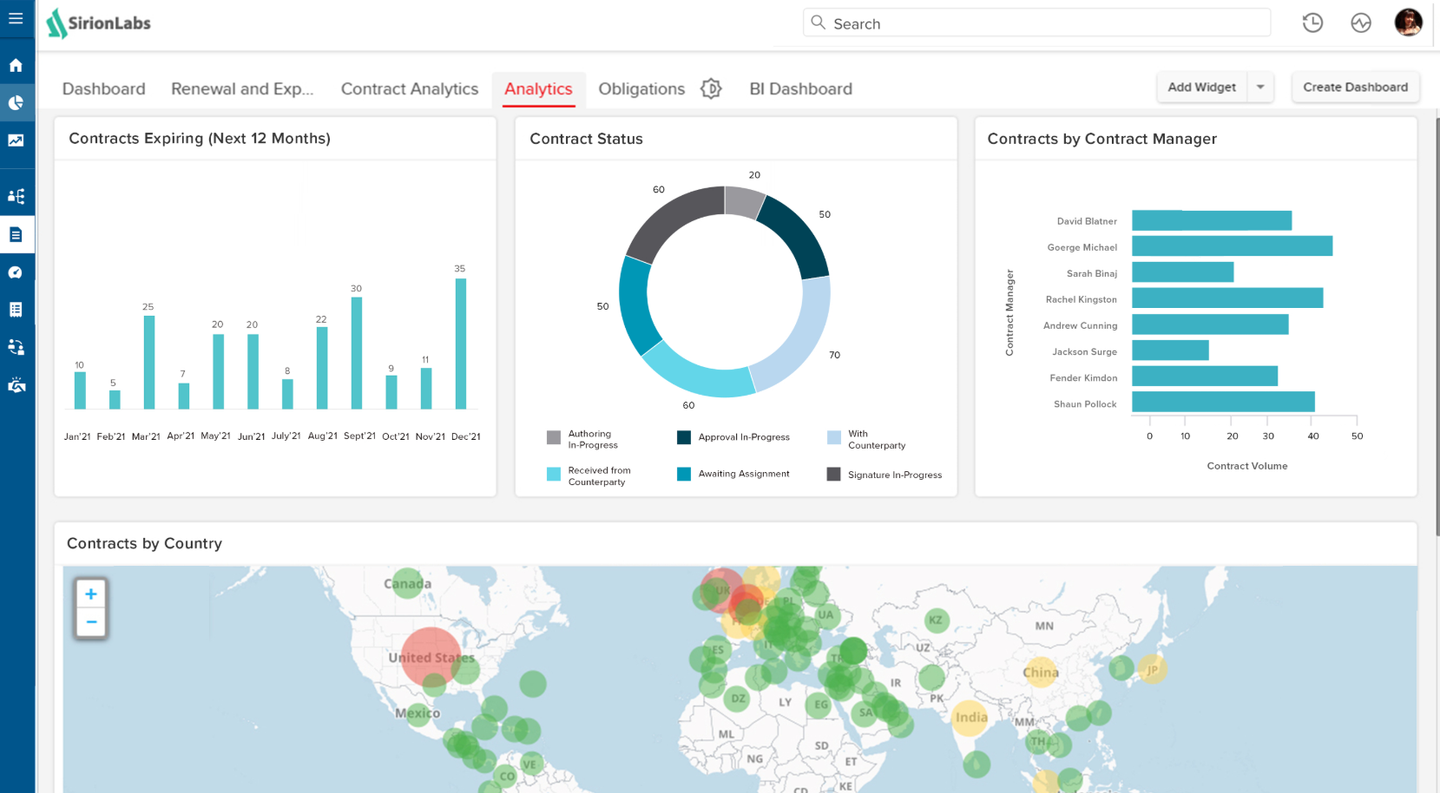
Sirion helps large organizations manage contracts with customers and suppliers, from drafting and approvals through signing. Its post-signature capabilities are particularly useful for tracking complex contractual obligations and checking whether suppliers meet agreed service levels.
Key compliance features:
- AI-assisted contract review: Sirion compares contract terms against company playbooks, flags deviations and categorizes potential risks. Its AI features also suggest revisions to address identified issues.
- Obligation monitoring: Dashboards show contractual commitments, deadlines and completion status, with automated alerts for upcoming or overdue obligations.
- Contract Performance Management: Teams can compare actual supplier performance against contractual service level agreements (SLAs), using data from connected business systems. The platform also supports invoice validation against agreed prices and actual performance.
Limitation: Sirion’s extensive configuration options can make implementation demanding. In G2 reviews, some users mention a steep learning curve, initial configuration complexity and limitations in certain integrations.
Agiloft
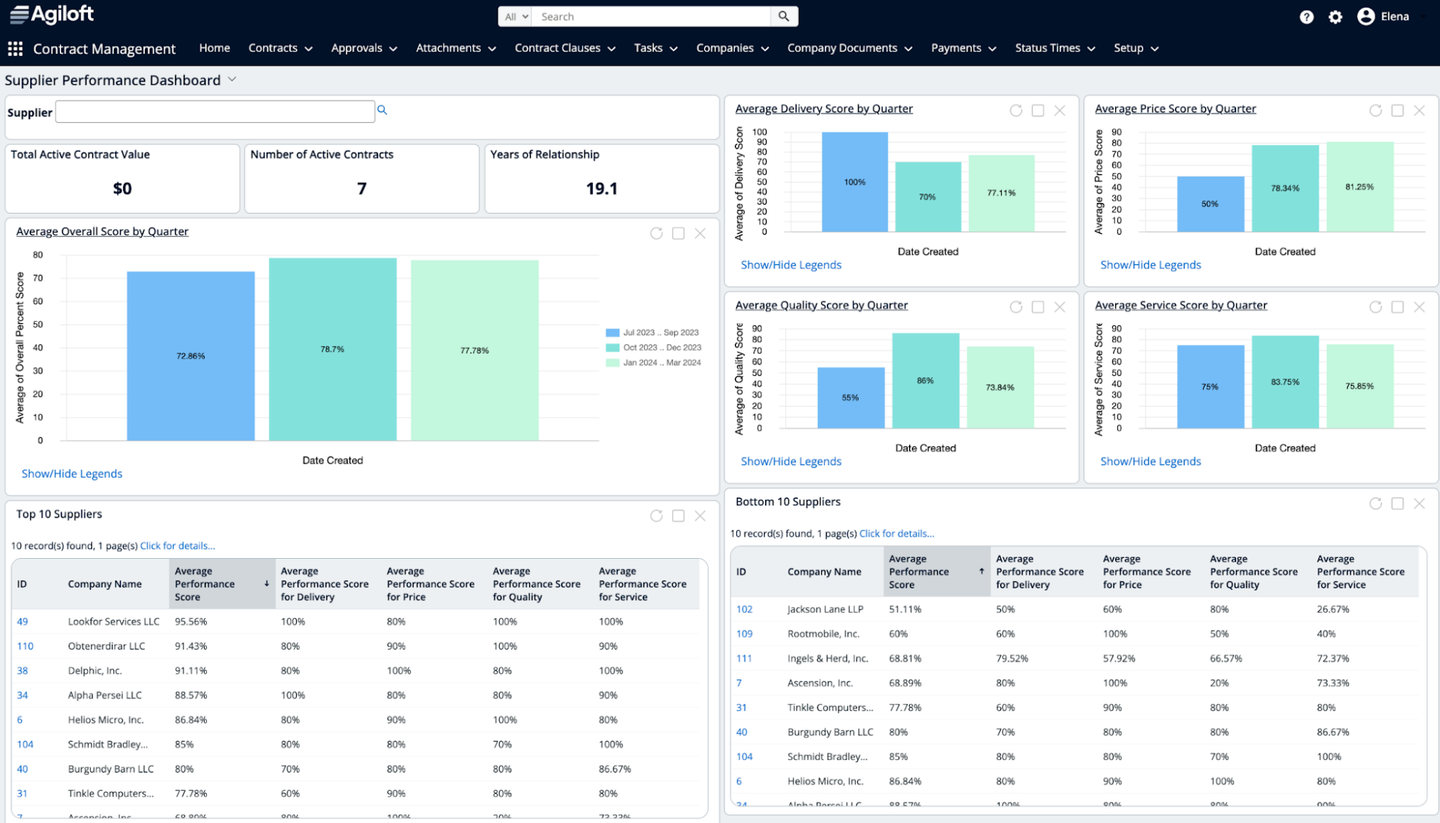
Agiloft is an enterprise contract lifecycle management platform with extensive options for customizing workflows without coding. For example, a company can configure a simple approval process for routine NDAs while requiring additional reviews for higher-value supplier agreements.
Key compliance features:
- Approval workflows and access controls: Administrators can configure approval processes based on contract types and other defined conditions. Detailed permissions restrict who can view or edit specific contract records and fields.
- AI-assisted contract review: Agiloft Astra compares contract language against configured playbooks, flags deviations from company standards and suggests revisions, including directly in Microsoft Word.
- Obligation management: AI-assisted extraction identifies contractual commitments, which teams can assign to responsible owners and track through completion. Dashboards show upcoming and overdue obligations, with automated reminders and escalations.
Limitation: Agiloft’s flexibility comes with additional configuration work. G2 reviewers describe a learning curve and, in some cases, the need for specialist support when implementing or maintaining complex workflows.
Ironclad
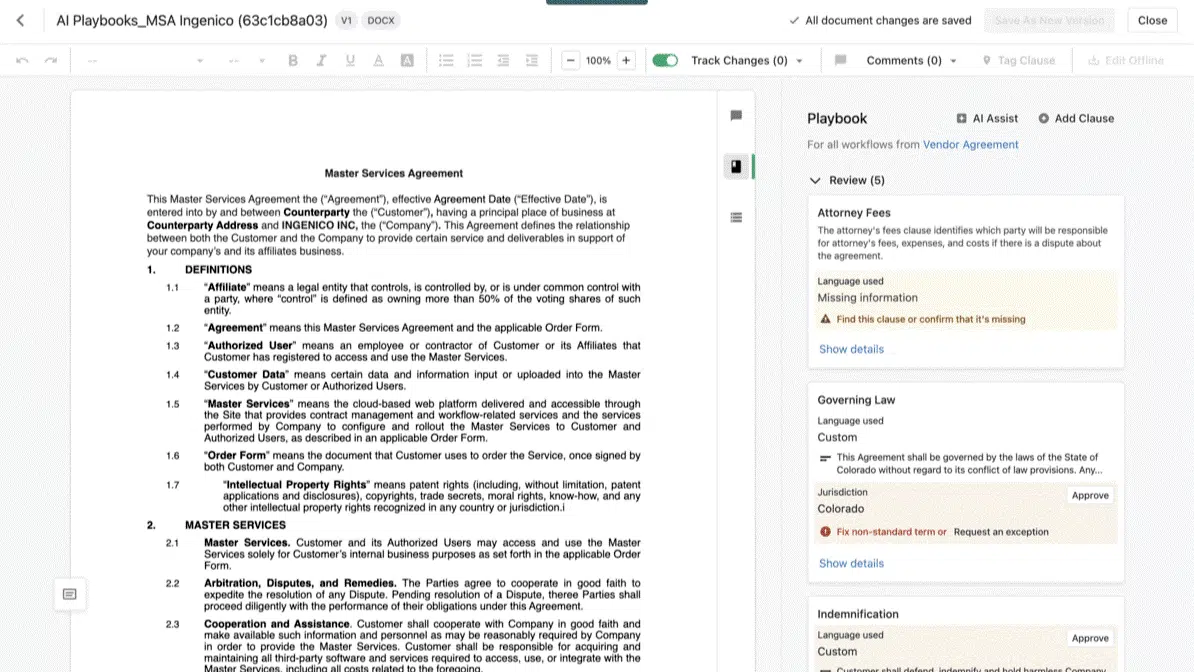
Ironclad is an enterprise contract management platform that gives legal operations teams detailed control over contract workflows. Its Workflow Designer lets administrators set rules for which clauses appear in agreements and who needs to approve them, based on details such as contract value or type.
Key compliance features:
- AI Playbooks: Compares contract clauses against company-defined rules, flags potentially non-standard terms and provides approved guidance or alternative wording for reviewers.
- Conditional approvals and change tracking: Workflow Designer routes contracts to the appropriate reviewers and can require renewed approval when specified changes occur. The Activity Feed records document revisions and approval decisions.
- Obligation management: Teams can assign owners to contractual commitments, monitor their status and track upcoming deadlines through a centralized dashboard, with reminders for responsible employees.
Limitation: Some G2 reviewers report difficulties finding documents through repository search. Others mention configuration complexity and a learning curve when setting up workflows.
See also: Ironclad alternatives.
Docusign CLM
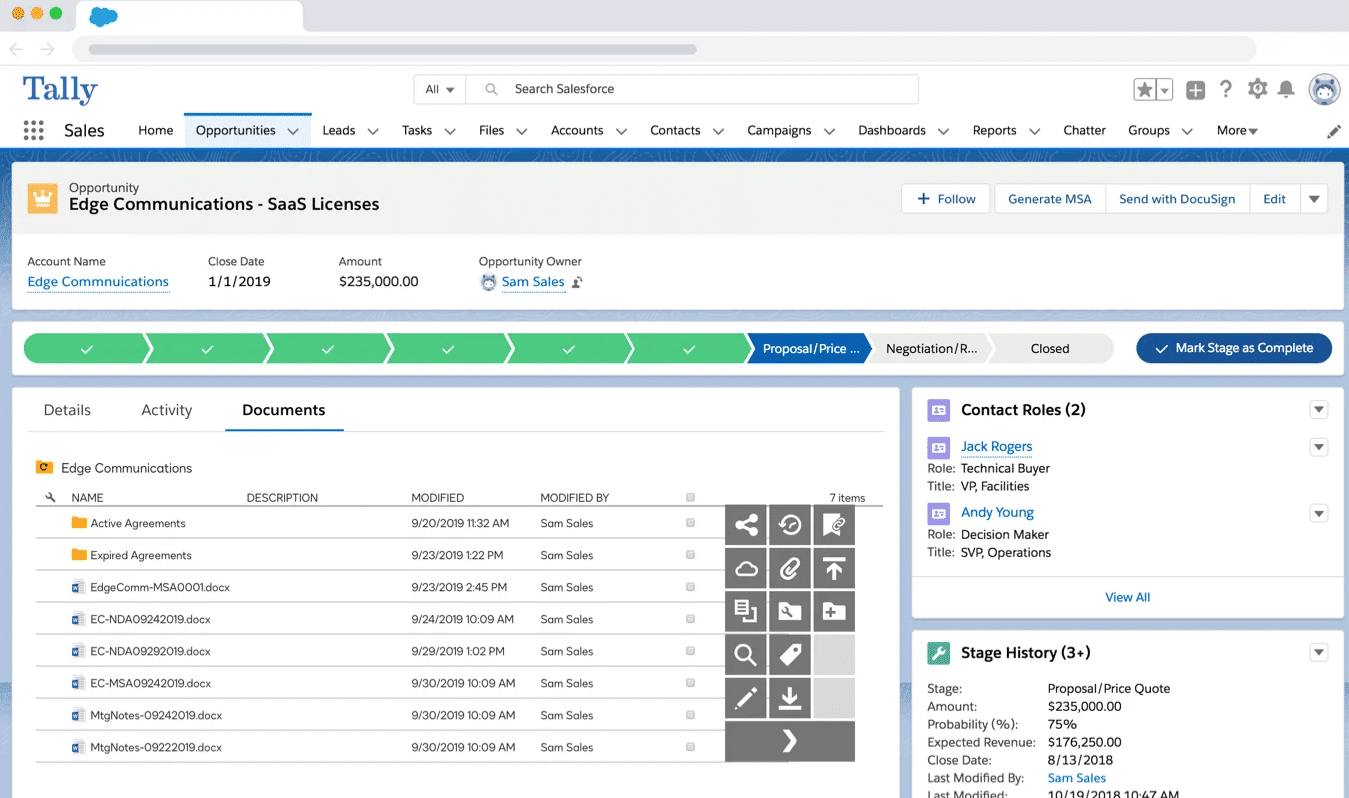
Docusign CLM helps large organizations standardize contract creation and manage complex approval processes. Legal teams can define approved contract wording and configure workflows that require additional review when agreements contain non-standard terms. Its integrations with Salesforce and Docusign eSignature also connect contract preparation with signing.
Key compliance features:
- Contract templates and clause libraries: Legal teams can create standard templates and define approved clauses and fallback wording, helping employees prepare agreements that follow company policies.
- Conditional approvals and version tracking: Configurable workflows route agreements to designated reviewers based on defined rules. Version comparisons and audit trails help teams identify changes and review past decisions.
- Contract reporting and monitoring: A searchable repository and reporting tools allow users to find signed agreements, review upcoming renewals and monitor contractual obligations. Additional AI-powered obligation management is available through Docusign IAM.
Limitation: G2 reviewers report that implementation can be time-consuming and configuring custom workflows may require technical expertise or external support. Some also find the reporting and dashboard features less flexible than expected.
See also: Docusign alternatives.
LinkSquares
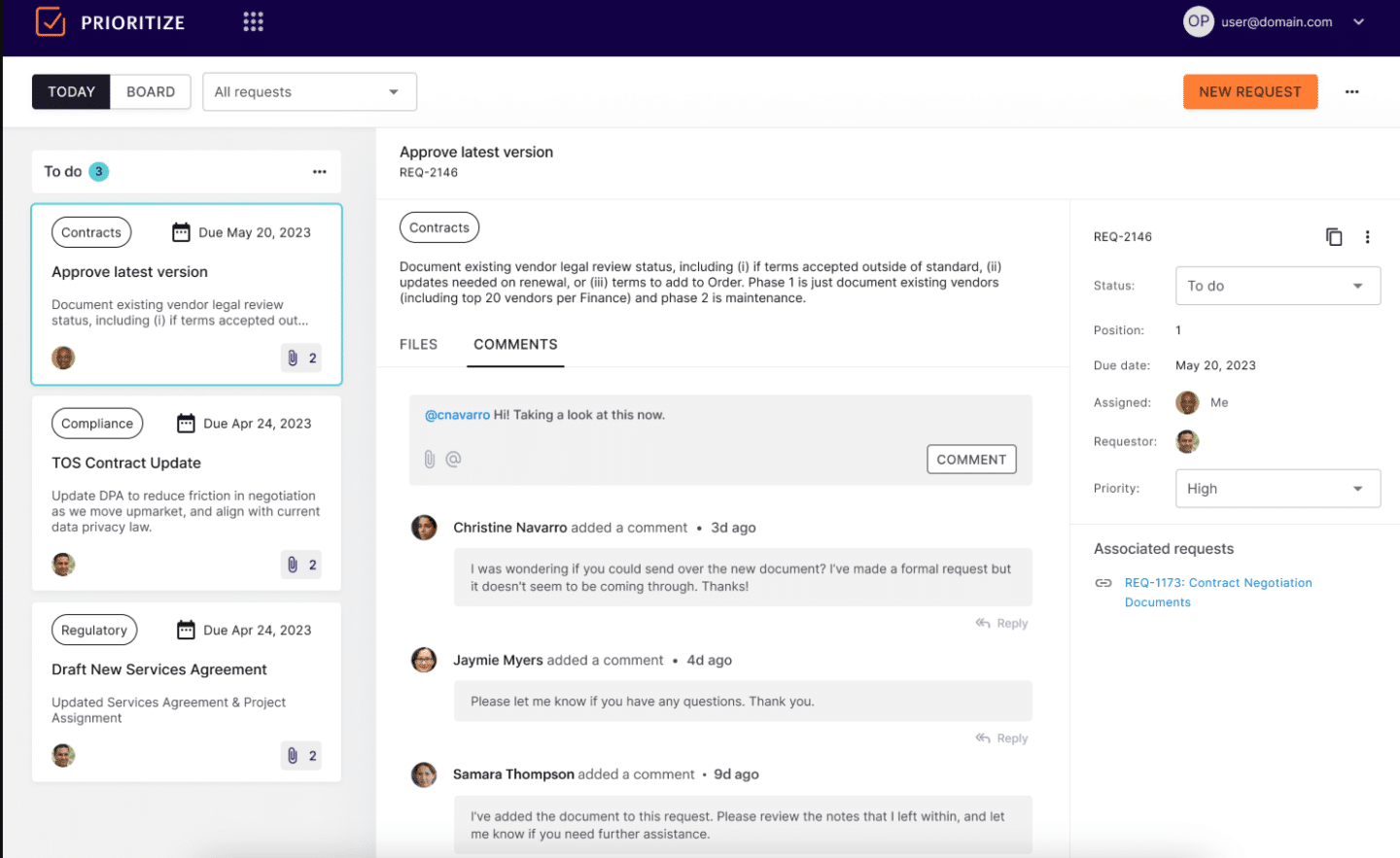
LinkSquares is a contract management platform that helps legal teams find and analyze information in large agreement portfolios. Its Analyze product extracts key details from existing contracts and makes them searchable; Finalize handles drafting, contract review and approvals.
Key compliance features:
- AI-powered contract analysis: LinkSquares automatically extracts key clauses, renewal dates and other contractual terms. This makes it easier to search across agreements and find, for example, all contracts containing a particular clause or approaching renewal.
- Contract review and approvals: The AI Legal Assistant reviews agreements against company playbooks, identifies deviations and suggests revisions. A library of legally approved clauses helps standardize contract wording, and conditional workflows route agreements to the appropriate reviewers.
- Risk scoring and deadline monitoring: AI-powered risk scoring helps legal teams identify contracts that need closer review based on company-defined criteria. Automated reminders also help responsible employees keep track of upcoming renewal and termination notice deadlines.
Limitation: Although G2 reviewers frequently praise its usability, some report inaccuracies in AI-extracted data and limited customization options. Important findings may therefore require manual verification.
SpotDraft
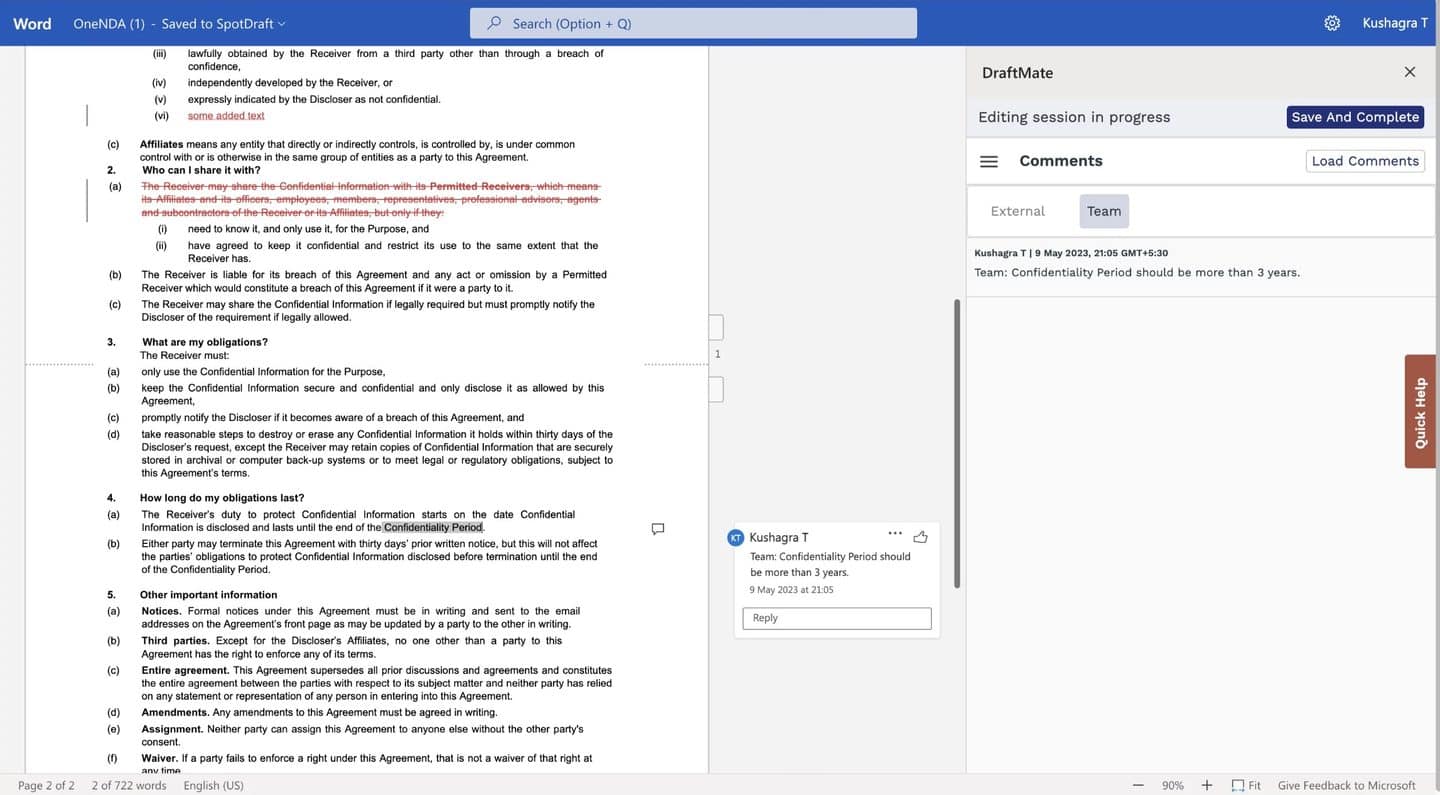
SpotDraft helps in-house legal teams manage contract requests and standardize routine agreements. Using customizable forms and templates, employees in other departments can prepare contracts while legal teams define which terms need review and who must approve them.
Key compliance features:
- AI-assisted contract review: VerifAI compares agreements against company-defined playbooks, flags potentially risky or non-standard terms and suggests revisions. Teams can review contracts in Microsoft Word, while the integrated CLM version also supports automated checks within SpotDraft.
- Conditional approval workflows: Contracts are routed to designated reviewers based on configured rules. Automatic Recollection of Approvals resets relevant approvals when changes occur, such as uploading a revised document or updating important contract details.
- Obligation Management: AI helps identify contractual commitments in signed agreements. Teams can review the extracted information and create tasks with assigned owners, deadlines and reminders.
Limitation: Some G2 users report limitations in the browser-based editing experience and occasional performance issues.
Gatekeeper
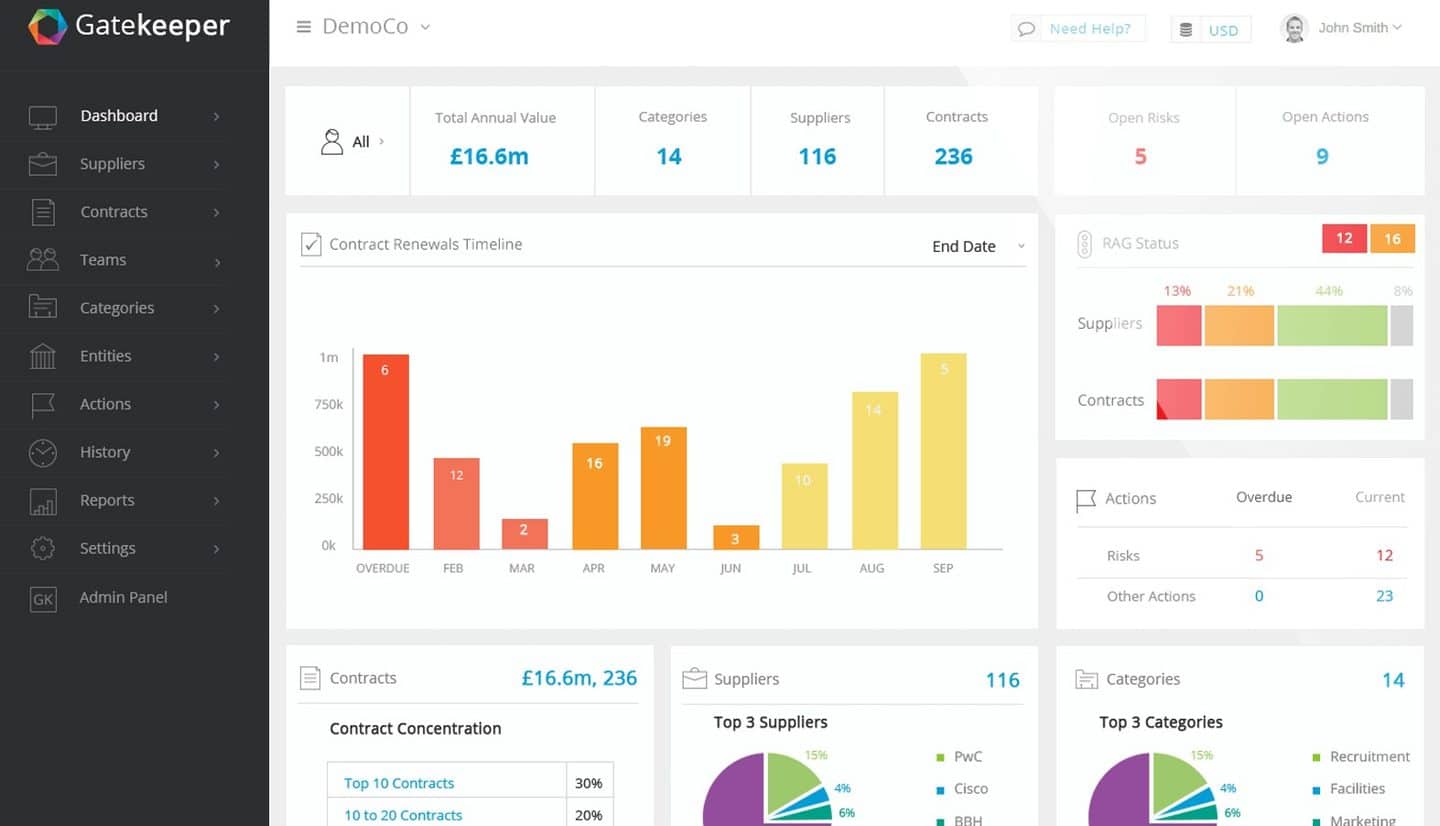
Gatekeeper combines contract lifecycle management with vendor risk management, keeping supplier management agreements connected to vendor assessments and compliance records. This allows procurement teams to evaluate suppliers before signing contracts and monitor whether they continue to meet company requirements throughout the relationship.
Key compliance features:
- Vendor risk assessments and monitoring: Gatekeeper supports supplier due diligence with questionnaires, risk scoring and compliance document collection. Teams can also monitor expiring insurance certificates and other documents to identify when further action is needed.
- Approval workflows and audit records: Conditional workflows route contract and vendor requests to designated reviewers based on defined criteria. Recorded approval decisions and related actions support internal reviews and audits.
- AI-powered contract review and obligation tracking: Gatekeeper’s AI agents can compare agreements against company playbooks, flag potential risks and extract contractual obligations. You can also track renewal dates and notice periods with automated reminders.
Limitation: Some G2 reviewers report limited flexibility in customizing dashboards and certain contract fields, which can make it harder to adapt the platform to specific reporting requirements.
ContractSafe

ContractSafe is a contract management platform for teams that want a straightforward way to organize agreements and keep track of important deadlines. Its searchable repository makes contract information easy to locate; additional features cover approvals, electronic signatures and AI-assisted review.
Key compliance features:
- Contract search and deadline tracking: A centralized repository makes agreements and their terms searchable. The automated reminders help teams track renewals, termination notice periods and other contractual deadlines.
- AI Contract Review Playbooks: Agreements are checked against company-defined rules, with results showing which requirements were met and which need attention. The AI also suggests revisions that reviewers can verify before making changes.
- Approval workflows and audit records: Contracts can be routed to individual reviewers or approval groups, either sequentially or simultaneously. Access permissions restrict who can view or modify agreements, and audit trails record changes and approval decisions.
Limitation: Some G2 reviewers report difficulties updating large batches of contracts and occasional inaccuracies in AI-extracted data that require manual correction.
Choose a CLM that makes compliance easy
When choosing contract lifecycle management software, consider where your organization faces the greatest compliance risks. If you manage supplier agreements with strict service requirements, prioritize obligation tracking and tools that monitor whether suppliers meet their commitments. If several departments create contracts, look for templates that can be created by legal teams, clear approval rules and reliable access to agreed contract terms.
Also check whether the platform connects with your existing business systems and notifies the right people before contractual deadlines. Otherwise, teams may still have to transfer information manually and keep track of important dates themselves.
Even a properly reviewed and approved contract can create problems if the agreed terms don’t reach the right teams or important deadlines go unnoticed. Oneflow helps prevent these gaps by connecting contract review and approvals with CRM data and post-signature lifecycle management.
Book a Oneflow demo to see how these capabilities could support your contract approval process and ongoing compliance management.
FAQs
What does contract compliance software track?
Contract compliance software can track approval status, contract changes, renewal dates and contractual obligations. More advanced platforms also monitor service commitments, obligation completion and potential compliance issues across agreements.
How do contract AI capabilities help with compliance?
AI can extract key contract terms, compare clauses against company playbooks and flag missing or non-standard provisions. Some platforms also identify recurring risks across multiple agreements. However, AI findings can be inaccurate and still require human verification.
How do you measure contract compliance?
Track metrics that reflect your company’s requirements, such as the percentage of contracts receiving required approvals, deviations from standard terms, obligations completed on time and missed notice deadlines. For supplier agreements, you can also measure performance against agreed service levels.
What compliance features should contract lifecycle management software include?
Look for contract templates, playbook-based review, approval workflows, access controls and audit trails. Post-signature features should include deadline reminders and obligation tracking. Integrations and reporting capabilities can also help teams monitor compliance across departments.
Does contract compliance software guarantee that a company is compliant?
Software can help identify risks, enforce configured approval rules and monitor contractual commitments, but it cannot guarantee legal or contractual compliance. Teams remain responsible for reviewing findings, meeting obligations and keeping compliance requirements up to date.
.png?id=40edbc9ee25345a211152388fdcf1fd2)

.png?id=073897979970647cd034d6db96c145de)