The back-and-forth approval workflows and snail-like tempo of the contract process make your prospects overthink, get bored, or stumble on a better-looking deal in the meantime. That’s what kills your deals, not your products or pricing.
And it’s costing you more than just time. World Commerce & Contracting research puts the average revenue loss from poor contract management at 9.2% of annual revenue. For $50M ARR, that’s $4.6 million leaking out through missed renewal dates and pricing inconsistencies.
Good sales contract management software stops that leak—as long as it fits how sales teams actually work: quote, negotiate, sign, track, renew and pass on accurate data for finance.
This article helps you select contract management software that’s just the right fit for your specific needs.
What sales contract management systems actually do (and what they don’t)
Sales contract management software manages the contract lifecycle from the sales team’s perspective—everything from proposal, negotiation and e-signature to updating the CRM, post-sign tracking and handoffs to finance that determines whether your invoicing is correct.
It serves slightly different needs than a general contract lifecycle management system, typically designed for in-house legal teams and procurement teams to manage supplier agreements, governing law provisions and regulatory obligations and a simple document management tool or e-sign solution that starts and ends with getting a signature on a PDF.
Usually, contracts leave deal data stranded. Reps close, export to PDF, email, wait, then manually update the CRM. By the time finance sees the numbers, all that info has passed through three people and two spreadsheets, manually copy-pasted, of course. That begs for errors, which then become invoice disputes. Invoice disputes slow cash collection. It’s a chain of (preventable) failures.
Rajat Bahri, CFO at Icertis, framed it plainly: “Millions of dollars flow in and out of the enterprise through commercial agreements with customers and suppliers. C-suite leaders lack confidence when it comes to optimizing those agreements and are unknowingly overlooking critical areas of value leakage in their business relationships.”
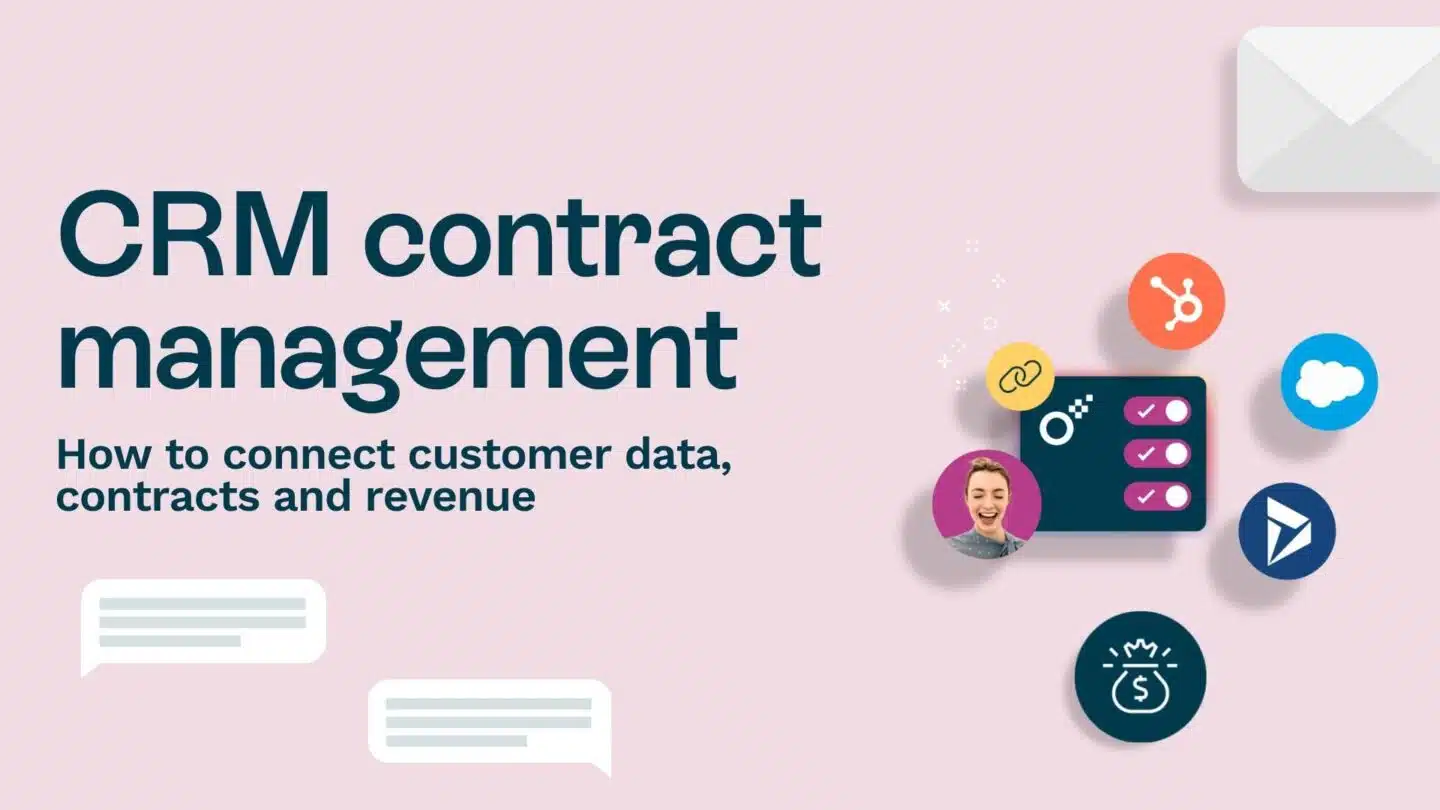
Modern contract management software fixes this by making the contract itself a live data source—one that stays connected to your customer relationship management platform, billing system and your team’s workflow from first draft to final renewal.
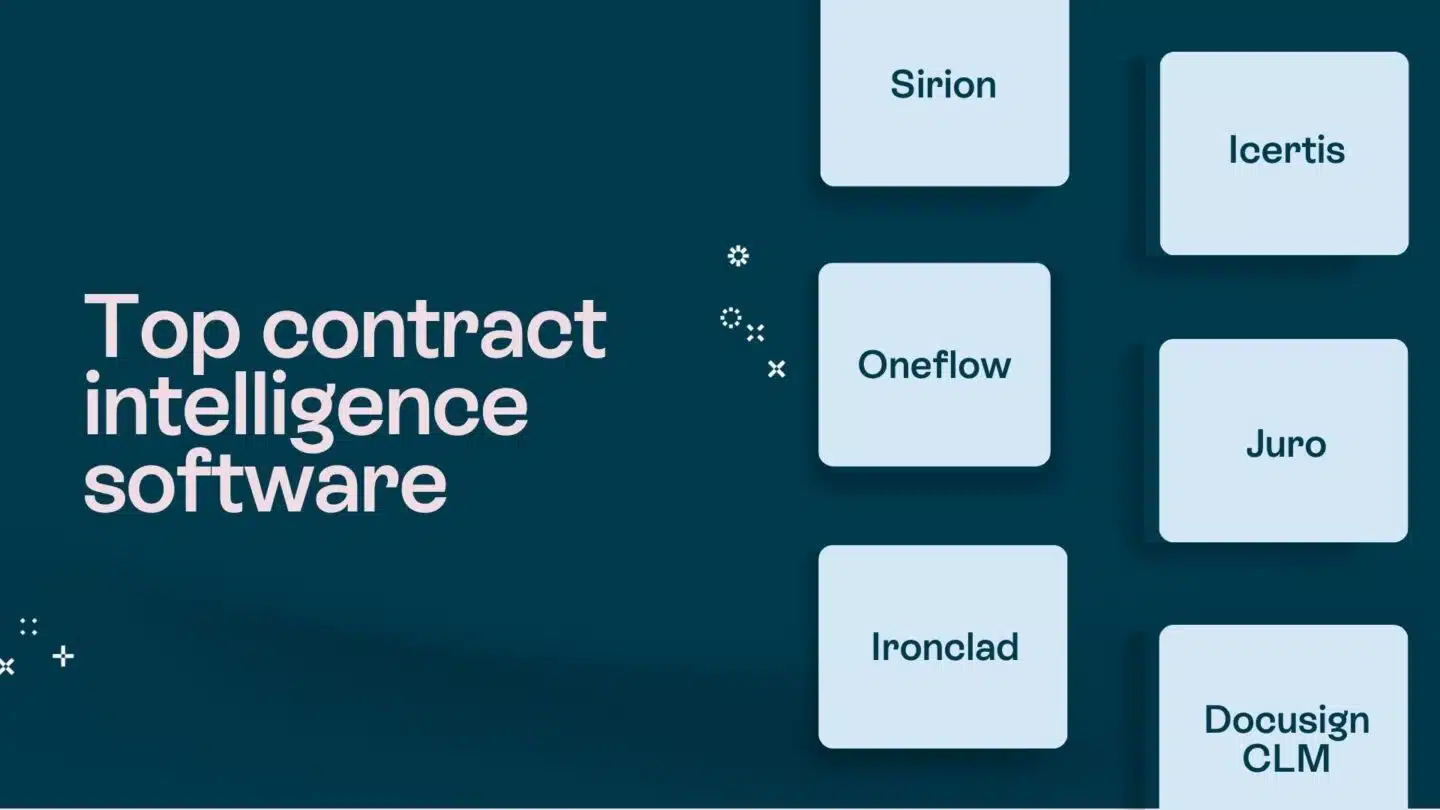
The best contract management software solutions for sales: Brief overview
Some of these tools are built for sales teams from the ground up. Others were made for legal and commercial teams but adapted for broader use.
| Tool | Best differentiator | User rating | Key features |
|---|---|---|---|
| Oneflow | Editable contracts after sending with bi-directional CRM sync | 4.6 | Live editing & negotiation, CRM sync (Salesforce, HubSpot, Dynamics), AI drafting & insights, Obligation tracking, Approvals, Searchable contract repository, E-signature |
| Ironclad | No-code workflow automation for complex approvals | 4.4 | Workflow builder, AI review & clause extraction, Repository & search, Templates, Integrations (Salesforce, Slack, Coupa, Ramp) |
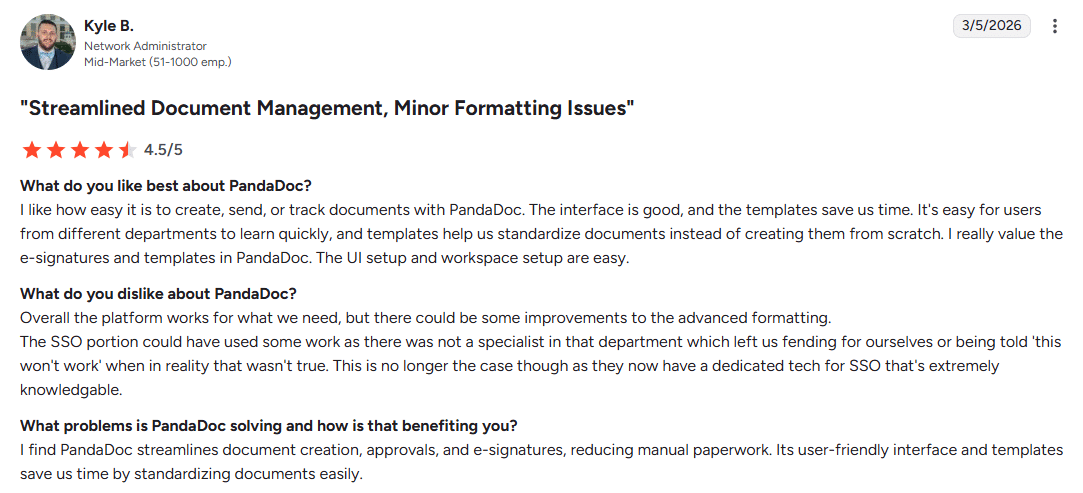
| PandaDoc | Proposal-to-payment workflow with engagement analytics | 4.5 | Document editor, CPQ quoting, E-signature & payments, Analytics, Deal Rooms, CRM integrations |
| Docusign CLM | Enterprise CLM with AI-driven contract analysis | 4.3 | AI clause flagging, Workflow automation, Repository, Obligation tracking, Integrations (Salesforce, SAP Ariba, Coupa) |
| Conga Contracts | Seamless CPQ-to-contract flow within CRM ecosystems | 4.3 | Contract generation from CRM, AI review, Redlining & approvals, Renewal alerts, Reporting, ERP integrations |
| Concord | Self-serve contracting for business teams | 4.2 | Intake & templates, AI review & suggestions, Collaboration & e-signature, Alerts, Repository, Integrations |
| Agiloft | Fully customizable no-code CLM platform | 4.5 | No-code workflows, AI review & extraction, Contract search, Authoring & clauses, Analytics, Monitoring & alerts |
The top 7 sales contract management tools
Let’s discover these in more detail to help you choose.
Oneflow
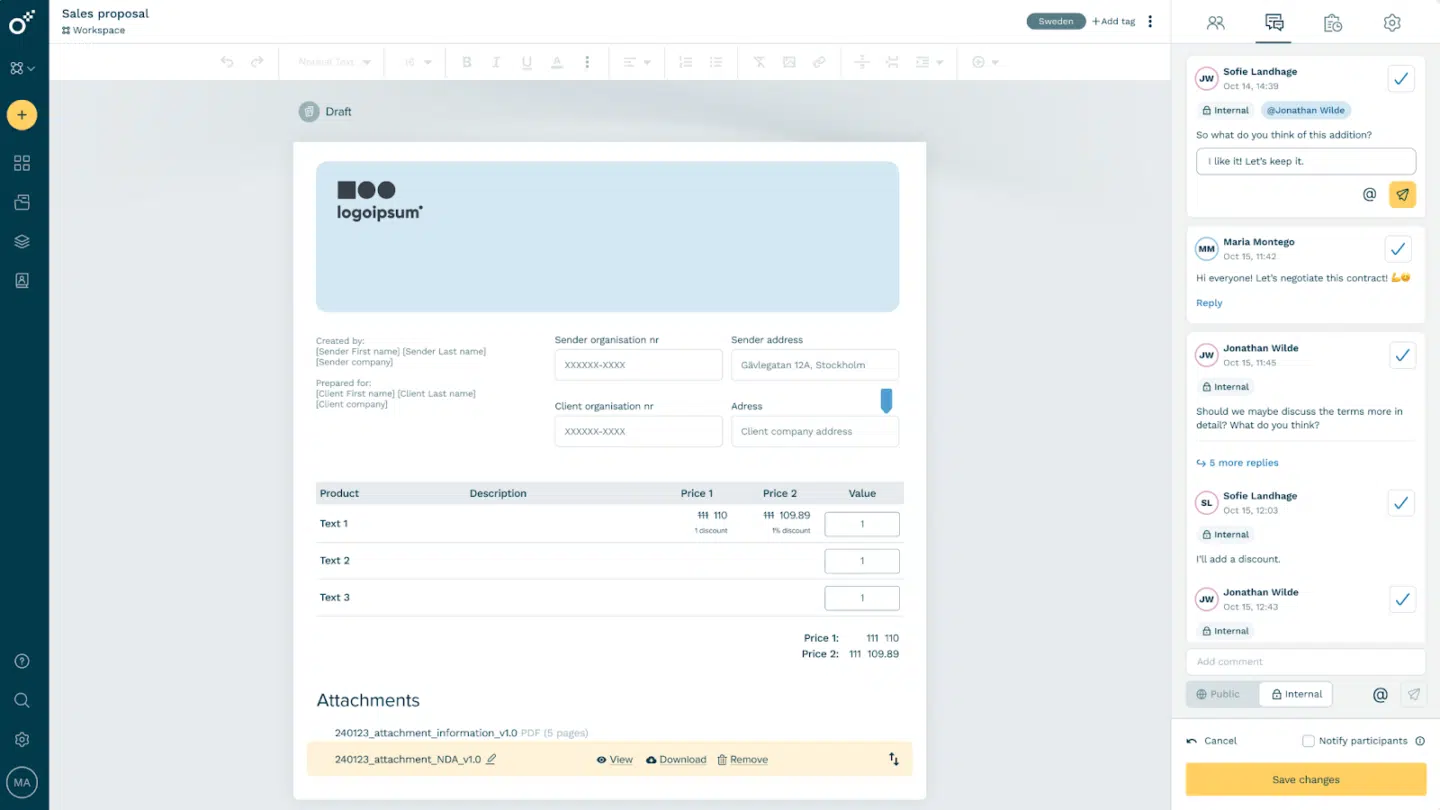
Oneflow handles the full contracting process from proposal to signing, and beyond. Contracts are live and interactive, connected bidirectionally to your CRM. When a rep updates a price in Salesforce, it updates in the contract. When a contract is signed, deal data flows back. The contract terms, product details and pricing stay consistent across every connected system.
As contract volume increases and sales cycles get more complex, the manual tracking that small teams can somewhat handle breaks down completely. Oneflow’s architecture keeps your contracts as the single source of truth for the whole organization, no matter the volume.
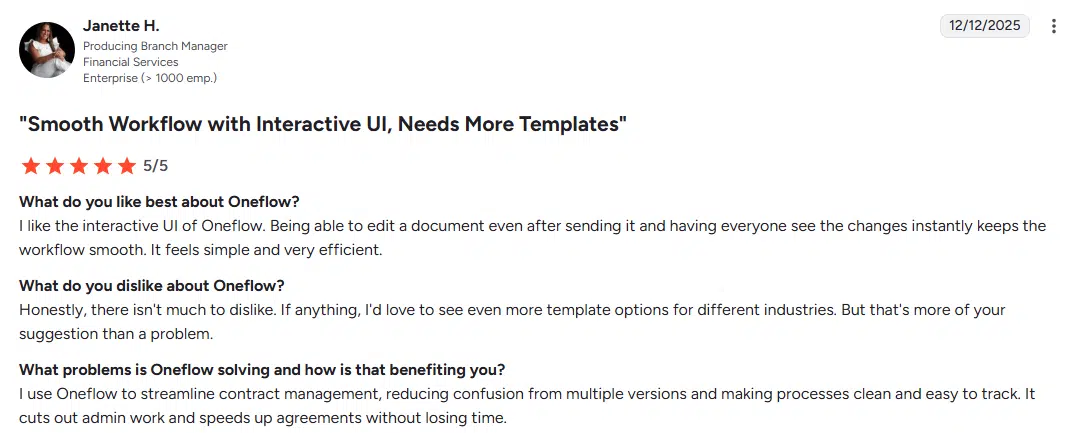
Oneflow lets you edit contracts after they’ve been sent without disrupting the workflow for anyone. Our customers love the value this brings to live negotiations, helping you close much faster.
Middlepoint, a staffing company processing hundreds of recruitment and customer contracts annually, had previously required in-person meetings just to get contracts signed. After implementing Oneflow, all their contract documents (customer, supplier and employment) moved into a single, centralized platform with full contract visibility and automated tracking, reducing weekly contract admin time by 80-90%.
Key features
- Live editing and negotiation. All parties can propose edits, add inline comments and track suggestions directly inside the contract. No Microsoft Word attachments bouncing around email.
- Two-way CRM sync. Native integrations with Salesforce, HubSpot and Microsoft Dynamics keep customer data consistent across platforms. Product tables pull directly from Salesforce Price Books or CPQ setups. You can automate workflows so that deal stages update the moment a contract status changes.
- AI-powered features. Oneflow helps with contract drafting, summarization and translation, analyzing individual contracts and scanning entire portfolios to surface operational risk and flag contract performance issues.
- Post-sign tracking and obligation management. Get automated alerts for key dates, contract renewals and expirations. Oneflow includes a searchable, GDPR-compliant contract repository that stores contracts securely and makes them easily findable after signature. Obligation tracking and contract tracking are both worth exploring if post-sign visibility is your priority.
- Multi-level approval workflows. Configurable contract approvals with role-based permissions. Every approval step is logged in the audit trail, helping you enforce compliance.
- Electronic signatures and digital signatures. Oneflow supports multiple secure signature methods, with an electronic seal applied at signing to lock contract documents against post-sign modification.
Ready to stop managing contracts the old way? Book a demo and see how your deal cycle can change.
User review
Ironclad
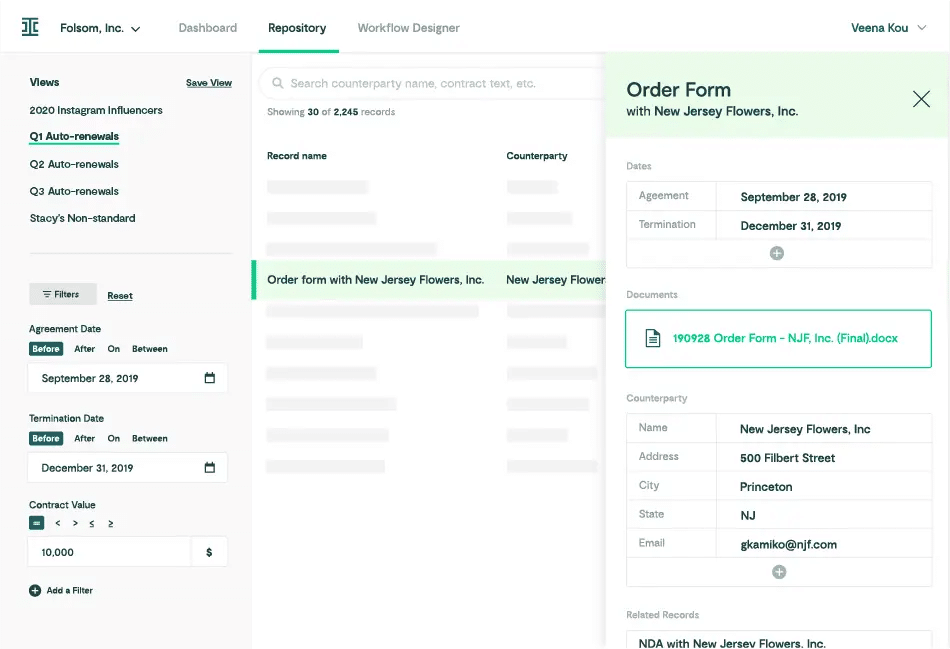
Ironclad is a contract lifecycle management platform for legal, procurement and sales teams that handle complex approval workflows and high contract volumes. The visual workflow designer lets non-technical users map multi-step approval routes, review flows and conditional logic without developer involvement.
The platform covers the full contract lifecycle, from creation and negotiation through execution, fulfillment and renewal. An AI assistant (Jurist) handles clause extraction, contract review and repository analysis, while a centralized repository gives teams searchable visibility into obligations, risks and key dates across their entire contract portfolio.
Key features
- Visual workflow automation for approvals, reviews, and conditional routing
- AI-assisted contract drafting, review, and clause extraction (Jurist)
- Centralized repository with metadata tagging, search, and obligation tracking
- Native integrations with Salesforce, Slack, Microsoft Word, Coupa, Ramp and more
- Pre-built templates and self-serve contracting for non-legal stakeholders
User review
PandaDoc
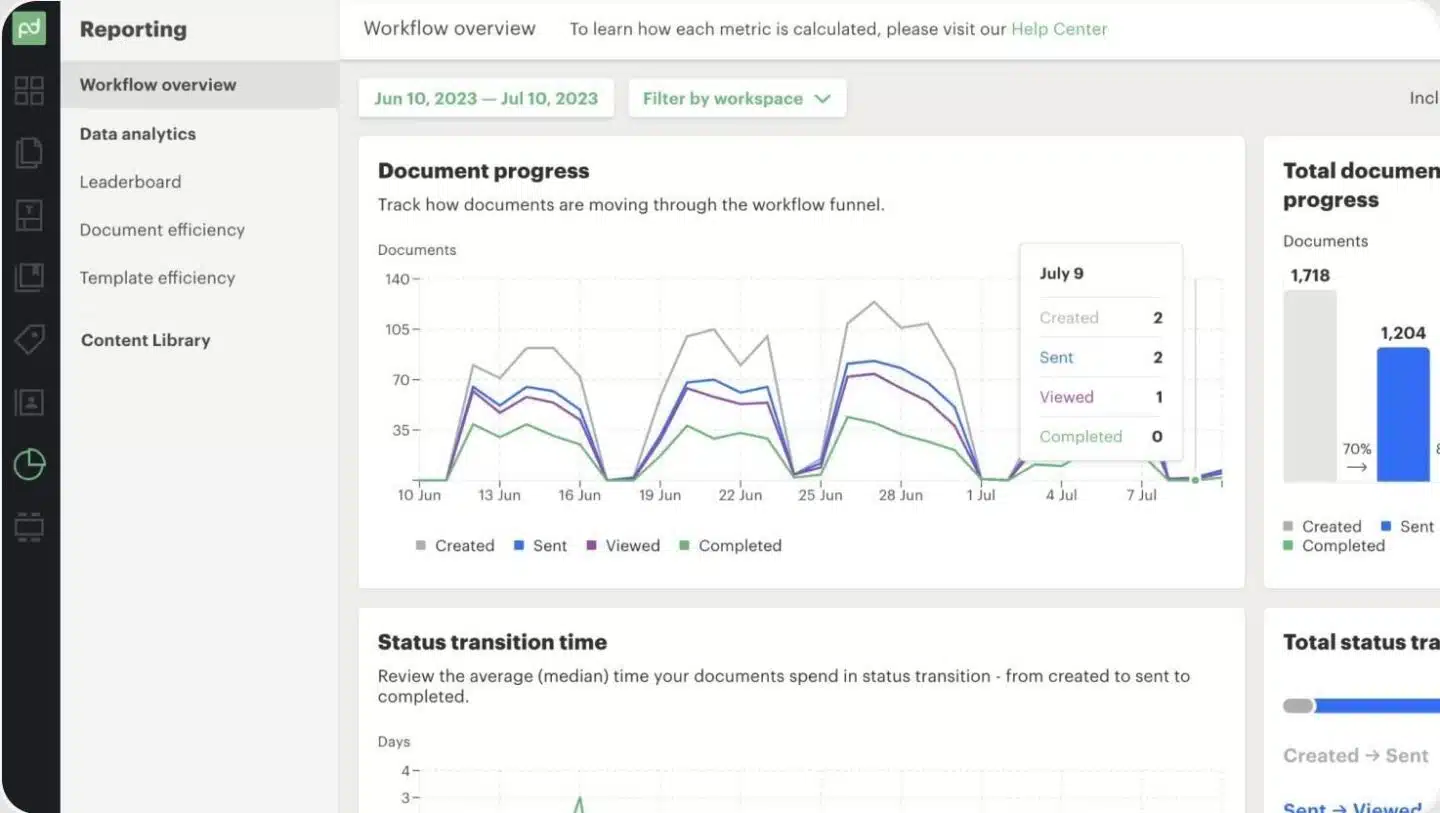
PandaDoc is a document management platform that creates polished, branded proposals and helps you collect e-signatures and payments. Its drag-and-drop editor, CPQ (configure, price, quote) functionality, and smart content rules make it good for sales teams that need to generate professional, personalized agreements without relying on legal.
Document analytics give reps a real-time view of recipient behavior, e.g., when a document was opened, which sections got the most attention, or how long a prospect spent reviewing terms.
It’s less comprehensive in post-signature. While it handles creation-to-payment well, it falls short as a contract intelligence platform. There’s also limited support for obligation tracking, renewal management or deep contract data analysis. This PandaDoc alternatives breakdown is worth reading before you commit.
Key features
- Drag-and-drop editor with rich templates, custom branding, and interactive product tables
- CPQ for automated, rules-based quoting pulled from a product catalog
- Built-in e-signature (E-SIGN, UETA, HIPAA compliant) and payment collection
- Document analytics on opens, section views, and time-on-page
- Deal Rooms for collaborative, real-time buyer engagement
- CRM integrations with Salesforce, HubSpot, Pipedrive, and more
User review
Docusign CLM
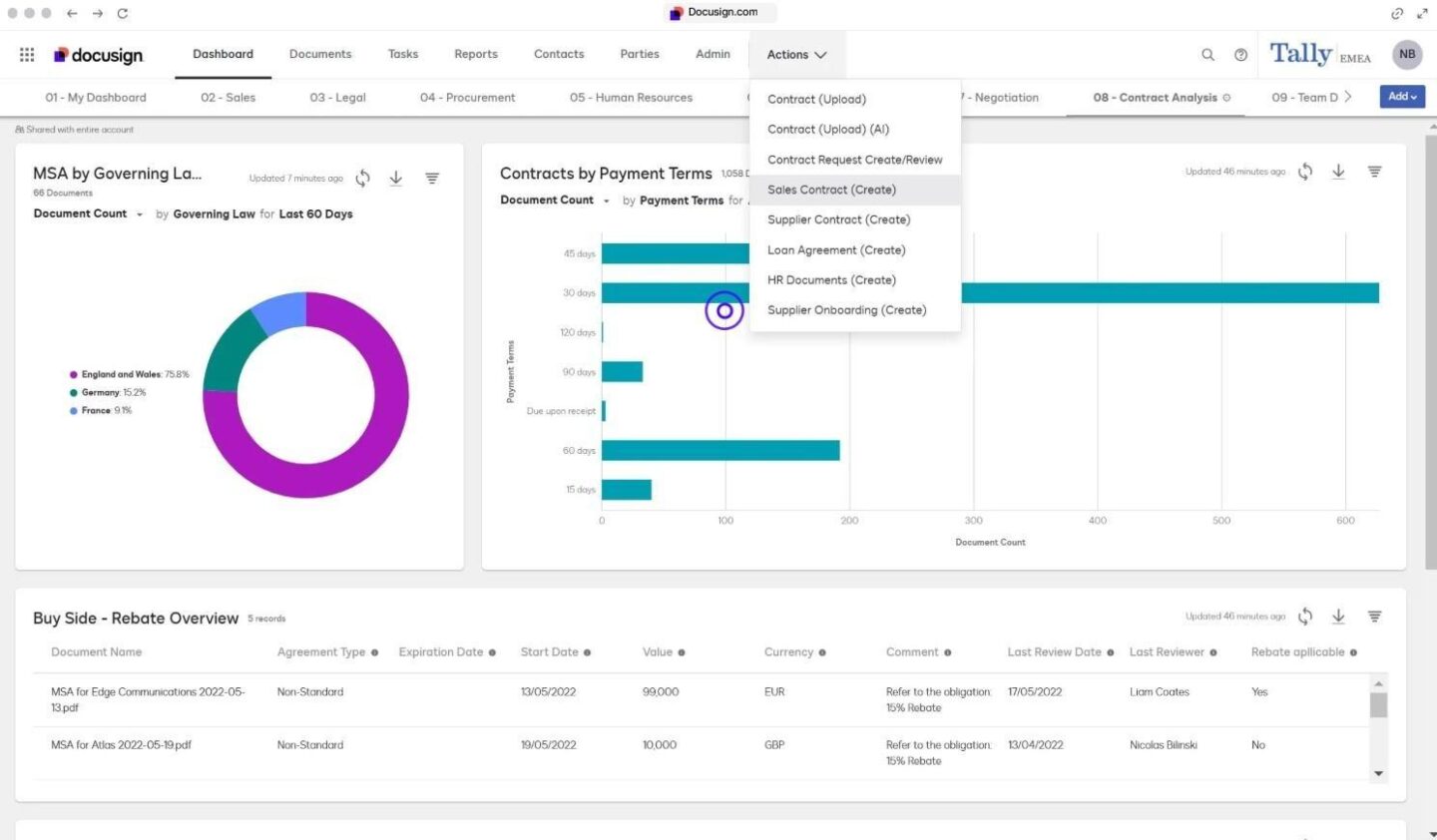
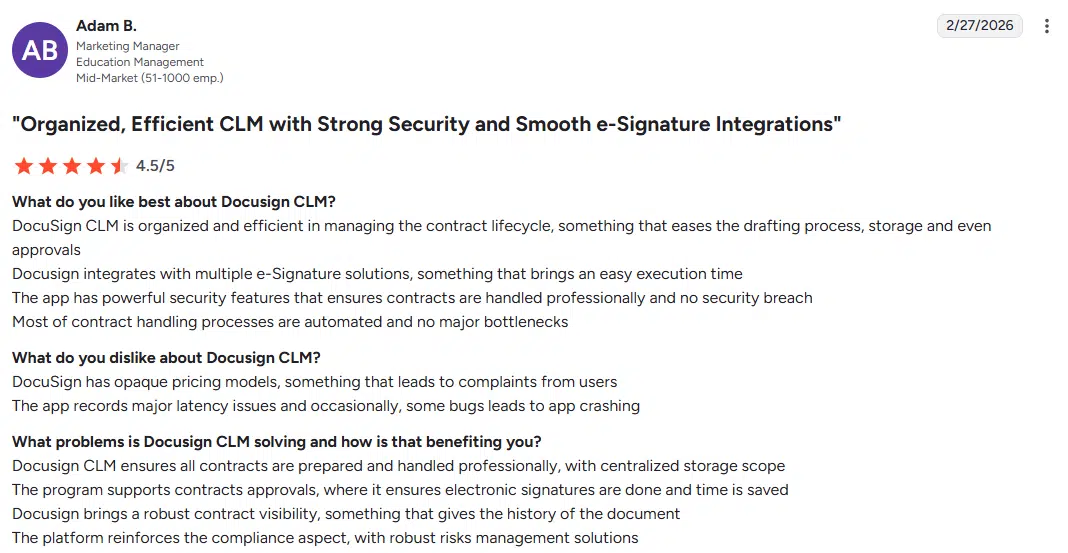
Docusign is best known for e-signature, but its CLM layer goes considerably further, covering the full contract lifecycle from creation and negotiation through execution, obligation tracking and renewal. It adds structured workflow automation, AI-powered review and a centralized repository.
The platform’s AI engine, Iris, is trained on contract data and powers clause extraction, risk scoring, AI-assisted negotiation and generative Q&A across your agreement portfolio. The pre-trained models automatically extract key terms and legal topics.
See also our Docusign alternatives breakdown for more options.
Key features
- Dynamic contract creation with AI clause flagging, language suggestions and pre-approved clause libraries
- Iris AI for contract review, negotiation assistance, risk scoring and generative Q&A
- Drag-and-drop workflow automation with pre-configured routing, approval and execution steps
- Centralized repository with keyword, concept and metadata search
- Obligation, renewal and milestone tracking with automated reporting
- Integrations with Salesforce, SAP Ariba, Coupa, Slack and more via pre-built connectors and APIs
User review
Conga Contracts
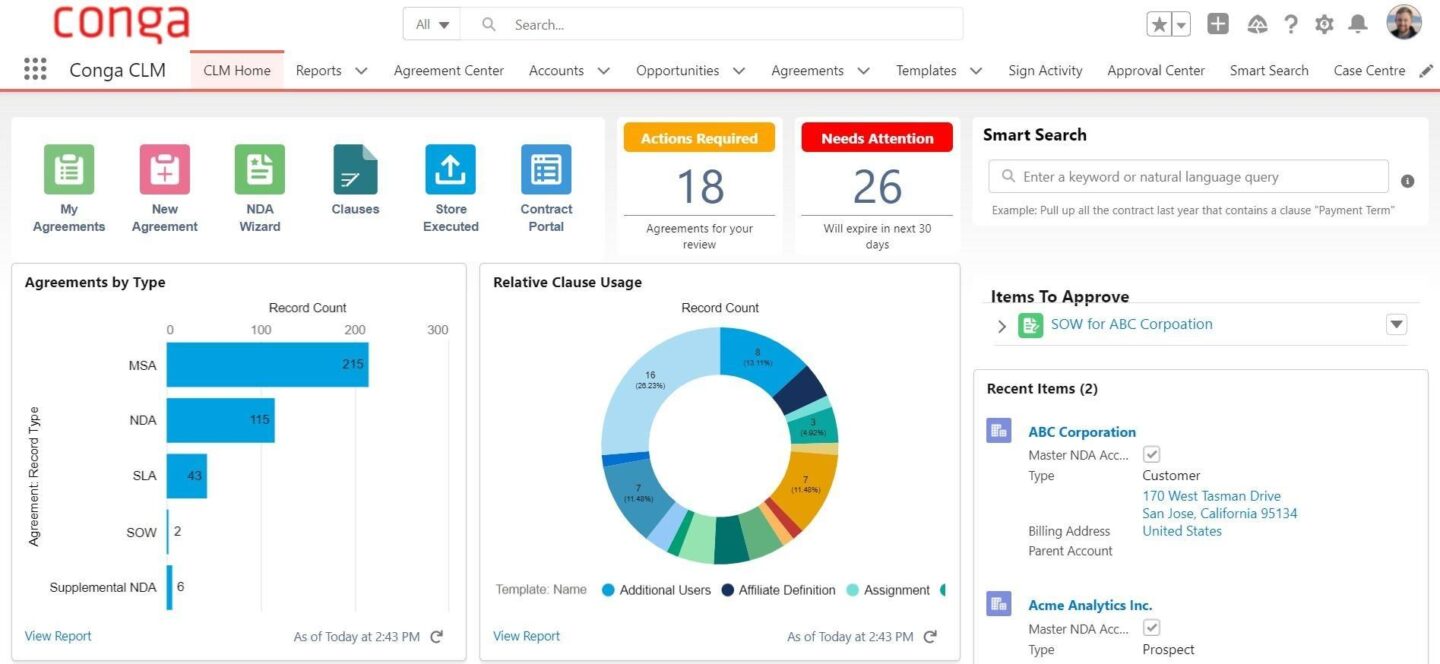
Conga CLM is for enterprise sales, legal and procurement teams that need to manage high volumes of complex contracts without sacrificing consistency or compliance. It’s part of the broader Conga Revenue Lifecycle Management platform, meaning contract generation, CPQ (configure, price, quote), document automation and e-signature can run as a connected chain. For sales teams especially, that means contracts can be generated directly from CRM opportunity data, with pricing, terms and configurations pulled automatically from Conga CPQ, eliminating re-entry and reducing errors at the point of deal execution.
AI tools extract key data points and flag risks. The pre-approved templates and automated approval routing help keep legal overhead low with higher contract volumes.
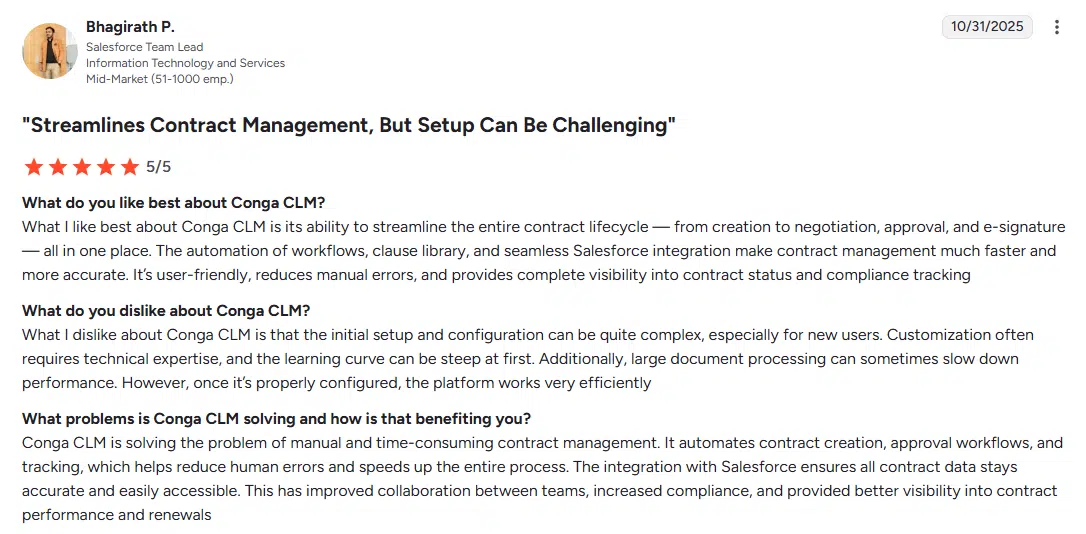
Conga has some admin complexity, which means organizations without dedicated Salesforce or RevOps support can find setup and ongoing maintenance demanding. If you need something that works out of the box, consider alternative quote-to-cash software.
Key features
- Contract generation from Salesforce and Dynamics CRM data, with automatic pull-through of CPQ pricing and terms
- AI-assisted contract review, clause extraction and risk flagging
- Redlining and language management with multi-level approval workflows
- Obligation tracking, compliance monitoring and automated renewal alerts
- Centralized repository with real-time reporting and cross-department visibility
- Integrations with Salesforce, Microsoft Dynamics and major ERP and procure-to-pay systems
User review
Concord
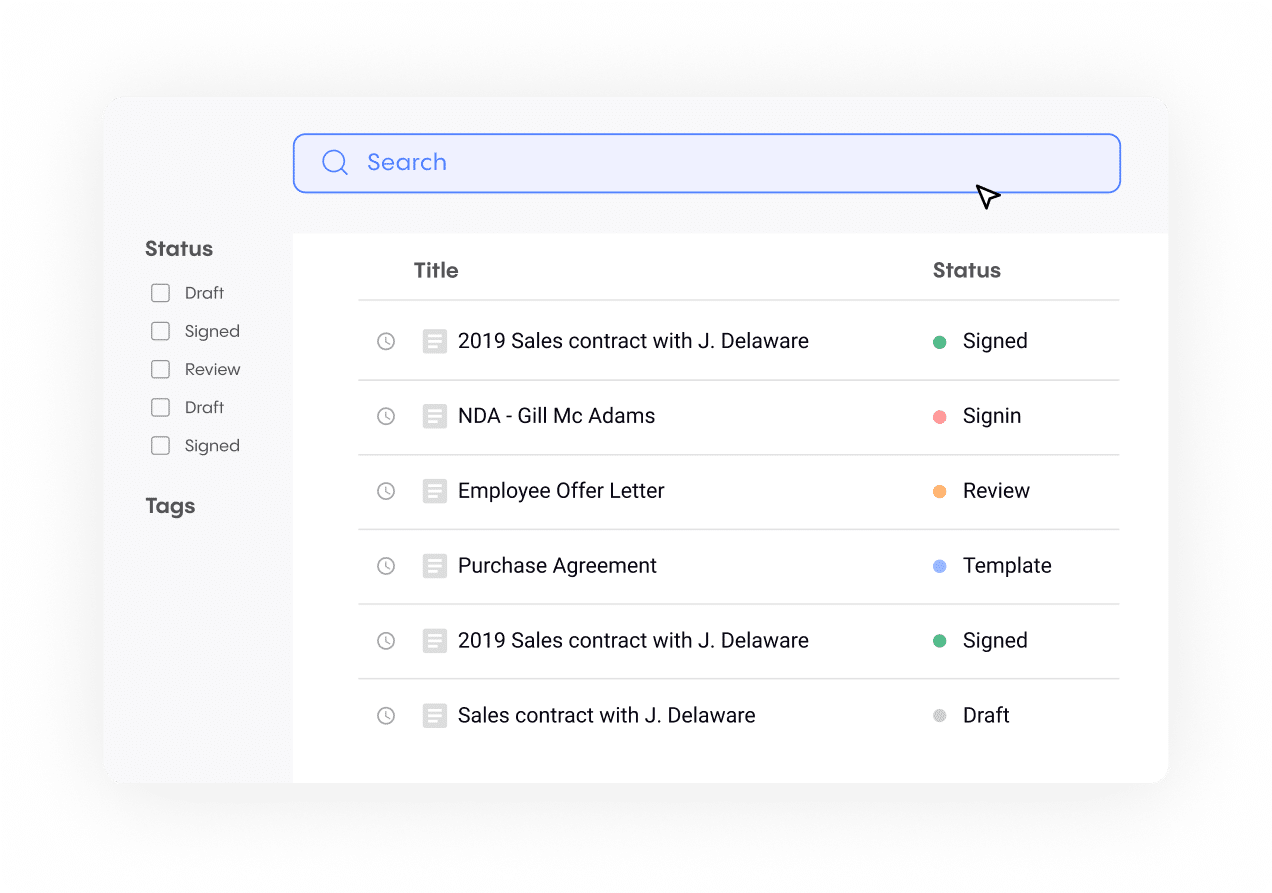
Concord is a contract platform with a self-serve intake model that lets business teams generate compliant contracts on demand using legal-approved templates, freeing legal teams to focus on complex, high-stakes agreements rather than routine requests.
Horizon AI surfaces deadlines, explains key risks and obligations, suggests edits during review and generates executive-ready reports. It also includes helpful collaboration features (redlining, version control, threaded comments, e-signature). The integration options connect Concord with tools like Salesforce, Slack, Google Drive, Zapier and more.
It’s priced and designed to scale with mid-market teams growing into more formal contract management, without the admin overhead or configuration complexity that often comes with enterprise CLM platforms.
Key features
- Self-serve contract intake with legal-approved templates
- AI-powered review, risk explanation, clause suggestions and automated reporting
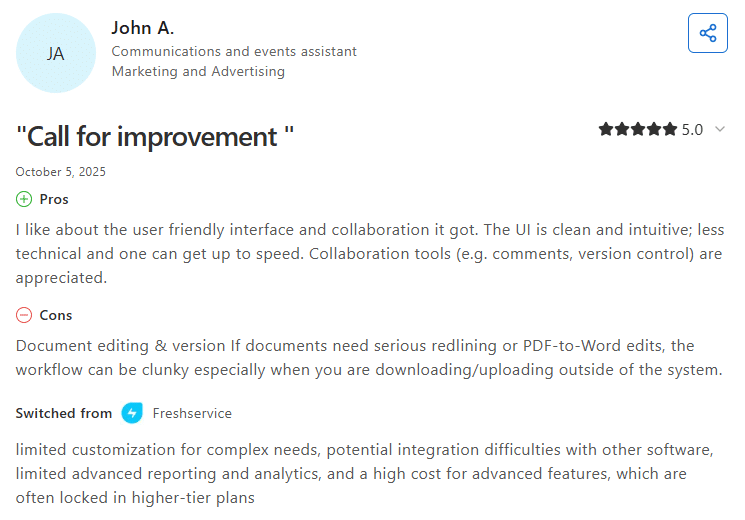
- Built-in redlining, version control, threaded comments and e-signature in one workflow
- Proactive deadline alerts and automated renewal notifications
- Centralized repository with tagging, search and document relationship tracking
- Integrations with Salesforce, Slack, Google Drive, Zapier and more via API
User review
Agiloft
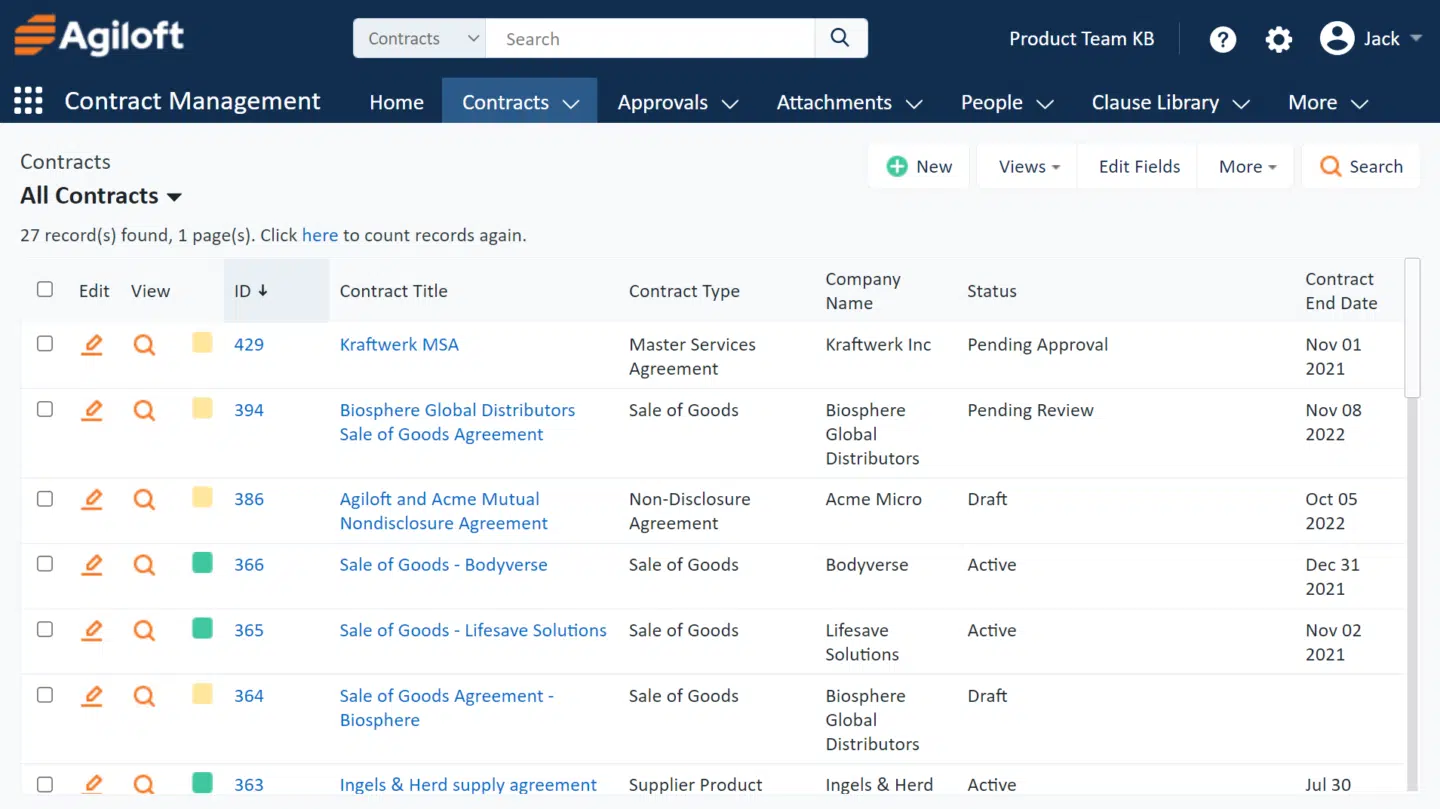
Agiloft is a highly configurable platform with a no-code architecture that lets legal teams, contract managers and business users build custom workflows, data models and approval chains without code.
AI handles contract review, obligation extraction, risk flagging and natural language queries across the contract portfolio. The Integration Hub connects to multiple business systems via drag-and-drop.
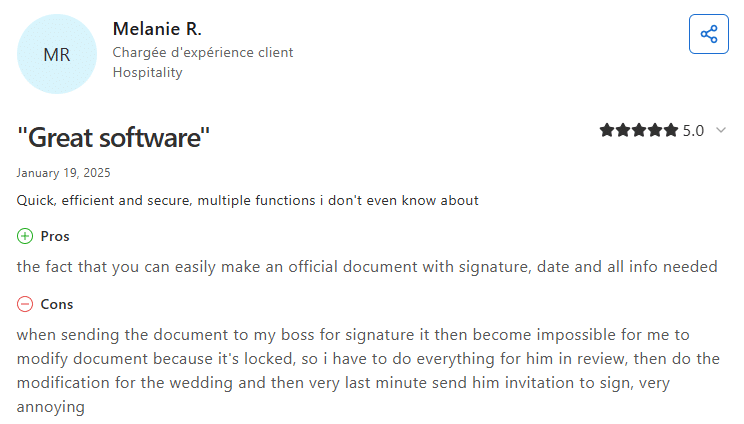
The trade-off is setup complexity. Organizations without dedicated legal ops or contract operations resources should factor onboarding time into the evaluation.
Key features
- No-code workflow builder with drag-and-drop integrations across multiple enterprise systems
- AI-powered contract review, obligation tracking and risk analysis
- Natural language contract search across the portfolio
- Contract authoring, redlining and conditional clause management
- Real-time dashboards, analytics and portfolio-level performance tracking
- Renewal and obligation monitoring with automated alerts
User review
How to choose the right tool for your sales team
The right choice of your sales contract management tool depends on where your contract process breaks down. If your sales teams need the entire contract lifecycle connected to their CRM, easy contract creation from practical templates, live negotiation and collaboration, secure e-signatures, post-signature obligation tracking, automated renewal reminders, and clean, structured data flowing to your business systems without manual intervention, Oneflow is the answer. It prevents contract volume increases from turning into operational chaos, without requiring a parallel product catalog or a dedicated admin to maintain it.
Book a demo and see what intelligent contract management looks like when it’s built around the way sales teams actually work.
FAQs
What’s the difference between sales contract management software and CLM software?
Traditional CLM platforms are designed for legal and procurement teams managing the full breadth of an organization’s contracts, like supplier agreements, regulatory compliance, governing law and obligation tracking. Sales contract management software focuses on the commercial deal cycle: quoting, proposal, negotiation, execution and post-signature data flow. There’s overlap, but the workflows, integrations and priorities are different.
How does sales contract management software integrate with CRM systems?
The best tools offer two-way native integrations. Contract data flows from your CRM into the contract (pre-populating product tables, pricing and contacts), and deal status flows back when a contract moves through stages or gets signed. This eliminates manual data entry and keeps contract data consistent across billing, CRM and finance.
What features should sales contract management software include?
At minimum: contract templates, e-signature, CRM integration, approval workflows, automated alerts and centralized contract storage. More sophisticated platforms add live editing, AI-powered contract review, dynamic product tables, obligation tracking and portfolio-level contract analytics.
Can sales contract management software handle post-signature obligations?
It should. Post-sign obligation tracking (monitoring key dates, contract renewals, service-level commitments and pricing escalations) is where most e-sign tools stop short and where companies risk revenue leakage. Platforms like Oneflow are designed for post-sign contract performance visibility.
.png?id=40edbc9ee25345a211152388fdcf1fd2)

.png?id=073897979970647cd034d6db96c145de)